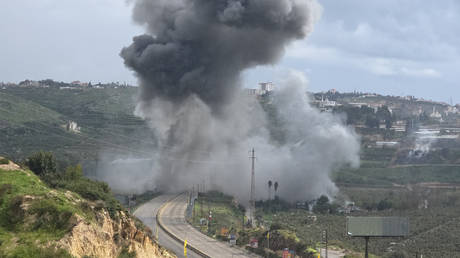
The screen on the nightstand flickers. It is 2:00 AM. A notification pings, then another, a frantic staccato that cuts through the heavy silence of a sleeping household. On the other side of the planet, the sky over Jerusalem and Tel Aviv isn't dark anymore. It is streaked with neon orange and white tracers, a lethal light show of ballistic missiles and interceptors dancing a high-stakes ballet.
Iran has launched a direct strike.
For the average person waking up in Mumbai, London, or New York, the first instinct is visceral fear. But as the sun rises, that fear transmutes into something more analytical, more clinical, and arguably more structural. We watch the video clips of the Iron Dome in action, but we feel the impact in our wallets. The explosion of a drone over the Negev Desert vibrates all the way to the floor of the National Stock Exchange.
The Invisible Tripwire
Geopolitics is often treated like a chess match played by titans in mahogany rooms. In reality, it is a spiderweb. You pull a thread in the Middle East, and the vibration travels instantly to a gas station in a quiet suburb or a retirement portfolio managed in a skyscraper.
When the news broke that Tehran had followed through on its threats—retaliating for the strike on its consulate in Damascus—the global markets didn't just react. They winced. This wasn't the shadowy "gray zone" warfare of the last decade. This was state-on-state. Direct. Blatant.
Consider the Strait of Hormuz. It is a narrow stretch of water, a literal choke point where twenty percent of the world's total oil consumption passes every single day. To a tanker captain, it is a high-stress navigation exercise. To a global economist, it is a jugular vein. If that vein is constricted, the blood pressure of the entire world economy spikes.
The Ledger of Anxiety
The numbers tell a story that prose sometimes struggles to capture. Within hours of the strike, Brent crude oil prices teased the $90 mark. This isn't just a number on a ticker. It is the cost of a farmer in Punjab running his tractor. It is the price of a flight ticket for a student heading home for the holidays.
In India, the Sensex—the heartbeat of the nation's financial health—plummeted by over 800 points in a single session. Investors wiped out trillions of rupees in wealth before lunch. Why? Because markets hate the unknown. They can price in a recession. They can price in a tax hike. But they cannot price in a regional conflagration that might pull in the world's superpowers.
Imagine an investor named Arjun. He isn't a wolf of Wall Street; he’s a middle-manager who puts a portion of his salary into a mutual fund every month, hoping to pay for his daughter’s university fees in ten years. When he sees the red bars on his screen, he isn't thinking about the religious or political history of the Levant. He is thinking about the "risk-off" sentiment.
Risk-off is a polite way of saying "run for the hills." When missiles fly, people sell stocks and buy gold. They buy the US Dollar. They retreat into the bunker of "safe-haven" assets. Arjun’s retirement fund just took a hit because two nations a thousand miles away decided to settle a score.
The Psychology of the Surge
There is a specific kind of vertigo that comes with watching a conflict escalate in real-time. We are the first generation of humans who can watch a war via a livestream on our phones while ordering a coffee. This proximity creates a feedback loop.
The surge in oil prices isn't always based on a physical shortage. Often, it is based on the fear of a shortage. Speculators bet on the worst-case scenario. This "war premium" is a tax on global stability. If Iran decides to block the shipping lanes, or if Israel retaliates against energy infrastructure, the $100 barrel of oil isn't a possibility—it’s a certainty.
Inflation is a monster that most central banks thought they had finally put back in its cage. They were ready to start cutting interest rates. They were ready to let the world breathe. Then, the sirens went off. If energy costs stay high, inflation stays high. If inflation stays high, interest rates stay high.
Your mortgage. Your car loan. The credit card debt you’re trying to clear. All of it is tethered to the flight path of those Iranian Shahed drones.
A World Interconnected by Necessity
It is tempting to look at the map and feel insulated. "That's over there," we tell ourselves. But the modern world has no "over there."
Supply chains are the nervous system of our civilization. A disruption in the Middle East means a delay in electronic components from Taiwan, which means a factory in Germany slows down, which means a dealership in Brazil has no cars to sell. We are locked in an embrace of mutual dependence that is both our greatest strength and our most profound vulnerability.
The real tragedy of the Iran-Israel escalation isn't just the immediate tactical damage. It is the erosion of the "peace dividend"—that brief, shining historical moment where we thought global trade had made large-scale war too expensive to contemplate. We are discovering, painfully, that ideology and national pride often have a higher budget than we anticipated.
The Human Cost of the Ticker Tape
Behind the "Sensex falls" headlines are humans. There is the shopkeeper who sees the price of cooking oil rise for the third time in a month and has to explain it to a frustrated grandmother. There is the tech worker whose startup just lost its venture capital funding because the "macro environment" became too volatile.
We talk about "market volatility" as if it’s a weather pattern, something external and indifferent. But volatility is just a collective expression of human doubt. It is the sound of millions of people wondering if the future is still a safe place to invest their dreams.
The missiles were intercepted. The immediate fire was doused by the most sophisticated air defense systems humanity has ever built. But the smoke remains. It lingers in the boardrooms where CEOs are now rewriting their five-year plans. It lingers in the homes of people watching the price of petrol creep up cent by cent, rupee by rupee.
The world didn't end last night. But the world we knew—the one where we could ignore the Middle East and focus on our own pockets—is gone. We are all stakeholders in that desert sky now.
A single drone, costing perhaps twenty thousand dollars, can threaten a global financial system worth trillions. That is the new math of the twenty-first century. It is asymmetrical, it is chaotic, and it is our new reality.
As the sun sets today, the markets will close. The traders will go home. The missiles will be counted and the launchers reloaded. We wait for the next ping on the phone, the next streak of light in the dark, wondering if the thread we are holding is the one that finally snaps.
Nothing is as expensive as a war that hasn't even fully begun.