The coffee in Hayange tastes the same as it did twenty years ago, but the air in the town square feels heavier. It is the weight of silence. In the small towns that dot the French rust belt and the sun-bleached stretches of the south, the most significant political shift in a generation didn't arrive with a shout. It arrived with the rhythmic thud of wooden shutters closing over storefronts that used to sell bread, shoes, and hardware.
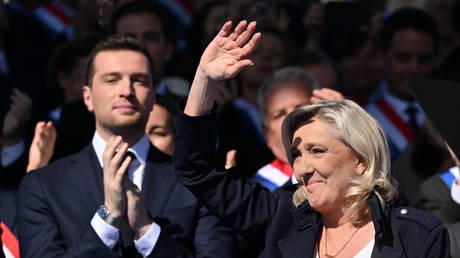
When you look at a map of French election results, you see splashes of navy blue claiming territory in the municipal heartlands. The data tells you that Marine Le Pen’s National Rally is winning. It tells you percentages, turnout rates, and seat counts. But the data won’t tell you about the retired crane operator sitting in a café in Hénin-Beaumont, watching the rain hit the pavement and wondering why the "metropolitans" in Paris seem to speak a language he no longer understands. Meanwhile, you can explore other stories here: The Calculated Silence Behind the June Strikes on Iran.
To understand why a small-town baker or a factory technician votes for a party once deemed untouchable, you have to stop looking at the polls and start looking at the sidewalks.
The Geography of Ghost Towns
For decades, the story of France was the story of the village. The mairie—the town hall—was the anchor of identity. But a slow, agonizing erosion took hold. First, the local factory moved its production to a place where labor costs less than a liter of wine. Then, the young people followed the jobs to Bordeaux, Lyon, or Paris. Finally, the state services began to retreat. The post office shortened its hours. The local maternity ward merged with a hospital an hour's drive away. To explore the complete picture, check out the excellent report by BBC News.
Imagine a man named Jean-Pierre. He is a hypothetical composite of the thousands of voters I’ve spoken with over the years. Jean-Pierre isn't a radical. He doesn't spend his nights reading political theory. He spends his nights worrying about the fact that his grandson has to drive forty minutes to see a dentist.
When the traditional parties—the Republicans on the right or the Socialists on the left—send representatives to Jean-Pierre’s town, they speak of "macroeconomic stability" and "European integration." They use words that feel like polished stones: smooth, cold, and impossible to grasp.
Then comes the National Rally candidate.
They don't talk about the GDP. They talk about the shuttered bakery on the corner. They talk about the "forgotten France." They use a vocabulary of proximity. By winning municipal elections, the party isn't just capturing a government building; it is capturing the role of the only person who seems to be listening to the silence of the provinces.
The Strategy of the Scrubber
There was a time when voting for Le Pen’s party felt like an act of rebellion or a scream of rage. It was loud, ugly, and socially expensive. You didn't admit it at Sunday lunch.
That has changed.
The strategy, often called dédiabolisation or "un-demonizing," has been a masterclass in political rebranding. In towns like Perpignan or Fréjus, the party’s mayors have focused on the hyper-local. They fix the potholes. They plant geraniums in the town square. They make sure the streetlights work.
It is the politics of the mundane.
By proving they can manage a budget and keep the streets clean, they strip away the "extremist" label. If the mayor can balance the books and organize a successful Christmas market, the voter begins to wonder why the newspapers in Paris are so terrified of them. The "invisible stakes" here aren't just about immigration or national sovereignty; they are about the validation of a lifestyle that felt like it was being erased by global forces.
Consider the psychological impact of a clean street in a town that has felt neglected for thirty years. It creates a sense of order in a world that feels increasingly chaotic. For the resident of a small town, the "Great Replacement" isn't just a demographic theory; it's the replacement of the local butcher with a boarded-up window, and the replacement of a sense of belonging with a sense of displacement.
The Great Disconnect
The divide in France is no longer just between left and right. It is between the "Somewheres" and the "Anywheres."
The "Anywheres" are the urban elite. They are comfortable in London, New York, or Paris. Their skills are portable. Their world is digital. To them, a border is an inconvenience.
The "Somewheres" are rooted. Their identity is tied to a specific patch of earth, a specific dialect, and a specific history. When the world changes, they cannot simply move. They are invested in the soil.
The National Rally has positioned itself as the guardian of the "Somewheres." While the central government in Paris pushes for green transitions that make diesel—the lifeblood of rural transport—more expensive, the local National Rally mayor talks about the "right to drive."
It is a clash of realities. One side sees a climate catastrophe; the other sees a monthly budget catastrophe. One side sees the future; the other sees a funeral for the past.
The Ripple Effect of the Local
Winning a small town is a tactical victory with a strategic payoff. Every municipal seat won provides a training ground for future national leaders. It creates a "robust" (to use a term I usually loathe, but here it fits the party’s own self-image) network of local officials who are no longer outsiders. They are the neighbors. They are the people you see at the pharmacy.
This local integration makes the party’s national rhetoric feel less like a threat and more like common sense to the local electorate. When the party wins a town, they don't just win a vote; they win the narrative of "the possible."
They demonstrate that the sky doesn't fall when they take power. The schools still open. The trash is still collected. This "normalization" is the most potent weapon in their arsenal. It turns a protest vote into a governing choice.
But what is the cost of this shift?
The invisible stake is the fraying of the cordon sanitaire—the old agreement that mainstream parties would never cooperate with the far right. As the National Rally becomes the "party of the mayors," that barrier dissolves. The local wins are the cracks in the dam. Once the water starts moving through the cracks, the pressure of the entire reservoir behind it begins to tell.
The Persistence of the Past
Despite the geraniums and the balanced budgets, the ghosts of the party’s past still linger. There are those who remember the rhetoric of the founder, Jean-Marie Le Pen, and they see the daughter’s polish as a thin veneer. They see the municipal successes as a Trojan horse.
Yet, for the voter in a town where the last train line was cut five years ago, those ghosts are less frightening than the very real specter of decline. They are willing to take a chance on the new because the old has failed them so consistently.
The tragedy of the French municipal election isn't just the rise of a specific ideology. It is the failure of the center to make the "Somewheres" feel like they still have a home in their own country.
The story of these elections is a story of a search for dignity. It is the desire to be seen by a state that has spent too long looking at spreadsheets and not long enough looking out of train windows.
As the sun sets over the tiled roofs of these small towns, the blue flags of the National Rally flutter in a breeze that feels like it’s picking up speed. The shutters are still closing in some places, but in others, people are opening their doors to a new kind of politics, one that promises to remember the names that the capital has forgotten.
The silence of the provinces has finally found a voice. It is a voice that is calm, local, and increasingly, the only one many people are willing to hear.
The coffee in the square is still hot, but the conversation has shifted forever.