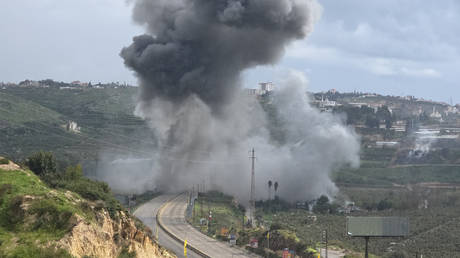
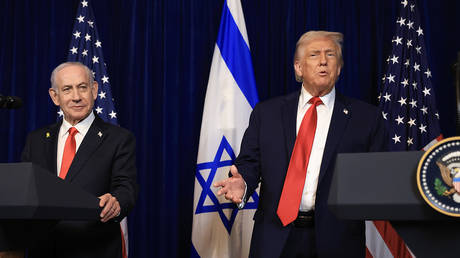
The prevailing narrative of American foreign policy often presents a image of a superpower making calculated moves on a global chessboard, but the reality is frequently more chaotic and dictated by internal fractures. Recent shifts in the White House’s stance toward Iran—moving from high-octane threats to a sudden de-escalation—trace back to a specific internal realization. The United States cannot fight a war it cannot afford, both in blood and in political capital, while its primary regional ally maintains a different set of strategic priorities. This pivot wasn't a change of heart; it was a collision with reality.
Joe Kent, a former CIA officer and advisor within the Trump administration, recently highlighted the friction that led to this climbdown. The core issue remains a fundamental disconnect between Washington’s desire for "America First" restraint and the aggressive security requirements of regional partners. While the headlines focus on diplomatic "wins" or "losses," the underlying mechanics involve a desperate attempt to restrain regional allies before they drag the U.S. into a conflict that would cripple the domestic economy. Read more on a similar subject: this related article.
The Mirage of Maximum Pressure
For years, the doctrine of Maximum Pressure served as the centerpiece of American strategy toward Tehran. The goal was simple on paper: choke the Iranian economy until the regime either collapsed or returned to the negotiating table with a weaker hand. It failed. Instead of capitulation, the strategy yielded a more defiant Iran that accelerated its nuclear enrichment and expanded its proxy network across the Levant.
When the rhetoric reached a fever pitch, the administration found itself backed into a corner. To maintain credibility, the next step after sanctions is kinetic action. However, the military establishment and key advisors like Kent realized that an open conflict with Iran would not be a repeat of the 1991 Gulf War. It would be a grinding, asymmetric nightmare. More reporting by NBC News highlights related perspectives on the subject.
The logistical reality of the Persian Gulf means that any strike on Iranian nuclear facilities or military infrastructure triggers an immediate Iranian response against global energy supplies. One third of the world's liquified natural gas and 25% of total global oil consumption pass through the Strait of Hormuz. Closing that needle’s eye for even a week would send global markets into a tailspin, a risk no president can take during an election cycle or a period of high inflation.
Restraining the Proxy and the Patron
A critical, often overlooked factor in the sudden cooling of tensions is the realization that the U.S. was losing control of the escalatory ladder. Traditionally, the United States acts as the security guarantor for its allies. But in the current landscape, the roles have blurred. Some regional partners, feeling the direct threat of Iranian influence, began pushing for a "decisive blow" that they expected the U.S. to deliver.
Joe Kent’s assertion that the U.S. must "restrain the Israelis first" points to a deep-seated anxiety in the American intelligence community. If an ally takes a unilateral action—such as an assassination or a strike on a sensitive site—the U.S. is effectively forced into the fight to protect that ally from the inevitable counter-strike. This "tail wagging the dog" scenario is the primary nightmare for proponents of American restraint.
The Cost of the Forever War Mentality
The American public has no appetite for a new front in the Middle East. After two decades in Iraq and Afghanistan, the political cost of body bags returning from a war with a sophisticated state actor like Iran is insurmountable. This domestic pressure acts as a hard ceiling on how far any administration can push its threats.
- Public Exhaustion: Polls consistently show a majority of Americans favor diplomatic solutions over military intervention.
- Fiscal Constraints: With a national debt exceeding $34 trillion, funding a massive regional war is a non-starter for the populist wing of the Republican party.
- Strategic Pivot: The Pentagon is desperate to shift resources toward the Indo-Pacific. A war with Iran tethers the U.S. to the Middle East for another decade, handing a strategic victory to competitors in Asia.
The Intelligence Gap and the Risk of Miscalculation
One of the most dangerous elements of the current standoff is the lack of direct communication channels between Washington and Tehran. In the absence of "hotlines," both sides rely on signaling through third parties or public statements. This creates a high probability of miscalculation.
During his tenure, Kent observed how easily "tough talk" intended for a domestic audience can be interpreted as an imminent threat by an adversary. When Iran perceives an existential threat, its doctrine dictates a pre-emptive or highly disproportionate response. The "climbdown" mentioned in recent reports was likely a coordinated effort by cooler heads in the State Department and the Pentagon to signal that the U.S. was not, in fact, looking for a regime-change war.
The Role of Non-State Actors
Iran’s true power lies not in its conventional navy or air force, but in its "Axis of Resistance." This network of militias in Iraq, Syria, Lebanon, and Yemen provides Tehran with a degree of plausible deniability while allowing it to strike American interests at will.
A war with Iran is not a localized event. It is a regional wildfire. The moment the first American missile hits an Iranian target, rockets would likely rain down on every U.S. base in the region. This reality forces a more cautious approach, regardless of how aggressive the public messaging might be.
Moving Toward a New Realism
The shift away from war isn't a sign of weakness; it’s an admission of limited capacity. The U.S. is currently overextended, attempting to manage a proxy war in Europe and a brewing crisis in the South China Sea. Adding a third major theater in the Middle East would break the back of the current American military posture.
Realism in foreign policy requires acknowledging that some problems cannot be "solved" through force—they can only be managed. The current administration, influenced by voices like Kent’s, is beginning to accept that a contained Iran is a more manageable outcome than a destroyed Iran that takes the global economy down with it.
The Requirement of Clear Boundaries
For this de-escalation to hold, the U.S. must establish clear "red lines" that are grounded in reality rather than rhetoric. These boundaries must be communicated not just to Tehran, but to regional allies as well.
- Direct Engagement: Establishing a reliable back-channel to prevent accidental escalation.
- Allied Accountability: Making it clear that the U.S. will not automatically bail out partners who initiate unilateral provocations.
- Economic Stabilization: Prioritizing the flow of energy over ideological victories.
The Fragility of the Current Peace
The "climbdown" is a temporary reprieve, not a permanent solution. As long as the underlying issues—nuclear proliferation, regional hegemony, and proxy warfare—remain unaddressed, the cycle of escalation will continue. The current pause is a tactical maneuver intended to buy time and prevent a total collapse of regional order.
The internal struggle within the American government between the "interventionists" and the "restrainers" is far from over. For now, the restrainers have the upper hand, simply because the math of a war with Iran doesn't add up. The risk to the American economy and the potential for a regional conflagration are too high.
Future stability depends entirely on the ability of Washington to maintain this precarious balance. It requires a level of diplomatic nuance that is often missing from modern political discourse. The true test will come when the next provocation occurs, and the administration must choose between the easy path of escalation and the difficult, often unpopular path of restraint.
American leaders must decide if they are willing to burn their own house down to light a fire in their neighbor's yard.
Check the current deployment levels of the U.S. Fifth Fleet to see how much of this "climbdown" is reflected in actual naval positioning.