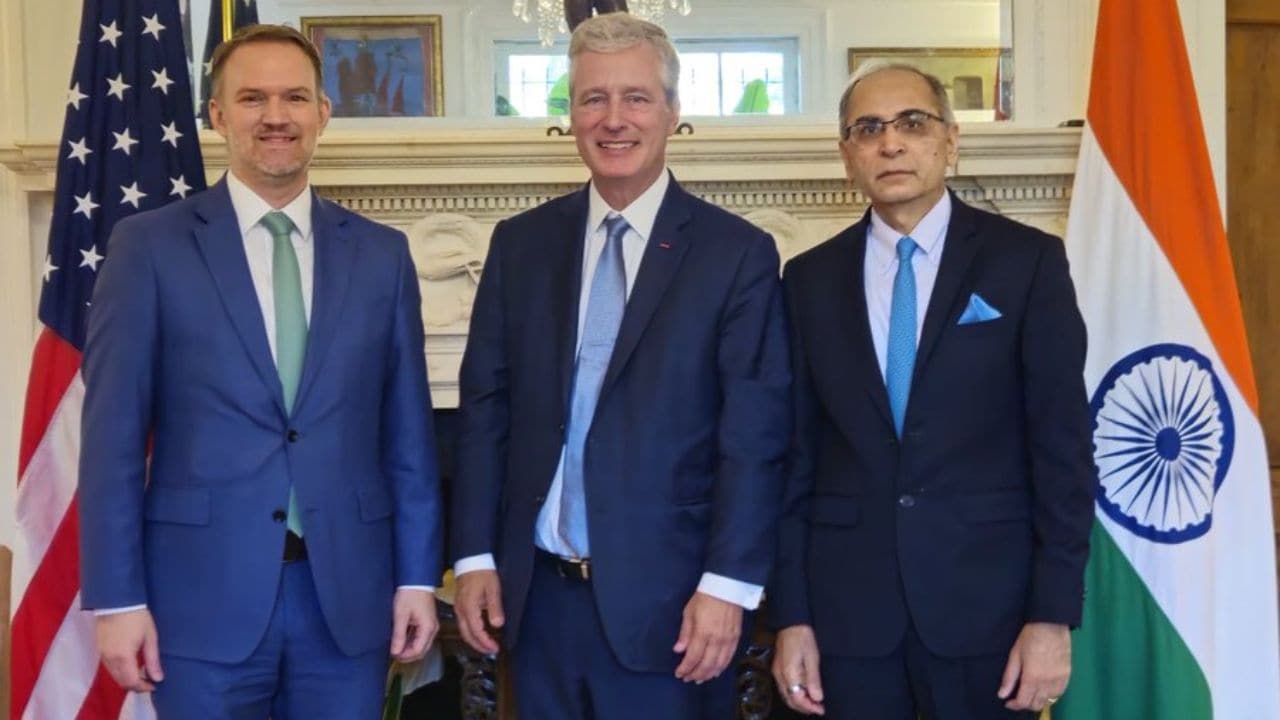
Photographs of Ambassador Kwatra and U.S. Trade Representative Greer shaking hands are the ultimate diplomatic junk food. They look satisfying in a press release, but they offer zero nutritional value for the Indian economy. While the mainstream media salivates over the "imminent" finalization of a trade deal, they are missing the glaring reality: a formal trade pact with the United States in the current protectionist climate is a strategic trap.
The "lazy consensus" suggests that a signed document equals market access. It doesn't. In the modern era of industrial policy and "friend-shoring," a trade deal is often just a sophisticated way for a superpower to export its regulatory burdens while keeping its own markets shielded by non-tariff barriers. If India wants to actually win, it needs to stop chasing the ghost of a comprehensive agreement and start playing a much dirtier, more effective game.
The Myth of the "Final Stage"
Every six months, we hear the same song. "Negotiations are in the final stages." "Only minor hurdles remain." This is diplomatic theater designed to keep markets calm and politicians looking busy.
The structural reality is that the U.S. and India are currently operating on diametrically opposed economic philosophies. Washington is doubling down on "Buy American" provisions and aggressive subsidies like the Inflation Reduction Act. New Delhi is pushing "Atmanirbhar Bharat" (Self-Reliant India) and Production Linked Incentive (PLI) schemes.
You cannot bridge the gap between two deeply protectionist agendas with a 500-page document. When Greer and Kwatra meet, they aren't solving problems; they are managing an impasse. The "hurdles" aren't minor—they are foundational conflicts regarding data localization, digital trade taxes, and agricultural subsidies. Pretending a "deal" is just around the corner is a disservice to every exporter who is actually trying to navigate the mess on the ground.
Intellectual Property is the Real Battlefield
Standard reporting focuses on shrimp, Harley-Davidson motorcycles, or pecans. These are distractions. The real war is being fought over patents and data.
The U.S. wants India to adopt "TRIPS-plus" standards—essentially extending the life of pharmaceutical patents and making it harder for Indian generic manufacturers to provide affordable medicine to the Global South. For India, agreeing to these terms in exchange for slightly lower tariffs on textiles would be a generational mistake.
I have seen trade missions where negotiators were ready to sell out long-term tech sovereignty just to get a "win" for the current news cycle. It is a sucker's bet. India’s strength lies in its ability to define its own digital and biological standards. Importing U.S. IP law wholesale isn't "modernizing"; it's surrendering the keys to the kingdom.
Why "No Deal" is the Best Deal
The most contrarian move New Delhi could make is to stop asking for a deal.
The moment you sit at a negotiating table for a formal Free Trade Agreement (FTA), you lose leverage. You become the solicitor. Instead, India should focus on sectoral mini-deals that require zero congressional approval in the U.S. and zero grandstanding in Parliament.
- Totalization Agreements: Forget the tariffs. Focus on the billions of dollars Indian professionals pay into the U.S. Social Security system that they never see again.
- Critical Mineral Supply Chains: Use the "China Plus One" anxiety to extract specific, high-value tech transfers without signing away sovereignty in a broad trade pact.
- Defense Co-production: This is where the real money is. Not in selling more mangoes, but in making GE F414 jet engines in India.
These are the "boring" victories that actually move the needle. A massive, comprehensive trade deal is a relic of the 1990s. In 2026, it’s a liability.
The Labor Standard Trap
Watch the language Greer uses. There is a constant push for "high-standard" labor and environmental chapters. On paper, this sounds noble. In practice, it is a protectionist tool used to slap sanctions on Indian goods whenever a domestic U.S. industry feels threatened.
If India signs a deal with these clauses, it is giving Washington a legal "kill switch" for Indian exports. We’ve seen this play out in various iterations of USMCA and other regional pacts. The "standards" are rarely about the workers; they are about raising the cost of production in the developing world until it's no longer competitive with automated factories in the West.
Stop Asking the Wrong Question
People always ask: "When will the trade deal be signed?"
The better question is: "Why do we still think we need one?"
The U.S. is already India's largest trading partner. Trade is growing despite the lack of a formal FTA. This proves that the market is smarter than the bureaucrats. Capital finds a way. Talent finds a way. The friction that currently exists—visa delays, retrospective taxes, and Section 232 tariffs—are issues that can be solved through executive action and bilateral persistence, not a bloated treaty that will get stuck in the throat of a divided U.S. Senate.
The Evisceration of the Middleman
The only people who truly benefit from these high-level "negotiation" summits are the consultants, lobbyists, and trade lawyers who bill by the hour to "navigate the complexity."
If you are an Indian business owner waiting for a trade deal to save your export strategy, you have already lost. The competitive advantage of the next decade won't come from a signature in D.C. It will come from dominating the mid-market manufacturing space that China is vacating.
The downside of my approach is clear: it lacks the "big splash" of a Rose Garden ceremony. It’s grinding, incremental, and unsexy. But it keeps India’s policy space intact. It prevents the country from being locked into a lopsided legal framework that favors Silicon Valley over Bengaluru.
Kwatra and Greer can meet every week for the next three years. They can exchange gifts and pleasantries. But the moment India signs a comprehensive trade deal with the current version of the United States, it will have traded its future for a headline.
Stop looking for a deal. Start looking for leverage.