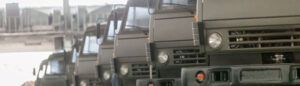
The recent acceleration in GDP growth preceding the formalization of hostilities with Iran is not an anomaly of prosperity, but a predictable mechanical response to specific fiscal and monetary stimuli typical of a "war-footing" transition. Markets often misinterpret front-loaded inventory accumulation and defense-related industrial scaling as sustainable economic health. In reality, this growth represents a reorganization of the capital structure away from consumer-led productivity and toward state-directed survivalism. Analyzing this shift requires moving beyond raw GDP prints to examine the underlying composition of growth, the velocity of capital in defense sectors, and the inevitable erosion of the private sector's purchasing power.
The Three Pillars of Pre-Conflict Growth
To understand why the economy expanded at a rate exceeding consensus expectations, the data must be disaggregated into three distinct structural drivers.
- Strategic Inventory Front-Loading: Anticipating supply chain disruptions, corporations and state entities accelerated the procurement of critical inputs—semiconductors, rare earth minerals, and petroleum distillates. This "just-in-case" transition from "just-in-time" logistics artificially inflates short-term production figures as firms pull future demand into the current quarter.
- Defense Expenditure Multipliers: Public sector investment in military readiness functions as a massive, high-velocity stimulus. Unlike social infrastructure, which has a long-tail ROI, defense spending enters the economy via immediate contracts for hardware, R&D, and logistics. This creates a temporary surge in industrial production and employment in specialized manufacturing hubs.
- The Risk-Premium Liquidity Injection: In the months leading to conflict, central banks often maintain accommodative postures to ensure sovereign debt markets remain liquid. This suppressed interest rate environment, intended to lower the cost of war-related borrowing, inadvertently fuels a final "melt-up" in equities and real estate before the inflationary pressures of active combat take hold.
The Cost Function of Synthetic Expansion
While the headline growth numbers appear favorable, the qualitative health of the economy undergoes significant degradation. This phenomenon is best understood through the lens of the Opportunity Cost of Capital. Every dollar diverted to munitions and tactical readiness is a dollar subtracted from the long-term technological and human capital development that drives real, non-inflationary growth.
The expansion is fundamentally non-productive. In a standard growth cycle, an increase in industrial output leads to a subsequent increase in consumer utility or future production capacity. In a pre-war cycle, the output—bombs, missiles, tactical gear—is designed for destruction. It is a "terminal asset" that does not generate a return on investment for the broader economy. This creates a divergence between nominal GDP (which is rising) and the standard of living (which is stagnating or declining due to the diversion of resources).
The Transmission Mechanism of Inflationary Pressure
The acceleration of growth ahead of the Iran conflict triggered a specific inflationary mechanism that differs from typical demand-pull scenarios. The primary constraint is not a lack of consumer money, but a supply-side bottleneck caused by government crowding out.
As the state secures priority access to energy, steel, and labor, the private sector faces rising input costs. The Phillips Curve—the historical relationship between unemployment and inflation—becomes distorted. Unemployment falls as the war machine scales, but because these workers are producing non-consumer goods, the supply of available products does not rise to match the increase in total wages. This creates a classic monetary imbalance where more dollars chase fewer civilian goods.
The second stage of this mechanism is the Currency Devaluation Hedge. Institutional investors, recognizing the impending deficit spending required to fund a conflict with Iran, rotate out of cash and into hard assets or commodities. This drives up the price of oil, gold, and industrial metals well before the first kinetic engagement. The "growth" reported in the headlines is, in many ways, the friction generated by money moving frantically to find safety.
Deconstructing the Labor Market Tightness
The low unemployment figures cited as evidence of economic strength are a lagging indicator that masks a shift in labor distribution. The "Total Factor Productivity" (TFP) likely declines during this phase.
- Labor Reallocation: Workers migrate from services and high-tech innovation sectors toward defense manufacturing and government administration.
- Skill Atrophy: The highly specialized skills required for defense may not be transferable back to the civilian economy once the conflict concludes or shifts in intensity.
- Wage-Price Spirals: To lure workers into accelerated production schedules, defense contractors offer premium wages funded by government debt. Private sector businesses must either match these wages, eroding their margins, or lose their workforce, reducing their output.
This creates a "high-employment, low-efficiency" trap. The economy is running at full capacity, but the "speed limit"—the maximum growth rate achievable without triggering runaway inflation—is actually lowering because the capital is being misallocated.
The Sovereign Debt Trap and the Iran Variable
The specific nature of a conflict with Iran introduces a unique geopolitical risk premium into the domestic growth equation. Iran’s role as a regional energy hegemon and its influence over the Strait of Hormuz creates a "Volatile Energy Overlay."
Economic planners, recognizing that a significant portion of global oil transit is at risk, accelerated domestic energy production and storage. This sector-specific boom in the Permian Basin and other energy hubs contributed significantly to the GDP beat. However, this is a Hedge-Based Growth rather than an Innovation-Based Growth. The infrastructure being built is designed to mitigate a disaster, not to lower the long-term cost of energy for the consumer.
The fiscal reality is that the pre-war growth was "bought" with a massive expansion of the national deficit. The debt-to-GDP ratio typically spikes in these periods, but the market ignores this as long as the growth rate stays above the interest rate. The danger arises when the conflict begins and the "growth" transitions from production to consumption (destruction), while the debt remains and the interest payments begin to crowd out all other government functions.
Strategic Divergence in Capital Markets
Investors and analysts must distinguish between the "Primary War Beneficiaries" and the "Secondary Economic Victims." The headline GDP number is an aggregate that hides a brutal divergence in performance.
- Aerospace and Defense (A&D): These firms see an expansion in both multiples and earnings. Their order books are guaranteed by sovereign credit.
- Consumer Discretionary: These sectors face a "squeeze" as disposable income is eaten by energy costs and inflation, while their supply chains are de-prioritized by the state.
- Financials: Banks benefit from increased loan demand for industrial expansion but face massive tail risk from sovereign debt volatility and potential defaults in vulnerable sectors.
The "outperformance" of the economy is essentially a transfer of wealth from future taxpayers to current defense contractors and commodity holders. It is a liquidation of future stability for current-quarter metrics.
The Threshold of Diminishing Returns
There is a point where the stimulus provided by war preparation ceases to provide a net positive to GDP and begins to act as a drag. This threshold is reached when the cost of servicing the debt required for the buildup exceeds the marginal productivity gains of the industrial expansion.
Given the current interest rate environment and the existing debt load, the "acceleration" seen ahead of the Iran conflict was likely the final peak of the cycle. The transition from the "Buildup Phase" to the "Engagement Phase" usually marks the onset of a stagflationary period. The production surge plateaus as capacity limits are hit, while the inflationary pressures from deficit spending and supply shocks continue to climb.
The Strategic Play for the Next Phase
Organizations and investors must ignore the headline growth figures and prepare for the Contractionary Pivot. The following maneuvers are necessary to navigate the transition from synthetic pre-war expansion to the reality of a war-time economy:
- De-risk from Interest-Rate Sensitive Assets: As the state competes for capital to fund the conflict, "crowding out" will drive real yields higher, regardless of central bank intervention.
- Pivot to "Input-Agnostic" Firms: Seek out companies with high pricing power and low reliance on the specific commodities (steel, energy, microchips) being monopolized by the defense sector.
- Monitor the Velocity of M2 Money Supply: If growth is accelerating while M2 is flat or declining, the expansion is purely a result of increased velocity—people spending money faster to avoid inflation—which is a classic precursor to a hard landing.
- Short-Term Hedging via Energy Volatility: The growth in energy production is a buffer, not a solution. Position for a "Supply-Shock" scenario where the cost of logistics outweighs the benefits of increased domestic output.
The "unexpected" growth was a signal of a system being pushed to its mechanical limits. The next stage is the inevitable cooling as the costs of this expansion are finally realized and the bill for the pre-war stimulus comes due.