The refrigerator usually hums a low, comforting G-sharp. It is the heartbeat of a modern home, a steady vibration that signifies safety, cold milk, and a tomorrow that looks exactly like today. When that hum stopped on a humid Friday afternoon in Cuba, it didn't just signal a mechanical failure. It signaled the collapse of a nation's sensory map.
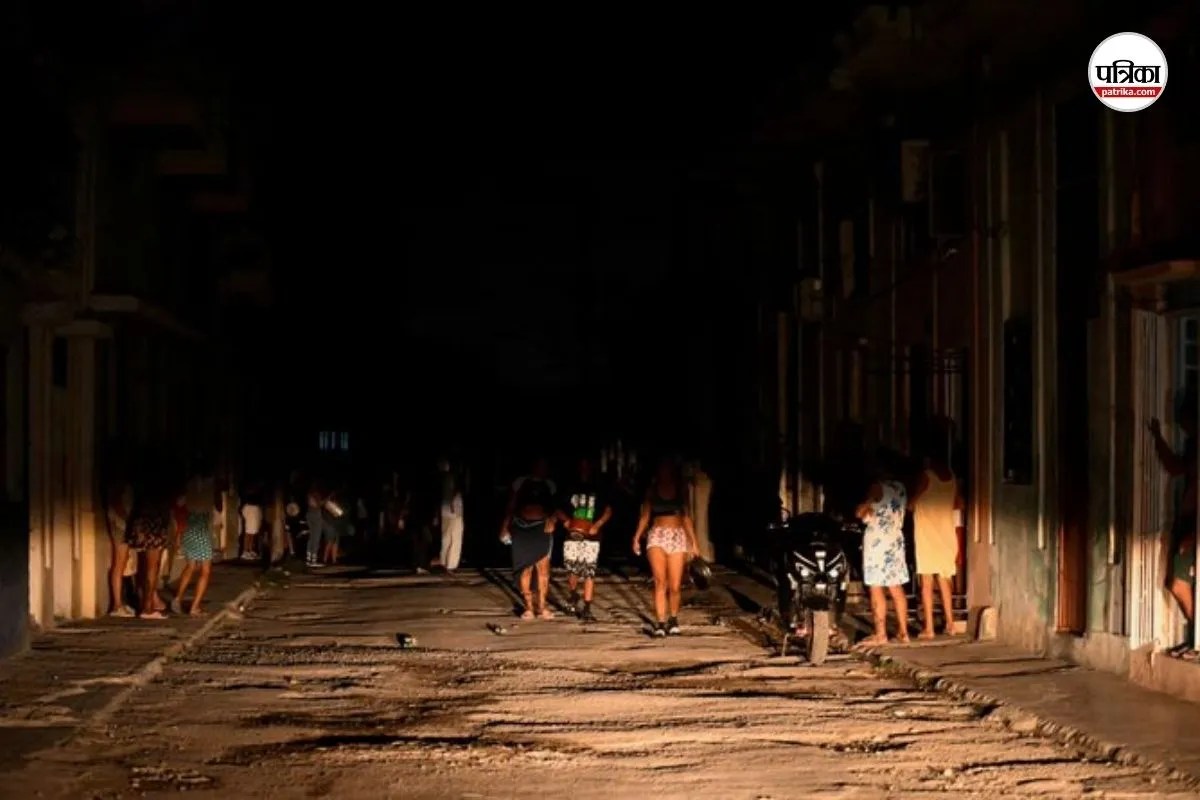
Silence in a city like Havana is a physical weight. It is heavier than the heat. Within minutes, the mechanical whir of fans died. The blue glow of television screens vanished into black glass. Ten million people suddenly found themselves standing in a world that had effectively traveled back to the nineteenth century, but without the infrastructure or the ancestral knowledge to survive it. Don't forget to check out our earlier coverage on this related article.
This wasn't a localized flicker or a blown transformer in a single neighborhood. This was the total disintegration of the national power grid. The Antonio Guiteras power plant, the aging titan of the island’s energy system, had finally given up the ghost. When it exhaled its last bit of steam, the entire country went dark.
The Anatomy of a Total Blackout
Energy is invisible until it isn't there. We treat it like air—an infinite resource that exists simply because we demand it. But for the people of Cuba, electricity has become a fickle ghost. The failure at the Matanzas plant was the final domino in a line that had been wobbling for decades. To read more about the background of this, NPR provides an in-depth breakdown.
To understand why a country of eleven million people can lose its pulse in an instant, you have to look at the skeletal remains of the grid. Most of Cuba’s thermoelectric plants are over forty years old. They are held together by the engineering equivalent of duct tape and prayer. They require a specific diet of fuel that the country can no longer afford or reliably import.
Imagine trying to run a marathon while breathing through a thin straw. That is the Cuban energy sector. When the Guiteras plant failed, the "straw" collapsed entirely. The frequency of the entire island's electrical system dropped so fast that safety protocols—where they existed—couldn't keep up. The grid didn't just trip; it shattered.
The Human Cost of 0.0 Hz
Consider a woman named Elena in a small apartment in Old Havana. She has two liters of milk, a small portion of pork, and her mother’s insulin in a fridge that is rapidly warming.
In a total blackout, time is measured by the thawing of ice.
Elena doesn't care about the geopolitical nuances of fuel shipments or the technical specifications of a turbine’s revolutions per minute. She cares about the fact that by hour twelve, the insulin loses its potency. By hour twenty-four, the meat begins to smell. By hour forty-eight, the darkness isn't just an inconvenience; it is a threat to her family’s survival.
The streets, usually vibrant with music and the clatter of life, transformed into corridors of shadows. Without streetlights, the architecture of the city felt predatory. People moved by the flickering light of cell phones, desperately hoarding their remaining battery percentages like precious water in a desert. But a phone is a useless brick when the cell towers, stripped of their backup power, also go quiet.
Isolation is the true byproduct of a blackout.
The Fragility of the Modern Mirage
We often believe that our progress is linear. We assume that once we have conquered the darkness with the lightbulb, the darkness is gone forever. This event proved that the "modern world" is actually a thin veneer stretched over a very fragile frame.
The collapse was triggered by a perfect storm of three factors:
- Infrastructure Decay: Power plants that have exceeded their lifespan by two decades.
- Fuel Scarcity: A reliance on imports that are subject to the whims of global markets and political alliances.
- Increased Demand: A summer of record-breaking heat that forced every aging air conditioner to labor until the copper cried out.
When these three forces collided, the result was a "zero-state." In electrical engineering, a black start is the process of restoring a power station to operation without relying on the external electric power transmission network. It is incredibly difficult. It is like trying to start a car by pushing it uphill while the tires are flat.
Restoration isn't a flick of a switch. It is a delicate, agonizingly slow dance. Engineers must balance the load perfectly. If they bring too many houses back online at once, the surge will crash the system again. It is a game of high-stakes chess played in the dark, where a single mistake sends millions back into the shadows.
The Sound of a Dying Grid
During the second night, the sounds changed. The silence was punctured by the roar of private generators—the heavy, rhythmic thumping of the wealthy or the lucky. It created a new kind of social map. You could hear where the money was. You could hear who had the fuel to keep the lights on and who was sitting in the stifling, mosquito-heavy heat of a Caribbean night.
The psychological impact of a total blackout is a slow-burn trauma. It erodes the sense of "now." Without the digital clocks, the glowing appliances, and the constant connectivity, the passage of time becomes elastic. You wait. You wait for a flicker in the overhead bulb that never comes. You listen for the hum of the fridge, hoping for that G-sharp to return.
The government’s response—closing schools, shutting down non-essential industries, and sending workers home—was a surrender to the inevitable. When there is no spark, there is no economy. There is only the basic struggle to stay cool, stay fed, and stay sane.
The Invisible Stakes
This wasn't just a news headline about a foreign land. It was a diagnostic report on the vulnerability of our global existence. We have built a civilization that requires a constant, uninterrupted flow of electrons to function. Our food, our medicine, our communication, and our very sense of safety are all tethered to a copper wire.
Cuba is an extreme case, a canary in the coal mine of infrastructure neglect. But the underlying physics apply everywhere. When the demand exceeds the supply, or when the machines that bridge that gap are left to rot, the darkness is only a heartbeat away.
As the sun began to rise on the third day, a few pockets of the island saw the return of the light. A dim bulb in a kitchen. A fan that groaned back to life. But the trust was gone. The people of Cuba looked at their light switches not as tools of certainty, but as symbols of a fragile truce with a failing system.
The hum of the refrigerator eventually returned for some, but it sounded different now. It sounded like a warning. It was a reminder that the shadows are always waiting at the edge of the circuit, patient and cold, ready to reclaim the world the moment the music stops.
In the end, the true tragedy of the blackout wasn't the loss of light. It was the sudden, terrifying realization of how much we have forgotten about how to live without it.