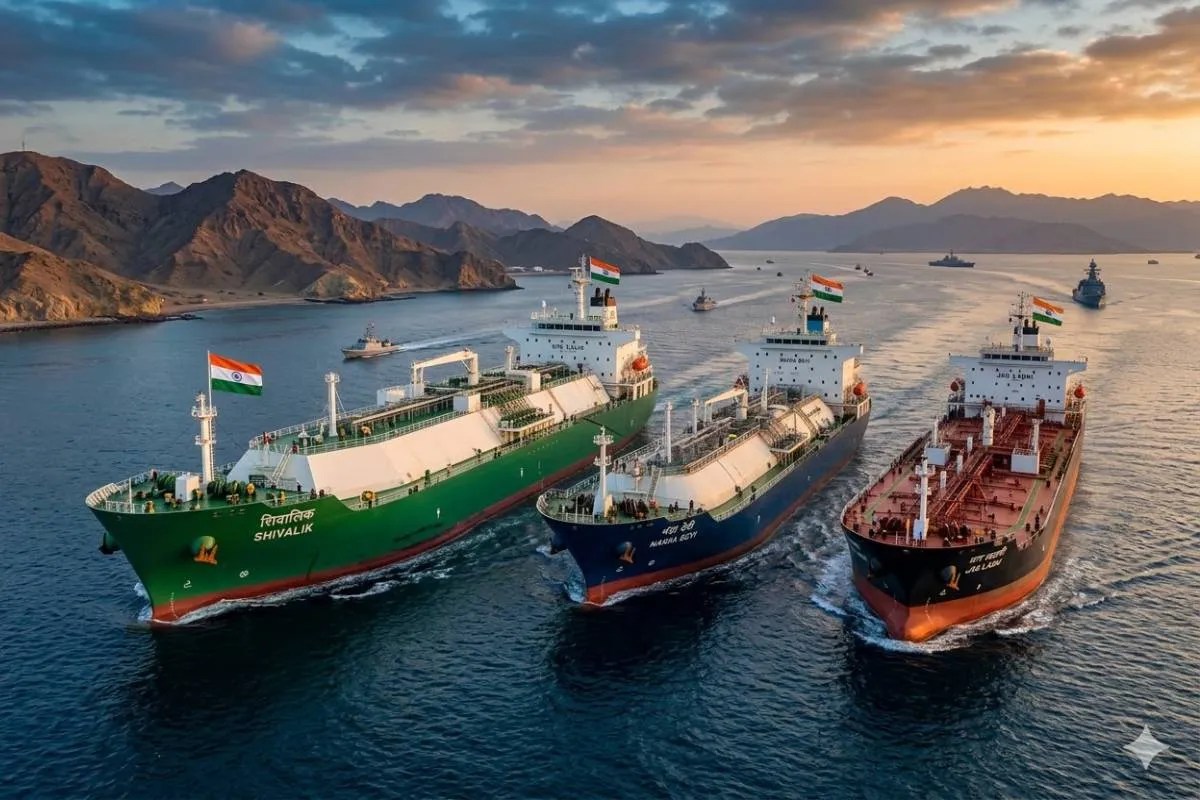
The Strait of Hormuz is the world's most dangerous choke point right now. Tensions between Iran and Israel have turned this narrow strip of water into a naval graveyard for the faint of heart. Most global shipping companies are hiking insurance premiums or avoiding the area entirely. Yet, India just pulled off what can only be described as a masterstroke in maritime logistics and diplomacy. While the world watched the missiles fly, three Indian vessels—the Shivalik, Nanda Devi, and Jag Ladki—sliced through the chaos to bring home the crude oil and gas that keeps our economy breathing.
It wasn't just luck. This was a calculated display of India's growing naval "hard power" and its unique "soft power" relationship with Tehran. When you see the prices at the petrol pump stay stable despite a literal war zone in the Gulf, you're looking at the direct result of this mission.
The High Stakes of the Hormuz Transit
To understand why this matters, look at a map. Roughly one-fifth of the world's total oil consumption passes through the Strait of Hormuz. It's only 21 miles wide at its narrowest point. If Iran decides to shut it down, the global economy hits a brick wall. For India, the stakes are even higher. We import over 80% of our oil. A significant chunk of that comes from Iraq, Saudi Arabia, and the UAE—all of which require ships to pass through this specific corridor.
The Shivalik, Nanda Devi, and Jag Ladki weren't just random boats. They represented a cross-section of India’s energy security strategy. One is a massive Suezmax tanker, another a specialized gas carrier. They were sitting ducks in a region where "shadow wars" involve limpet mines and drone strikes.
Why India Can Go Where Others Can't
You might wonder why Indian ships aren't getting seized like British or Greek tankers have been in the past. It comes down to a very delicate diplomatic balancing act that New Delhi has perfected.
India has invested heavily in the Chabahar Port in Iran. This isn't just a commercial project; it's a strategic bypass to Pakistan and a gateway to Central Asia. Because of this, Tehran views India as a vital economic partner, not just another Western-aligned customer. This "Strategic Autonomy" is India's greatest shield. We don't take sides in the Iran-Israel or Iran-US spats. We take the side of our own energy needs.
The Role of the Indian Navy
Don't think for a second these tankers were alone. The Indian Navy has been running "Operation Sankalp" for a few years now. They keep a persistent presence in the Gulf of Oman and the Persian Gulf.
When the Jag Ladki moved through the Strait, it wasn't just a commercial voyage. It was a coordinated dance between the Ministry of Shipping, the Ministry of External Affairs, and the Naval Command. Indian frigates often loiter nearby. They don't always provide a visible "shotgun" escort—that can be seen as provocative—but they maintain a "bridge-to-bridge" communication line that tells every actor in the region: "This is an Indian asset. Touch it, and you deal with us."
Breaking Down the Three Vessels
The arrival of these three ships is a massive win for Indian Oil Corporation (IOC) and Bharat Petroleum. Let's look at what they actually did.
- The Shivalik: This vessel handled the heavy lifting of crude oil. Moving a Suezmax tanker through a zone where drones are active requires nerves of steel.
- Nanda Devi: Focused on the Liquefied Petroleum Gas (LPG) side. With the festive seasons and high domestic demand, a delay in this cargo would have spiked kitchen expenses across Indian households.
- Jag Ladki: A veteran of the Great Eastern Shipping fleet. This ship’s successful transit proves that Indian private players are just as integrated into the national security grid as the state-owned ones.
The logistics of this are insane. You have to time the entry to avoid peak "harassment" hours, maintain specific speeds to minimize the profile for sea-skimming missiles, and keep the AIS (Automatic Identification System) settings in a state that balances safety with stealth.
The Economic Ripple Effect
If these ships had turned back, the "war risk surcharge" on Indian imports would have skyrocketed. We’re talking about millions of dollars in additional costs per trip. By proving that Indian-flagged vessels can safely navigate the Hormuz during an active conflict, India is effectively lowering its own "risk premium."
It also sends a message to the oil-producing nations. It tells Iraq and the UAE that India is a reliable buyer that won't flake out when the neighborhood gets loud. That reliability gets us better long-term contracts and "most favored nation" treatment when oil supplies get tight.
Common Misconceptions About the Route
A lot of people think the Indian Navy just blasts anything that comes near. That’s not how it works. It’s mostly about electronic warfare and "presence." The Navy uses advanced surveillance to track every small skiff and fast-attack craft that leaves the Iranian coast. They share this data with the tankers. Information is a better shield than a deck gun in these waters.
Another myth is that India is "pro-Iran." It isn't. India is "pro-India." We buy from whoever sells, and we protect whoever carries. If that means talking to the Revolutionary Guard one day and the US Fifth Fleet the next, so be it.
The Strategy Moving Forward
This successful transit isn't a one-off. It’s the new baseline. As global volatility increases, India is moving toward a "Blue Water" energy policy. We aren't just waiting for the oil to arrive; we are going out and fetching it with a clear-eyed understanding of the risks involved.
The masterstroke here wasn't just the sailing of three ships. It was the years of diplomatic groundwork and naval modernization that made the sailing possible. India has turned a geopolitical nightmare into a demonstration of national resilience.
Check the live vessel tracking maps for the North Arabian Sea. You'll see more Indian hulls moving through those waters than almost any other nationality right now. That’s not an accident. It’s the sound of a country securing its future. Keep an eye on the Ministry of External Affairs' briefings over the next month as they look to build on this naval momentum.