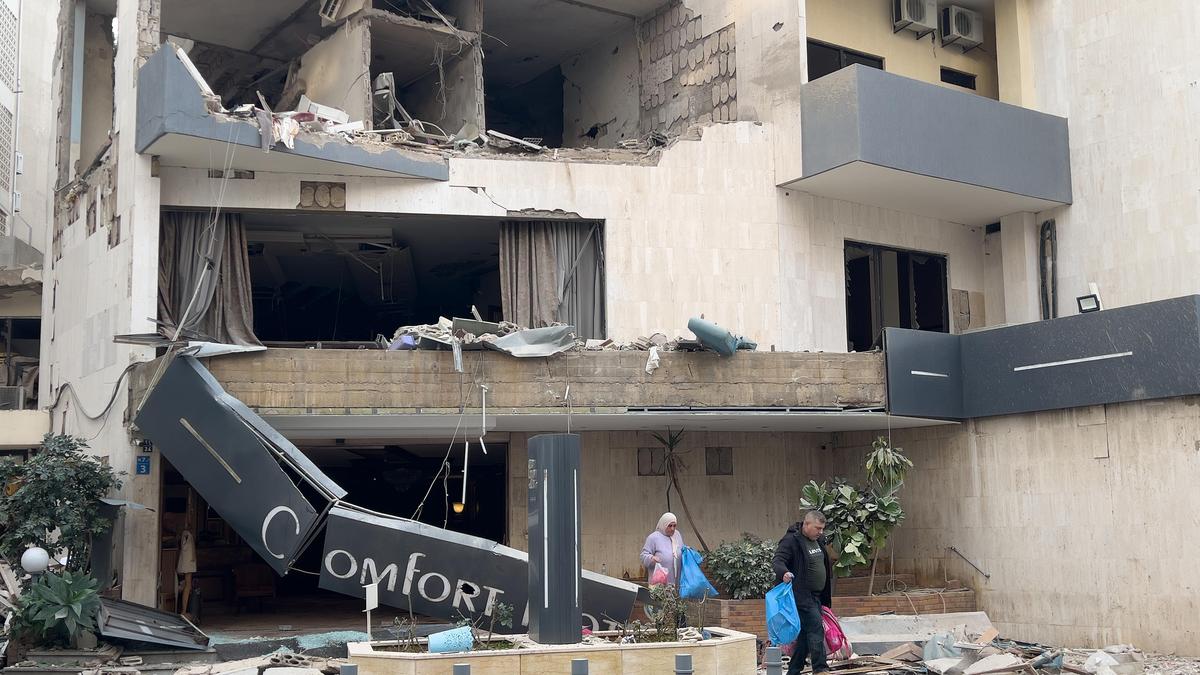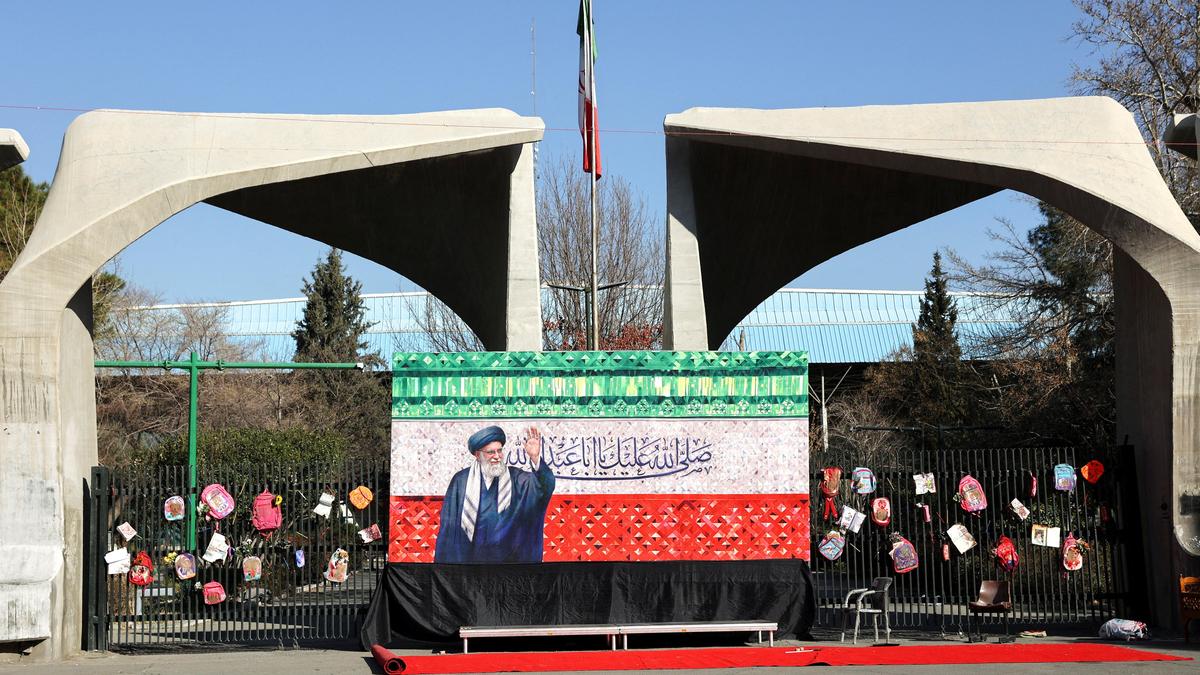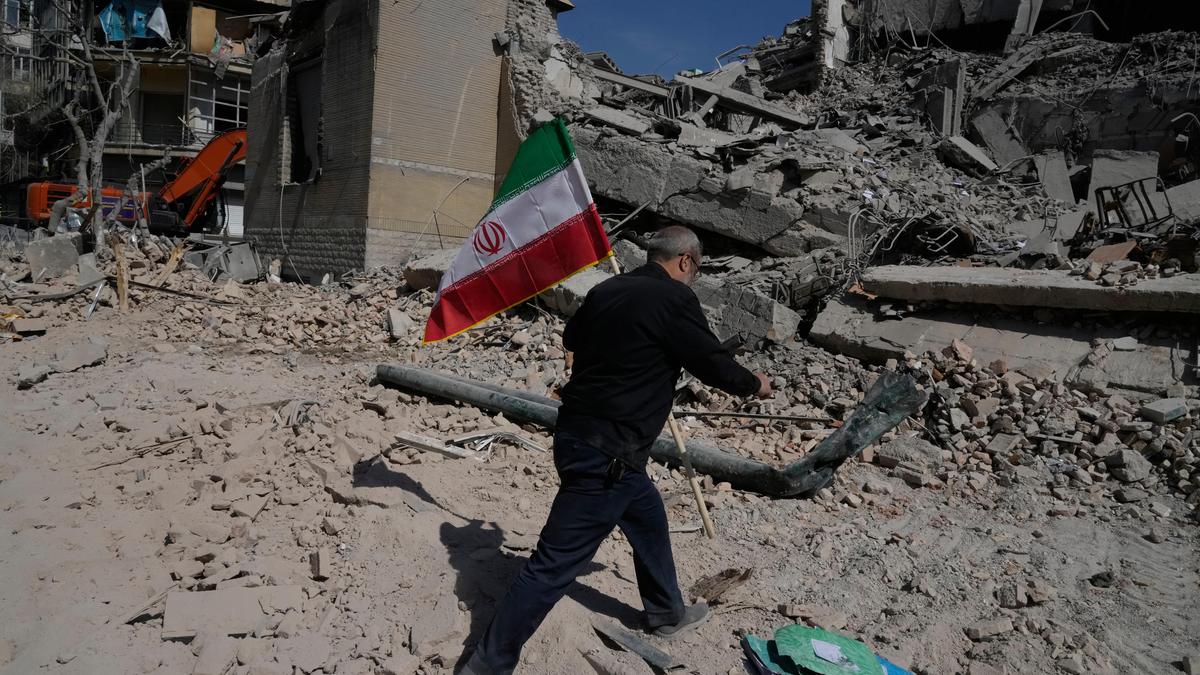
The escalation of hostilities between the United States and Iran, punctuated by recent kinetic actions and calls for internal regime shifts, represents a fundamental breakdown in the "Gray Zone" containment strategy that has defined Middle Eastern security for decades. While diplomatic rhetoric focuses on moral imperatives or immediate provocations, the underlying structural reality is a competition over the Regional Security Architecture. When Russia labels U.S. justifications as "invented threats," they are not merely disputing intelligence; they are challenging the legitimacy of the U.S. as the primary arbiter of Mediterranean-to-Gulf stability.
To understand the current volatility, one must look past the headlines of "false pretexts" and analyze the three distinct layers of the conflict: The Intelligence Asymmetry, The Sovereignty Friction, and The Proxy Equilibrium.
The Intelligence Asymmetry and the Logic of Preemption
The primary point of contention in recent diplomatic exchanges involves the validity of "imminent threat" as a legal and tactical justification for military strikes. In the context of international law, the Caroline Test remains the standard: the necessity of self-defense must be instant, overwhelming, leaving no choice of means, and no moment for deliberation.
Russia’s critique of the U.S. position centers on the erosion of this standard. By labeling threats as "invented," Moscow suggests that Washington has moved from Preemptive Strike (neutralizing a specific, verified, and immediate attack) to Preventive War (striking to prevent a potential shift in the balance of power).
The mechanism at work here is a Decision-Making Information Gap. The U.S. operates on classified signals intelligence (SIGINT) and human intelligence (HUMINT) that is, by definition, opaque to the public and to adversaries. This opacity creates a structural incentive for adversaries to claim fabrication, regardless of the intelligence's veracity. The strategic cost of this asymmetry is the loss of international "Casus Belli" legitimacy. When the threshold for kinetic action moves from "the enemy is loading a missile" to "the enemy intends to acquire the capacity to load a missile," the global security framework transitions from a rules-based order to an exercise in raw power projection.
The Three Pillars of the Iranian Resistance Framework
Iran’s response to U.S. pressure is not a series of isolated reactive measures but a calculated application of Strategic Depth. This framework is built on three specific pillars:
- Forward Defense: Utilizing non-state actors in Iraq, Lebanon, Syria, and Yemen to move the theater of conflict away from Iranian borders. This creates a "buffer of blood" where the costs of escalation are borne by third-party territories.
- Asymmetric Naval Deterrence: The ability to threaten the flow of hydrocarbons through the Strait of Hormuz. Even a 5% disruption in global oil supply creates a disproportionate shock to Western economies, making the "cost-to-kill" ratio for a full-scale conflict prohibitively high.
- Nuclear Latency: Maintaining the technical capability to produce a weapon without actually assembling one. This "threshold status" provides the leverage of a nuclear power without the immediate sanctions or military strikes that a confirmed test would trigger.
When the U.S. calls for Iranians to "seize power," it is attempting to bypass these three pillars by targeting the internal Sociopolitical Cohesion of the state. However, from a strategic consulting perspective, "regime change from within" often fails when it is signaled externally. External calls for revolution often trigger a "Rally 'Round the Flag" effect, allowing the incumbent leadership to frame domestic dissent as foreign espionage.
The Russia-Iran Interdependency Model
Russia’s vocal condemnation of U.S. actions is frequently mischaracterized as a simple alliance. In reality, it is a Functional Interdependency driven by specific geopolitical bottlenecks. Russia views Iran as a critical node in the North-South Transport Corridor (INSTC), a project designed to bypass European-controlled shipping lanes.
The Russia-Iran relationship is governed by three variables:
- Military Technology Exchange: Iran provides low-cost loitering munitions (drones) which Russia requires for high-attrition warfare in Europe. In exchange, Russia provides advanced electronic warfare (EW) suites and potentially Su-35 fighter jets.
- Sanctions Evasion: Both nations are creating a parallel financial architecture (SPFS and Shetab linkage) to insulate themselves from the SWIFT banking system.
- Multipolarity Advocacy: Russia utilizes Iranian defiance as a proof of concept that U.S. hegemony is localized rather than universal.
The Russian claim that the U.S. is using a "false pretext" serves a dual purpose. Domestically, it reinforces the narrative that Western institutions are unreliable. Globally, it positions Russia as the defender of the Westphalian System—the principle that state sovereignty is absolute and that internal governance is not the business of foreign powers. This resonates strongly with the Global South, where memories of "interventionism" remain a significant hurdle for U.S. diplomacy.
The Cost Function of Intervention vs. Containment
Any strategic analysis of the U.S. stance must quantify the difference between Active Degradation and Passive Containment.
- Active Degradation (Current U.S. trajectory): Involves targeted strikes on IRGC assets and financial networks. The benefit is the immediate reduction in the adversary's kinetic capacity. The cost is the high probability of "horizontal escalation," where the adversary strikes back in a different theater (e.g., cyberattacks on infrastructure or maritime harassment).
- Passive Containment: Relies on long-term sanctions and diplomatic isolation. The benefit is lower immediate risk of war. The cost is "sanctions fatigue" and the gradual development of the "Resistance Economy," where the target state adapts its supply chains to survive indefinitely under pressure.
The current friction arises because the U.S. has reached the Diminishing Returns stage of sanctions. With the most significant Iranian sectors already under maximum pressure, the only remaining levers of influence are kinetic or rhetorical (encouraging internal uprising).
Structural Failures in the ‘People Seizing Power’ Narrative
The U.S. call for the Iranian populace to overthrow their government ignores the Mechanics of Autocratic Resilience. Revolutions typically require three conditions: a split in the security elite, a viable alternative leadership structure, and an economic breaking point that affects the ruling class, not just the citizenry.
In the Iranian model, the Islamic Revolutionary Guard Corps (IRGC) is not just a military branch; it is a conglomerate that controls roughly 30% to 50% of the national economy. This means the security apparatus has a direct financial stake in the survival of the current political structure. When the U.S. encourages an uprising, it is asking an unarmed populace to challenge a military that is simultaneously their employer and their oppressor. Without a strategy to peel away the economic interests of the middle-tier IRGC officers, the call for power-seizure remains a rhetorical flourish rather than a viable policy.
The Proxy Equilibrium and the Risk of Miscalculation
The Middle East currently exists in a state of Unstable Equilibrium. The U.S. and Iran are engaged in a "Tit-for-Tat" game theory scenario.
$$R_{t} = \alpha + \beta R_{t-1} + \epsilon$$
In this simplified model, the response ($R$) at time ($t$) is a function of the previous action ($R_{t-1}$). The danger lies in the $\epsilon$ variable—the "noise" or "unintended escalation." A drone strike that accidentally hits a high-ranking official or a civilian center can shift the $\beta$ coefficient, leading to an exponential rather than linear escalation.
Russia’s role in this equation is to increase the "noise." By delegitimizing U.S. claims, Russia encourages Iran to maintain its posture, betting that the U.S. is too overextended in Eastern Europe and the Indo-Pacific to commit to a third major front. This creates a Strategic Overstretch trap for Washington.
The Strategic Path Forward
The U.S. must shift from a policy of "Rhetorical Interventionism" to one of Verifiable Deterrence. The current approach of condemning Iran while simultaneously calling for its citizens to revolt creates a strategic incoherence that Russia easily exploits.
- Redefining the Red Lines: Instead of vague threats regarding "regional stability," the U.S. must establish specific, quantifiable thresholds for kinetic response that are communicated privately to Tehran and publicly to the UN Security Council. This reduces the "false pretext" narrative by making the cause-and-effect of military action transparent.
- Economic Decoupling of the IRGC: Rather than broad-based sanctions that harm the general population (and fuel the U.S. "villain" narrative), focus must shift to the granular dismantling of IRGC front companies in third-party jurisdictions like the UAE, Turkey, and Singapore.
- Diplomatic Counter-Messaging: To neutralize the Russian critique, the U.S. must present "Degraded Intelligence" summaries to neutral bodies (e.g., the IAEA or the UN) prior to, or immediately following, kinetic actions. Transparency is the only antidote to the "invented threat" accusation.
- Accepting the Multipolar Reality: Washington must operate under the assumption that Russia and Iran are now a permanent strategic bloc. Policy should be designed to drive wedges between their specific interests—such as their competing roles in the Caspian energy market—rather than treating them as a monolithic "axis of evil."
The objective is not the immediate democratization of Iran—a goal that lacks a clear operational pathway—but the stabilization of the Regional Security Architecture through the re-establishment of a credible, predictable, and legally defensible deterrent. Failure to do so will result in a continued "Gray Zone" war that slowly drains U.S. resources while providing Russia with a low-cost method of degrading Western influence.