The expansion of Israeli airstrikes deeper into Lebanese territory signals a definitive shift from tactical border skirmishes to a systematic dismantling of regional stability. When eleven people die in a single wave of strikes, the narrative often gets buried under the clinical language of "military objectives" and "precision targets." However, the reality on the ground suggests a much more volatile strategy. Israel is no longer merely responding to provocations; it is actively testing the threshold of a full-scale regional war to see who blinks first. This isn't just about neutralizing launch pads. It is about the complete reconfiguration of the northern front.
The Architecture of an Expanded Conflict
For months, the friction between the Israeli Defense Forces (IDF) and Hezbollah remained confined to a predictable, albeit deadly, geography. That unspoken agreement has evaporated. By moving targets from the immediate border zone to the heart of civilian and logistical hubs, the IDF is signaling that the "rules of the game" have been discarded.
This escalation follows a specific pattern of kinetic pressure. The logic is simple: make the cost of Lebanese alignment with regional proxies so high that the internal political structure of Lebanon buckles. But history shows this is a flawed gamble. Lebanon is a country already hollowed out by economic collapse and political paralysis. Adding high-explosive ordnance to that mix doesn't usually result in a more compliant neighbor; it creates a vacuum that the most radical elements are best equipped to fill.
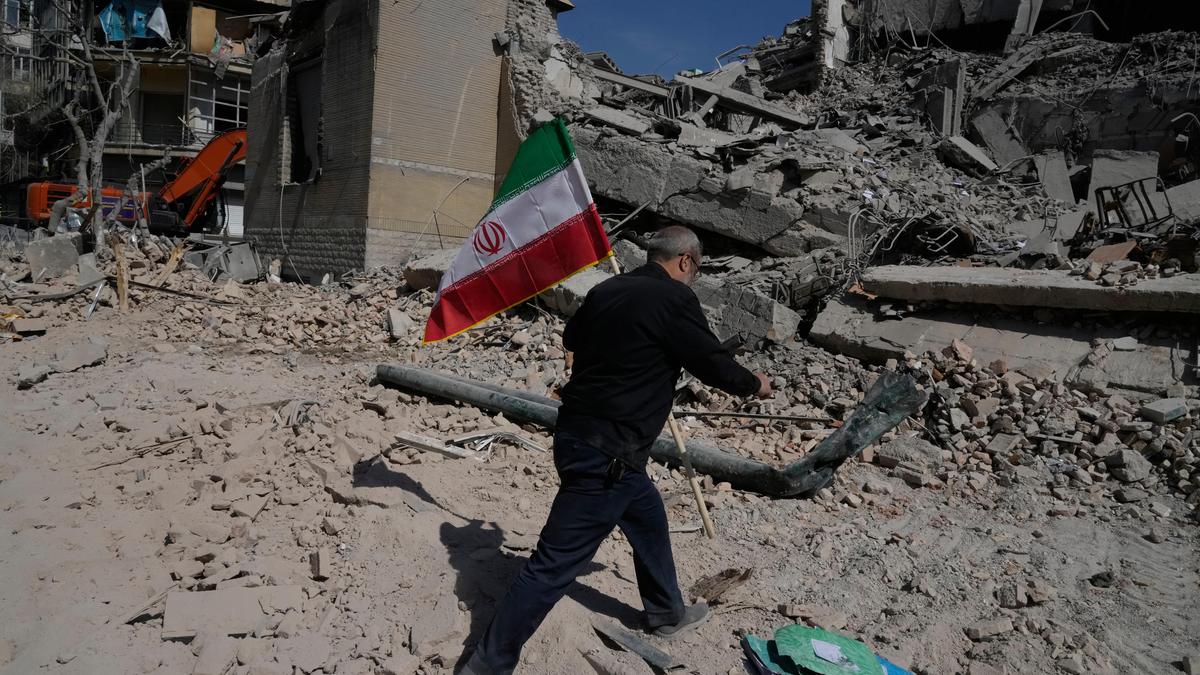
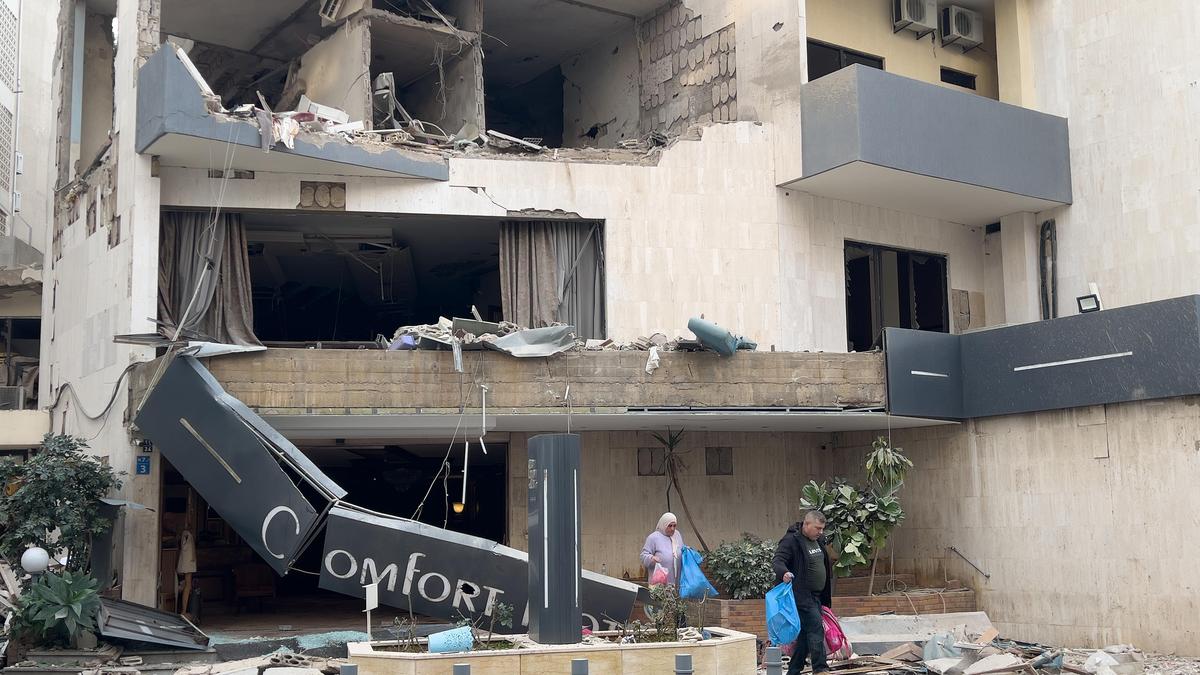
The death of eleven individuals in the latest strikes provides a grim metric for this new phase. Among the rubble, we find not just the shattered remnants of buildings, but the end of the diplomatic "buffer" that Western intermediaries have desperately tried to maintain. Every strike that drifts further north of the Litani River represents a mile further away from a negotiated settlement.
The Intelligence Failure of Pure Force
There is a persistent belief in military command centers that superior firepower can dictate political outcomes. It is a seductive thought. If you hit enough depots, kill enough mid-level commanders, and disrupt enough supply lines, the enemy must eventually sue for peace.
Yet, Hezbollah is not a conventional army that can be defeated by traditional attrition. It is a social and political entity woven into the fabric of Southern Lebanon. When strikes kill civilians or destroy non-military infrastructure, they serve as the most effective recruiting tool for the very insurgency the IDF aims to suppress.
The "why" behind the expansion of these strikes is often framed as a necessity for returning displaced Israeli citizens to their homes in the north. This is a legitimate domestic pressure for the Israeli government. However, the "how" is increasingly counter-productive. You cannot bomb a border into being safe if the result of those bombs is a generation of neighbors with nothing left to lose.
Logistics of the Long Range Strike
Modern aerial warfare relies on a complex chain of data.
- Satellite imagery identifies structural anomalies.
- Signals intelligence intercepts communications to confirm presence.
- Human intelligence provides the final "eyes on" before a trigger is pulled.
When these strikes result in high casualty counts, it suggests one of two things: either the intelligence was faulty, or the collateral damage was deemed an acceptable price for the target. In the context of the latest eleven fatalities, the international community is forced to ask where the line of proportionality currently sits. If the goal is the removal of a specific threat, but the method destroys a city block, the tactical win is swallowed by a strategic loss in the court of global opinion.
The Proxy War Paradox
We cannot analyze the strikes in Lebanon without looking at the broader map. Lebanon is the primary stage, but the directors are in Tehran and Washington. For Israel, the expanded strikes are a message to Iran that the "ring of fire" strategy will be met with disproportionate force.
Iran, conversely, uses its proxies to bleed Israeli resources without committing to a direct, state-on-state conflict that it might lose. Lebanon is the victim of this cynical math. The Lebanese people are essentially paying the price for a geopolitical chess match they didn't choose to play.
The current trajectory is a slide toward a "Third Lebanon War" that neither side claims to want, yet both sides are actively provoking. It is a classic escalatory spiral.
- Action: A rocket hits an open field in Israel.
- Reaction: A drone strike hits a Lebanese command center.
- Escalation: A retaliatory barrage hits an Israeli city.
- Counter-escalation: Heavy bombers level a neighborhood in a Lebanese town.
At each step, the participants feel their response is justified and "measured," but the cumulative effect is a steady march toward a catastrophic threshold.
The Economic Aftershocks
Beyond the immediate loss of life, the expansion of strikes is delivering a death blow to the Lebanese economy. Before the recent escalations, there were faint hopes of a tourism-led recovery. Those hopes are gone.
Investors do not put money into countries where the sky can fall at any moment. The displacement of thousands from the south has put an unbearable strain on the already failing social services in Beirut and the north. Israel’s strategy of "security through destruction" ignores the long-term reality that a totally failed state on its border is significantly more dangerous than a hostile but stable one.
A failed Lebanon becomes a playground for every non-state actor in the Middle East. It becomes a smuggling hub, a weapons laboratory, and a source of permanent instability. By expanding the target bank, Israel may be inadvertently ensuring that no stable government can ever take root in Beirut—the only entity that could actually enforce a long-term peace treaty.
The Failure of the International Community
The United Nations Interim Force in Lebanon (UNIFIL) has become a group of spectators. Their mandate, born of previous conflicts, is toothless in the face of modern, high-intensity strikes. Diplomacy is currently being conducted through the delivery of 2,000-pound bombs rather than through the halls of the UN.
The U.S. and European powers continue to call for "restraint," but these calls ring hollow when they are not backed by any real change in policy or support. Restraint is a luxury that neither side feels they can afford. For the Israeli government, restraint looks like weakness to a frightened electorate. For Hezbollah, restraint looks like a betrayal of its "resistance" branding.
We are watching the slow-motion collapse of the post-2006 order. The Blue Line is no longer a border; it is a live firing range.
The Hard Truth of the Northern Front
The death of eleven people is a tragedy, but in the cold logic of this conflict, it is a data point indicating that the buffer zone is expanding. The "why" is a desperate search for security through force. The "how" is an increasingly broad application of air power that disregards the fragile sovereignty of a neighboring state.
Ultimately, Israel cannot bomb its way to a permanent peace. The more the strikes expand, the more the conflict transforms from a border dispute into an existential struggle for the identity of the region. The real reason this strategy is failing is that it assumes the enemy is a static target rather than a fluid, evolving movement that thrives on the very destruction being rained down upon it.
The current path leads only to a larger graveyard. If the goal is truly the safety of civilians on both sides of the border, the current expansion of strikes is a pivot in the wrong direction.
Stop looking at the casualty counts as isolated incidents and start seeing them as the heartbeat of a war that has already begun, whether we choose to name it or not.