West Africa is currently the global epicenter of modern terrorism, and the numbers coming out of the region are nothing short of a catastrophe. If you’ve been following the Sahel or the broader West African region, you know things have been shaky for years. But a recent report from the Pentagon’s Africa Center for Strategic Studies reveals a terrifying acceleration. We aren't just seeing a steady increase in violence. We're witnessing a 90% surge in events involving Al Qaeda and Islamic State affiliates over the last three years.
This isn't a localized "skirmish" anymore. It's a full-blown regional collapse that the world is largely ignoring while focusing on conflicts in Europe and the Middle East. When we talk about a 90% rise, we’re talking about thousands of dead civilians, millions of displaced families, and governments that essentially stop existing once you drive thirty miles outside the capital city.
The Data Behind the Chaos
The sheer scale of this spike is hard to wrap your head around without looking at the raw totals. According to the Africa Center’s data, extremist violence in the Sahel—primarily Mali, Burkina Faso, and Niger—accounted for nearly half of all terror-related fatalities on the entire continent last year.
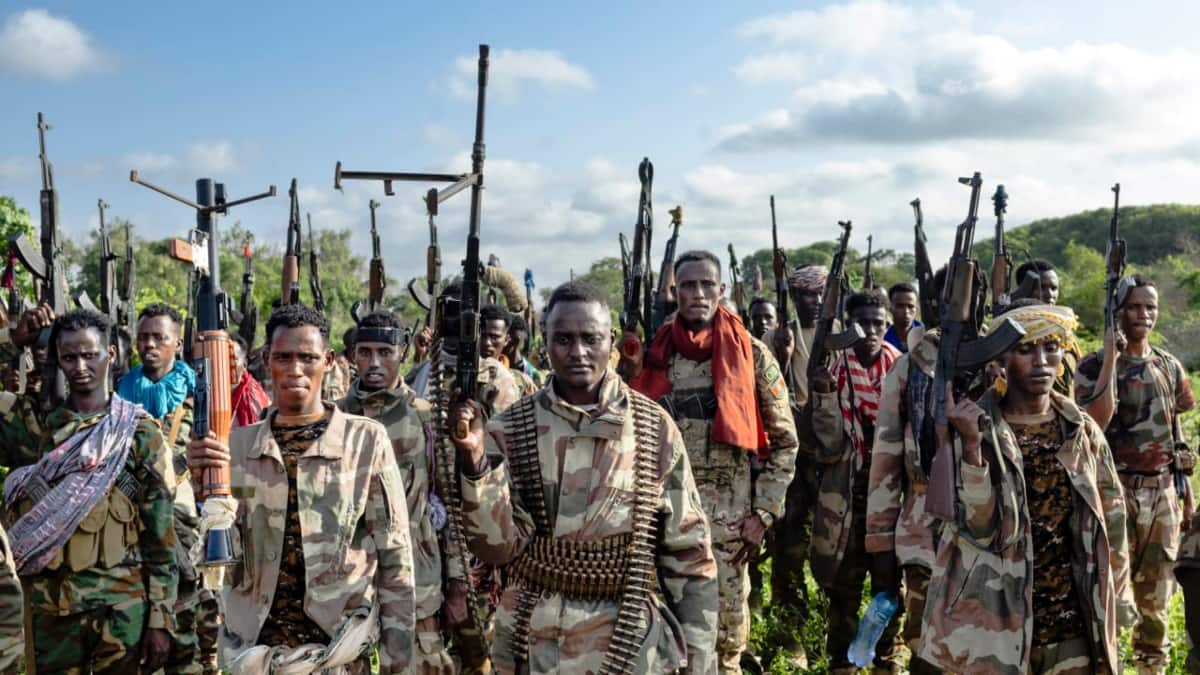
We're looking at a shift from sporadic guerrilla tactics to sustained, large-scale insurgencies. These groups aren't just hiding in the bushes. They're collecting taxes. They're running courts. They're governing. In many parts of Burkina Faso, the central government has lost control of over 40% of its territory. That’s nearly half a country gone to groups like Jama’at Nusrat al-Islam wal-Muslimin (JNIM), which is the main Al Qaeda branch there, and the Islamic State in the Greater Sahara (ISGS).
The death toll jumped from roughly 4,800 in 2021 to over 12,000 in the most recent reporting cycle. That is a staggering loss of life. It’s also a sign that the "containment" strategy used by Western powers and local militaries has failed. It didn't just fail a little bit. It crashed and burned.
Why the Surge is Happening Now
You might wonder why this is exploding now after twenty years of the "Global War on Terror." Honestly, it’s a perfect storm of bad governance, military coups, and the departure of international security forces.
Between 2020 and 2023, the region saw a wave of "khaki fever." Military juntas took over in Mali, Guinea, Burkina Faso, and Niger. These new leaders promised they’d be tougher on terrorists than the civilian governments they replaced. They kicked out French troops. They told the UN peacekeeping missions to pack their bags. In Mali, they even brought in Russian mercenaries from the Wagner Group (now rebranded under the Africa Corps).
The result? The exact opposite of what they promised.
The security vacuum left by departing French and UN forces was immediately filled by Al Qaeda and ISIS. These groups are incredibly smart. They wait for the moment of maximum political instability and then strike. When a central government is busy fighting off a coup or reorganizing its top brass, the borders become sieves. The terrorists move in, provide a twisted version of "order" to neglected rural populations, and recruit the youth who have no other economic options.
The False Promise of Mercenaries
There's a massive misconception that bringing in Russian contractors would solve the problem where Western "softness" failed. It’s a myth. Data shows that since the Wagner Group arrived in Mali, civilian casualties have actually skyrocketed. Why? Because their tactics often involve indiscriminate violence against local communities suspected of harboring insurgents.
When a mercenary group rolls into a village and kills civilians, it doesn't "clear" the area of terrorists. It creates a hundred new recruits for Al Qaeda. Terrorist groups use these atrocities as their best marketing tool. They show up the next day and tell the survivors, "The government hates you, but we can protect you." It works. It's a cycle of radicalization that keeps the 90% growth rate fueled with fresh bodies.
Regional Contagion and the Coastal Threat
This isn't staying in the desert. That’s the most alarming part of the latest US think tank findings. The violence is "leaking" south. Countries like Benin, Togo, and Ghana—nations that used to be seen as stable tourist destinations—are now reporting attacks on their northern borders.
Benin, in particular, has seen a massive jump in "security incidents." This tells us that the Al Qaeda and ISIS affiliates aren't just looking to create a caliphate in the sand. They want access to the Atlantic. They want the ports. They want the wealthier economies of the coast. If the coastal states don't get their act together soon, we won't be talking about the "Sahel crisis." We’ll be talking about the "West African collapse."
Logistics and Funding of Modern Terror
These groups aren't just guys with old AK-47s anymore. They’re well-funded and highly mobile. Much of their money comes from illegal gold mining. West Africa is dotted with "artisanal" gold mines—small, unregulated pits in the ground. In many cases, Al Qaeda affiliates seize these mines and tax the miners. They’ve essentially built a shadow economy that bypasses the global banking system.
They also control smuggling routes for cigarettes, drugs, and even human trafficking. This isn't just religious extremism. It’s organized crime with a theological veneer. They’ve mastered the art of being "local." They speak the local languages, they marry into local families, and they exploit ethnic tensions that have existed for centuries.
The Failure of "Military First" Solutions
If we've learned anything from the 90% rise in attacks, it’s that you can’t kill your way out of this. For a decade, the strategy was: find the bad guys, drop a bomb, repeat. It didn't work.
The real drivers of this violence are:
- Massive unemployment among people under 25.
- A total lack of basic services like water, schools, and clinics in rural areas.
- Corruption that makes the average person hate their own government more than they fear the insurgents.
- Climate change destroying traditional grazing lands, leading to bloody conflicts between herders and farmers.
Terrorists exploit these grievances. Until the "root causes" move from a PowerPoint slide into actual policy, the numbers will keep climbing.
What You Can Actually Do
Staying informed is the first step, but it feels distant. However, the stability of West Africa affects global security, migration patterns, and even the price of commodities. If you're involved in international policy or just care about global stability, the move here isn't to call for more "boots on the ground."
We need to support local civil society groups in West Africa that are actually doing the work of deradicalization. We need to pressure international bodies to focus on border security for the coastal states before it’s too late.
The 90% rise in attacks is a red alert. It’s a sign that the current global strategy is a total loss. We need to stop looking at the Sahel as a fringe problem and start treating it like the global security emergency it clearly is.
Start by following organizations like the Africa Center for Strategic Studies or the International Crisis Group. They provide the ground-level data that mainstream news often misses. Don't wait for the next major city to fall before you pay attention. The time to pivot the strategy was yesterday. The next best time is right now.