The air inside a nuclear enrichment facility doesn't smell like science fiction. It smells like industrial floor wax and the low-frequency hum of machinery that never sleeps. Somewhere in the heart of Iran, thousands of silver cylinders have been spinning for years, moving at speeds that defy the casual imagination to separate isotopes of uranium. For a long time, those spinning cylinders represented a ticking clock that the rest of the world watched with held breath.
Now, the clock has been paused. Or perhaps, it has been dismantled.
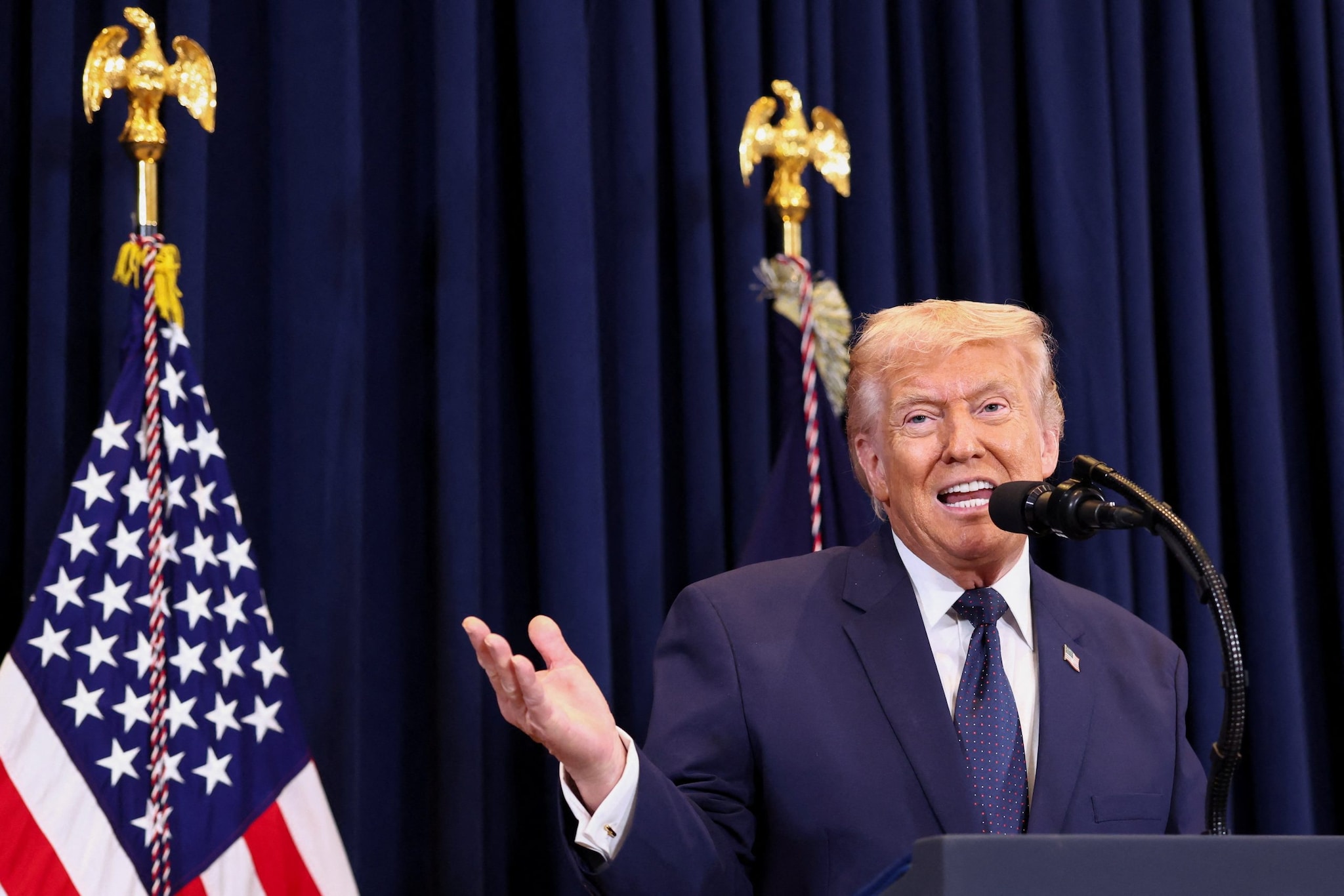
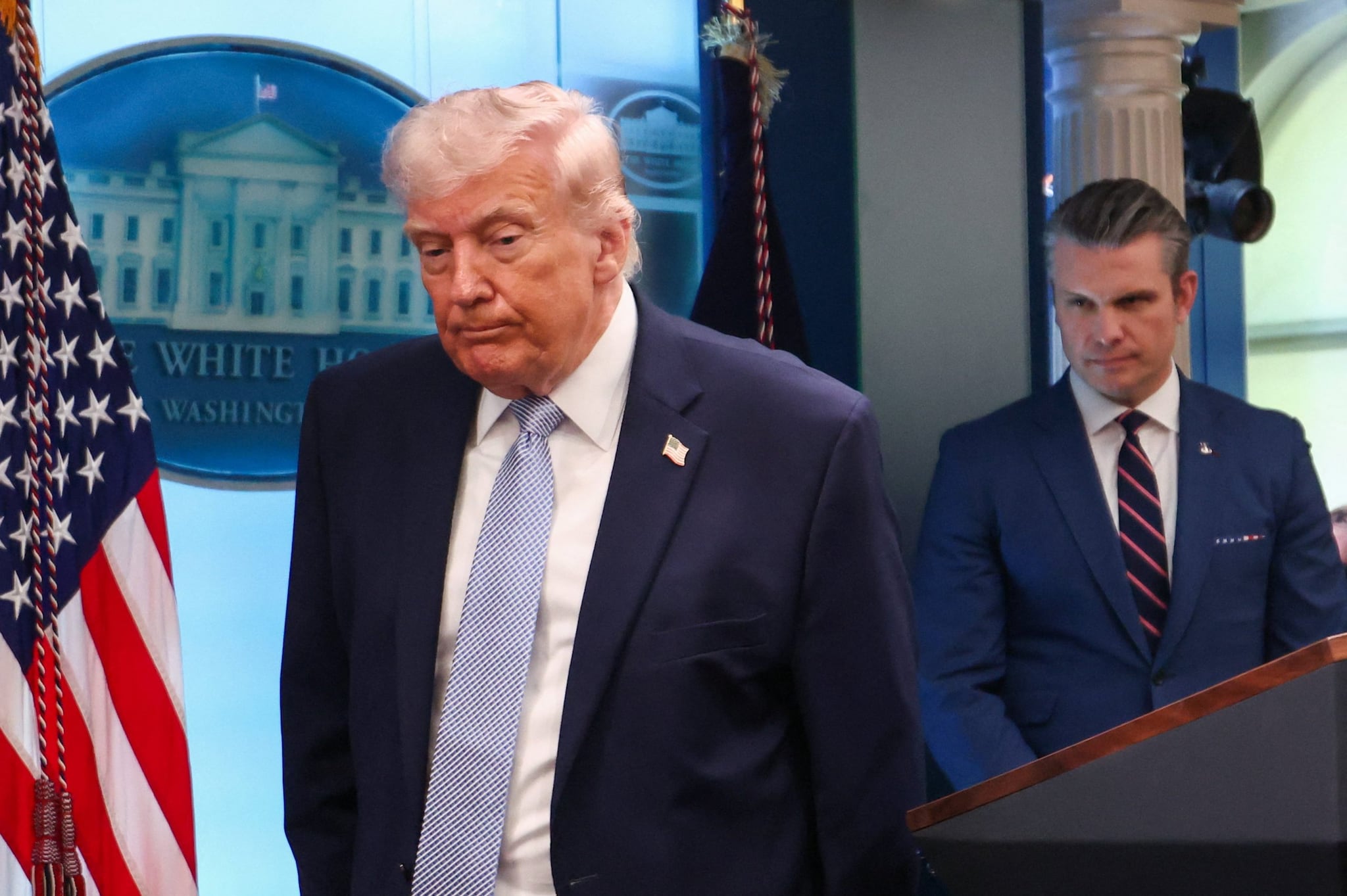
Donald Trump recently stood before the cameras to announce a truce, a moment he described not just as a diplomatic success, but as a "complete win." The central pillar of this victory, according to the president, is that Iran’s uranium—the raw material for both power and potential destruction—will be "perfectly taken care of." It is a phrase that sounds more like a promise from a high-end concierge than a geopolitical safeguard, but it carries the weight of a generation's worth of anxiety.
To understand why this matters, you have to look past the podiums and the press releases. You have to look at the material itself.
Uranium is a strange, heavy metal. In its natural state, it is relatively harmless, a dense rock buried in the earth. But when it is refined, it becomes a vessel for immense power. Think of it like a spring being wound tighter and tighter. At lower levels of enrichment, it provides the steady, glowing warmth that powers cities. At higher levels, the spring is coiled so tight that its release can level those same cities.
For decades, the global community has lived in a state of perpetual calculation. Analysts in windowless rooms in D.C., Tel Aviv, and Brussels spent their lives measuring the "breakout time"—the window of weeks or months it would take for those spinning centrifuges to produce enough highly enriched material for a weapon. It was a math problem with existential stakes.
Under this new truce, that math has changed. The president’s assertion that the material will be "taken care of" implies a shift from confrontation to custody. The spinning stops. The material is moved, diluted, or placed under a level of surveillance so granular that the "breakout" becomes a mathematical impossibility.
Consider a hypothetical engineer in Natanz, let’s call him Omid. For a decade, Omid’s daily life has been defined by the maintenance of these machines. He knows the exact vibration of a centrifuge that is about to fail. He understands the terrifying beauty of the physics involved. To Omid, the uranium isn't a political talking point; it is a volatile substance that requires constant, meticulous care.
When the rhetoric between nations heats up, Omid’s job becomes a flashpoint. Every turn of the wrench is scrutinized by satellites thousands of miles above his head. The truce changes Omid’s morning. It turns a site of global tension back into a workplace. The "complete win" the president speaks of is, for people like Omid, a return to a world where their labor doesn't inadvertently invite a rain of fire.
But how do you "perfectly" take care of something as dangerous as enriched uranium?
The logistics are staggering. You don't just put it in a box. It involves international inspectors—men and women with clipboards and Geiger counters—who live out of suitcases and spend their days verifying seals and counting canisters. It involves technical protocols that ensure not a single gram goes missing. When the president uses the word "perfectly," he is betting on a system of transparency that has historically been fragile.
The skeptics will tell you that trust is a luxury we can’t afford. They point to the long history of shadows and mirrors in the region. They argue that a truce is merely a tactical pause, a way for an adversary to catch their breath. They see the uranium not as "taken care of," but as hidden.
Yet, there is a different way to view this moment.
History isn't just a series of battles; it's a series of choices. Every time a nation decides to step back from the edge of the screen, the world gains a little more room to breathe. The president is leaning into a brand of diplomacy that prioritizes the "art of the deal" over the dogma of old conflicts. He isn't talking about ideology; he is talking about results. By framing the uranium as a solved problem, he is attempting to remove the primary engine of the conflict.
The stakes are invisible until they aren't. We don't think about nuclear enrichment when we're buying groceries or taking our kids to school. We only think about it when the headlines scream of "red lines" and "imminent threats." This truce is an attempt to push those headlines back into the shadows. It is an attempt to make the invisible stakes stay invisible.
If the uranium is indeed "perfectly taken care of," it means the silver cylinders in Iran stop being a countdown. It means the "breakout time" becomes an irrelevant metric.
It is easy to get lost in the jargon of geopolitics. We talk about "Joint Comprehensive Plans," "sanction relief," and "enrichment percentages." But the heart of the matter is much simpler. It’s about the vault.
Imagine a massive, lead-lined vault. Inside sits the material that has dictated the foreign policy of the 21st century. One path leads to the vault being pried open, its contents used to assert dominance through the threat of ruin. The other path—the one the president claims we have now taken—leads to the vault being locked, the key held by a collective of eyes that do not blink.
The "complete win" isn't just about a signature on a piece of paper. It’s about the removal of a shadow.
The human element of this story isn't found in the leaders shaking hands. It’s found in the millions of people who live in the crosshairs of a potential conflict. It’s found in the soldiers who won't have to be deployed, the families who won't have to flee, and the future that won't be defined by a mushroom cloud.
We are often told that the world is a chaotic, uncontrollable place. We are told that some conflicts are eternal and some weapons are inevitable. This truce challenges that narrative. It suggests that even the most volatile problems can be managed, contained, and "taken care of."
There is a certain audacity in the word "perfectly." In a world of frayed edges and broken promises, perfection is a tall order. But in the realm of nuclear physics, anything less than perfection is a catastrophe. The president knows this. The inspectors know this. Omid, the engineer, knows this.
The machinery of war is loud, expensive, and heavy. The machinery of peace is often quiet, boring, and technical. It looks like a seal on a door. It looks like a sensor on a pipe. It looks like a shipment of material being moved across a border under the cover of night, destined for a facility where it can no longer do harm.
As the dust settles on the announcement, the focus will shift to the "how." How will the inspections work? How will the compliance be measured? These are the questions for the bureaucrats and the scientists. For the rest of us, the story is about the relief of a tension we had almost forgotten we were carrying.
The spinning has stopped. The heat is dissipating. The material is being moved into the quiet of the vault.
Somewhere in a facility deep underground, a light is turned off, a door is locked, and for the first time in a long time, the silence is not a warning, but a reprieve.