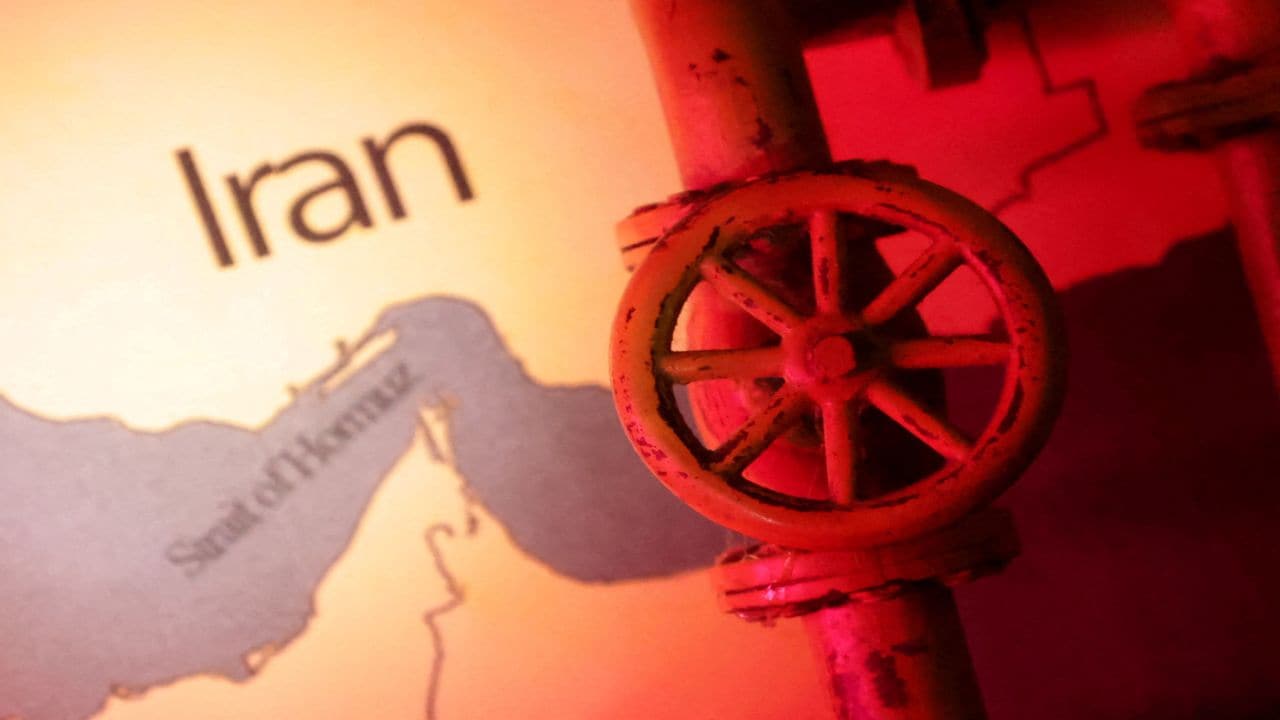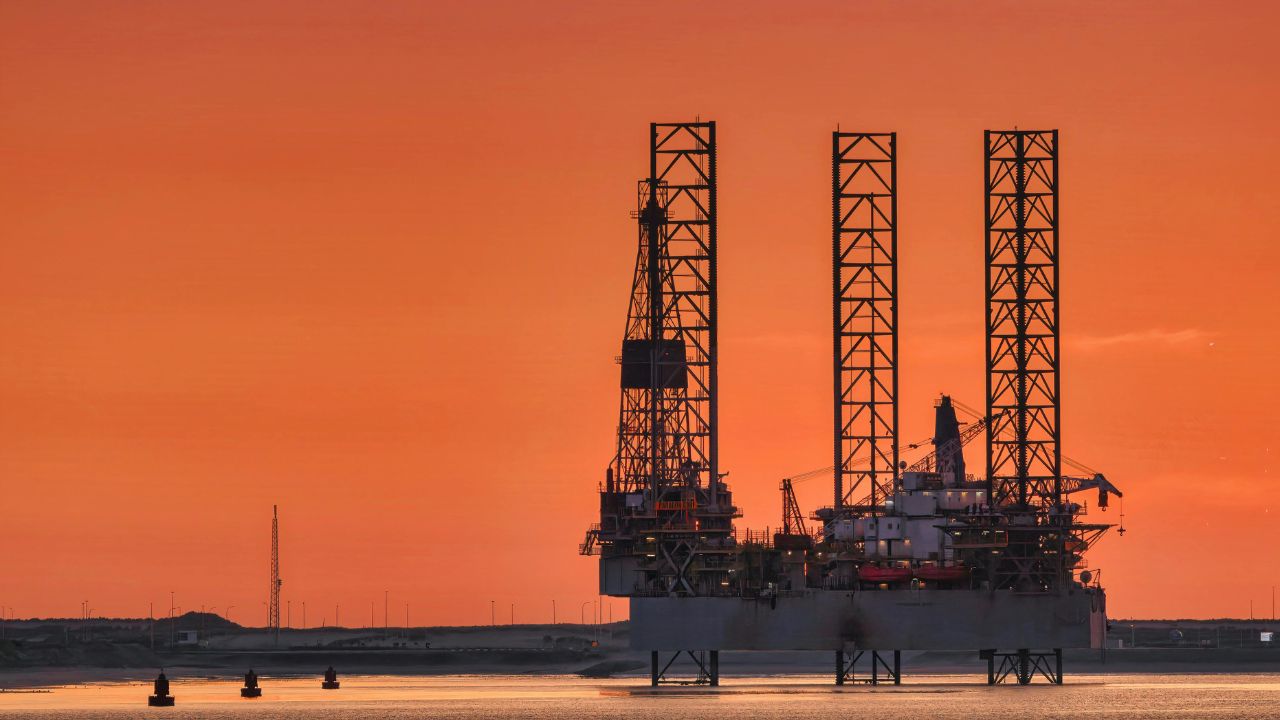
Somewhere in the middle of the Strait of Hormuz, a supertanker named the Abqaiq pushes through the heavy, salt-crusted air. Below deck, the vibration of the massive diesel engines is a constant, bone-deep hum. The captain knows that the water beneath his hull is barely thirty miles wide at its narrowest point. But the "navigable" part—the actual deep-water lanes that can carry two million barrels of crude—is only two miles wide in either direction.
If you want to understand why your morning commute might suddenly cost twice as much, or why a factory in a suburb you’ve never visited might go dark, you have to look at those two miles. It is the most expensive real estate on Earth.
Anil Trigunayat, a man who spent decades in the hushed corridors of diplomacy, knows that this stretch of water is less a shipping lane and more a tripwire. When he speaks of "oil shock risks," he isn't talking about abstract numbers on a screen. He is talking about the physical reality of a world that breathes through a straw.
The Fragility of the Flow
Think of the global economy as a complex, living organism. If the heart is industry and the limbs are commerce, the Strait of Hormuz is the carotid artery. Roughly one-fifth of the world’s total oil consumption passes through this tiny gap every single day.
Imagine a hypothetical small-business owner named Elena. She runs a delivery fleet in a mid-sized city. She doesn't track Middle Eastern geopolitics. She doesn't know the difference between a VLCC (Very Large Crude Carrier) and a tugboat. But when a shadow falls over Hormuz, the price of the fuel she buys at a pump five thousand miles away spikes within hours.
Speculation travels faster than tankers.
Trigunayat points to a terrifyingly simple truth: uncertainty is its own kind of weapon. You don't actually have to sink a ship to cause a global crisis. You only have to make the world believe you might. When insurance premiums for these vessels skyrocket, that cost isn't absorbed by the shipping giants. It is passed down, cent by cent, until it hits Elena’s gas card.
A History Written in Black Gold
This isn't the first time we've stood on this ledge. The ghost of the 1970s still haunts the halls of every central bank. Back then, the shock wasn't a slow burn; it was a cardiac arrest. People waited in lines that stretched for blocks just to get enough gasoline to get to work.
Today, the stakes are even higher because our "just-in-time" world has no fat left on its bones. We operate on razor-thin margins. Most nations keep strategic reserves, sure, but those are temporary bandages for a severed limb.
The Strait is flanked by Iran on one side and Oman and the UAE on the other. It is a theater of constant tension. Trigunayat observes that the current "pervasive uncertainty" is fueled by a cocktail of regional rivalries and the creeping involvement of global superpowers. When a drone flies too close to a tanker, or a naval exercise gets too loud, the digital tickers in London and New York start to bleed red.
The Invisible Chains
We like to think of ourselves as independent. We talk about green energy and the "transition" as if it has already happened. But the reality is much grittier. We are still tethered to the seabed of the Persian Gulf by invisible chains of supply and demand.
Consider the "risk premium." This is the extra amount investors pay because they are afraid. Right now, that premium is baked into every gallon, every plastic toy, and every head of lettuce transported by a truck. If the Strait were to close—even for a week—the resulting shockwave wouldn't just be an "oil story." It would be an everything story.
The price of Brent crude could realistically blow past $100, $120, or even $150 a barrel. At those levels, the math of modern life stops working. Airlines go insolvent. Fertilizer prices—which are tethered to energy costs—make food production a losing game. The "human element" here isn't just a captain on a ship; it’s a father at a kitchen table wondering why bread costs fifty percent more than it did last month.
The Diplomat’s Warning
Anil Trigunayat doesn't use the language of panic. Diplomats aren't paid to panic; they are paid to weigh the weight of a silence. He looks at the current stalemate and sees a lack of exits.
When he talks about the "rise of oil shock risks," he is signaling that the usual safety valves are failing. In the past, a crisis in the Middle East might be balanced by increased production elsewhere. But today, the spare capacity is low, and the political will is fractured.
The world is watching a high-stakes game of chicken played with vehicles that take three miles just to come to a full stop.
The danger isn't necessarily a grand, declared war. It’s the "accidental spark." A nervous radar operator, a miscommunication between bridge and shore, or a rogue actor looking to make a point. In a space as tight as Hormuz, there is no room for error.
The Cost of the Straw
If you’ve ever tried to drink a thick milkshake through a thin, cracked straw, you know the frustration. You pull harder, but you get less. Eventually, the straw collapses.
The global energy market is currently pulling very hard on a very thin straw.
We find ourselves in a strange paradox. We are more technologically advanced than at any point in human history, yet we are still beholden to a few fathoms of water in a volatile corner of the globe. We have built a skyscraper of an economy on a foundation made of glass.
The captain of the Abqaiq watches the horizon. He sees the grey silhouettes of warships and the flickering lights of the coast. He knows that his cargo is the lifeblood of a dozen nations. He also knows that he is sailing through a bottleneck that could tighten at any moment.
There is no easy fix. You cannot widen the Strait. You cannot easily bypass it—pipelines exist, but they can only carry a fraction of what the tankers hold. The only real solution is the one thing that seems most in short supply: stability.
Trigunayat’s insight serves as a cold splash of water. He reminds us that while we argue over interest rates and tech stocks, the physical world still dictates the terms of our survival. The "uncertainty" he speaks of is a heavy, physical weight. It sits on the shoulders of every consumer, every politician, and every ship's captain.
As the sun sets over the Persian Gulf, the water turns a deep, bruised purple. The tankers keep moving, one after another, in a slow, rhythmic procession. They are the pulse of the world. But a pulse can skip. And when a pulse skips in the Strait of Hormuz, the whole world feels the heart attack.
We are all passengers on those ships, whether we like it or not, staring at a horizon that refuses to stay clear.