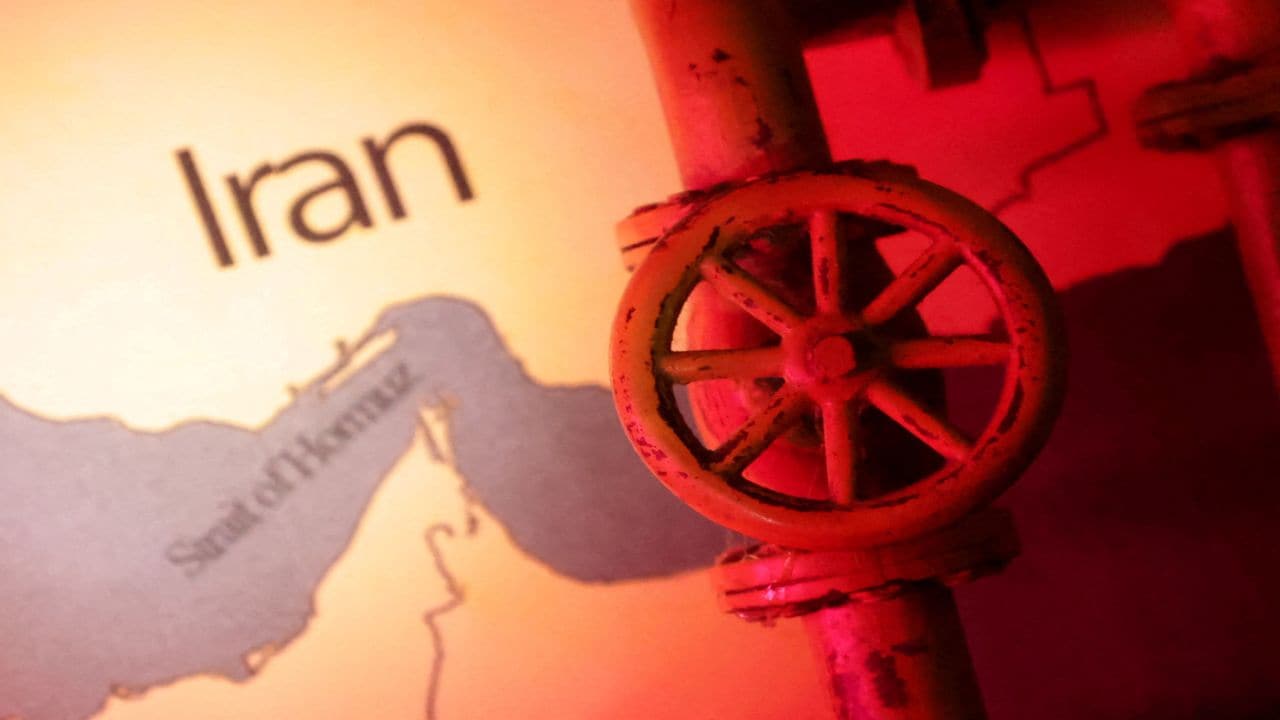
The arithmetic of global energy security is currently being rewritten by a narrow, twenty-one-mile-wide strip of water. As tensions between Washington, Tel Aviv, and Tehran escalate toward a flashpoint, the Strait of Hormuz is no longer just a chokepoint—it is a ticking clock. For decades, the Gulf monarchies relied on the sheer scale of the U.S. Fifth Fleet to keep the oil flowing. That certainty has evaporated. Today, the threat of a full-scale regional war has forced a desperate, multi-billion-dollar pivot toward land-based infrastructure that bypasses the Persian Gulf entirely.
The shift is not a temporary reaction to a news cycle. It is a fundamental decoupling. Saudi Arabia, the United Arab Emirates, and even Iraq are frantically investing in pipelines and port expansions that exit into the Red Sea or the Gulf of Oman. They are betting that the age of maritime dominance in the Gulf is ending, replaced by a "Continental Pivot" where survival depends on how far one can stay away from the Iranian coastline.
The Myth of Total Maritime Security
For half a century, the global economy operated under the assumption that the Strait of Hormuz was "too big to fail." With roughly 20% of the world’s daily oil consumption passing through this narrow neck, the consensus was that no actor—not even a desperate Iranian regime—would dare shut it. Total closure was viewed as a form of economic suicide that would invite immediate, devastating intervention.
That logic is dead. Recent history shows that a total blockade isn’t necessary to cause global chaos. Low-intensity "shadow wars"—involving magnetic mines, drone swarms, and the seizure of commercial tankers—have proven that Iran can spike insurance premiums and disrupt shipping schedules without firing a single ballistic missile at a carrier strike group.
This realization has hit Riyadh and Abu Dhabi with sledgehammer force. If the U.S. and Israel move against Iranian nuclear or military infrastructure, the retaliatory strike won't just be kinetic; it will be economic. The Gulf nations realize they are currently trapped in a geographic cage where their primary export revenue remains at the mercy of their primary geopolitical rival.
The East-West Pipeline and the Red Sea Gamble
Saudi Arabia’s answer to this vulnerability is the Petroline, or the East-West Pipeline. This massive artery stretches across the desert, linking the oil-rich Eastern Province to the port of Yanbu on the Red Sea.
On paper, this is a masterstroke. It allows the Kingdom to move five million barrels a day (bpd) without ever entering the Persian Gulf. However, the plan has a massive, often overlooked flaw: the Red Sea is no longer a safe haven. The rise of sophisticated Houthi militia capabilities in Yemen has turned the Bab el-Mandeb strait into a second chokepoint.
By moving their export focus from the Strait of Hormuz to the Red Sea, the Saudis have effectively traded one tactical nightmare for another. Investigative looks at satellite imagery of the Yanbu terminals show massive expansion, but they also reveal a frantic hardening of defenses. It is a race between infrastructure and an evolving drone threat that costs $20,000 to build and $2 million to intercept.
UAE and the Fujairah Shortcut
The United Arab Emirates has been more surgical in its approach. The Habshan-Fujairah pipeline is perhaps the most strategic piece of steel in the Middle East. It carries crude from the inland fields of Abu Dhabi directly to the port of Fujairah, which sits outside the Strait of Hormuz on the Gulf of Oman.
This 230-mile pipeline can handle roughly 1.5 million bpd. It is the UAE’s "get out of jail free" card. But here is the catch that analysts rarely discuss: Fujairah is a bunkering hub and a storage facility, not a replacement for the massive loading capacities of the Persian Gulf terminals. If Hormuz closes, the world loses 20 million bpd. The Fujairah bypass handles less than 10% of that deficit. It is a life raft for the UAE, but it is not a bridge for the global economy.
The High Cost of the Land Bypass
Building pipelines across deserts isn't just a matter of engineering; it’s an exercise in extreme capital expenditure. To truly bypass the Strait, the Gulf Cooperation Council (GCC) would need to spend upwards of $100 billion in new pipe, pumping stations, and deep-water ports.
These costs are being eaten at a time when these nations are also trying to fund "Vision" projects meant to diversify their economies away from oil. This creates a vicious cycle. They need oil revenue to build the pipelines to protect the oil revenue, all while the global push for renewable energy threatens to make these multi-decade investments obsolete before they are even completed.
Furthermore, land-based routes introduce new political vulnerabilities. A pipeline crossing a border is a hostage. We see this currently in the tension between Iraq and Turkey over the Kirkuk-Ceyhan line. When oil moves by sea, the sovereign owns the route. When it moves by land, the neighbor owns the leverage.
The Iraq-Jordan Pipe Dream
Iraq is in the most precarious position of all. Its only maritime outlet is the narrow Al-Basra Oil Terminal, deep within the Persian Gulf. In a conflict, Iraq’s economy would effectively cease to function within 48 hours.
The proposed Basra-Aqaba pipeline, which would run through Jordan to the Red Sea, has been discussed for decades. It is a project plagued by sectarian politics and Iranian influence within the Iraqi parliament. Pro-Iranian factions in Baghdad have consistently stalled the project, knowing that keeping Iraq’s oil tied to the Persian Gulf keeps the Iraqi state tethered to Iranian strategic interests.
This is the "why" that is often missed. The battle over export routes isn't just about shipping logistics. It is a battle for sovereignty. Iran views the Strait of Hormuz as its greatest piece of leverage against the West. Any attempt by its neighbors to bypass that leverage is seen as an act of economic warfare.
The Tech Frontier: Hardening the Bypass
As the physical infrastructure moves, so does the technology of defense. We are seeing a massive shift in how these pipelines are monitored. The "Smart Pipe" is no longer a buzzword; it is a necessity.
- Acoustic Fiber-Optic Sensing: Pipelines are being lined with fiber optics that can detect the vibrations of a shovel—or a drill—miles away.
- Satellite-Linked Valve Arrays: In the event of a kinetic strike, AI-driven systems can now isolate sections of a pipeline in milliseconds, preventing the massive environmental disasters that traditionally made pipelines easy targets.
- Autonomous Drone Patrols: Saudi Aramco is reportedly deploying long-endurance drones that use thermal imaging to scan for "hot spots" or unauthorized personnel along thousands of miles of desert pipe.
These technologies are impressive, but they also create a new surface for cyber-attacks. An adversary no longer needs to blow up a pipe if they can simply hack the pressure sensors and trick the system into an emergency shutdown.
The Hidden Player: China’s Strategic Silence
While the U.S. and Israel focus on the military containment of Iran, China is playing a much longer game. Beijing is the primary customer for the oil passing through these straits. You might expect China to be the loudest voice calling for maritime security, but their silence is calculated.
China has been quietly funding the development of Gwadar Port in Pakistan. Their goal is a "CPEC" (China-Pakistan Economic Corridor) that would allow Gulf oil to be offloaded in Pakistan and piped directly into Western China. This would bypass not only the Strait of Hormuz but also the Malacca Strait, which is controlled by the U.S. Navy.
By diversifying the routes, China isn't just helping the Gulf nations; it is insulating itself from the very war the U.S. and Israel are contemplating. If the Strait closes, the West faces a price shock. China, through its overland and "belt and road" bypasses, hopes to be the only major economy still fueled up.
The Intelligence Gap in Route Planning
The problem with the "rethinking" of oil routes is that it assumes the next war will look like the last one. Military planners are obsessed with ballistic missiles hitting tankers. However, the real threat to these new land routes is "hybrid interference."
An investigative look at regional instability shows that pipelines are incredibly easy to sabotage from within. In 2019, the East-West pipeline was attacked by drones launched from within Saudi territory, not from Iran. This suggests that even if you bypass the water, you cannot bypass the geography of dissent. The more a nation relies on a single, 700-mile-long piece of steel, the more vulnerable it becomes to a single person with a well-placed explosive charge.
The End of the Rentier Security Model
The move to bypass the Strait of Hormuz signals the end of the "Rentier Security" era. For years, Gulf nations paid for protection via arms deals and basing rights. They "rented" the security of the seas.
That model has failed because the threat has become decentralized. A $50,000 suicide boat or a $10,000 drone can now negate a $13 billion aircraft carrier. The rethinking of export routes is a silent admission that the old security guarantees are worthless in the face of asymmetric warfare.
We are entering a period of "Fortress Infrastructure." Nations are no longer just building pipes; they are building redundant, hardened, and highly monitored energy corridors that prioritize survival over efficiency. This will make oil more expensive to transport, and those costs will be passed directly to the consumer at the pump.
The Strait of Hormuz remains the most dangerous piece of water on the planet, but its power is being slowly bled away. Every mile of pipe laid in the Saudi desert or the mountains of Fujairah is a vote of no confidence in the regional status quo. The Gulf is not just rethinking its routes; it is preparing for a world where the Persian Gulf is a dead zone.
The era of the "safe" oil tanker is over. The era of the "hardened" desert pipe has begun. Whether it can be built fast enough to outrun the drums of war is the only question that matters. If the first missile flies before the final valve is turned, the global economy will discover exactly how fragile a twenty-one-mile gap can be.