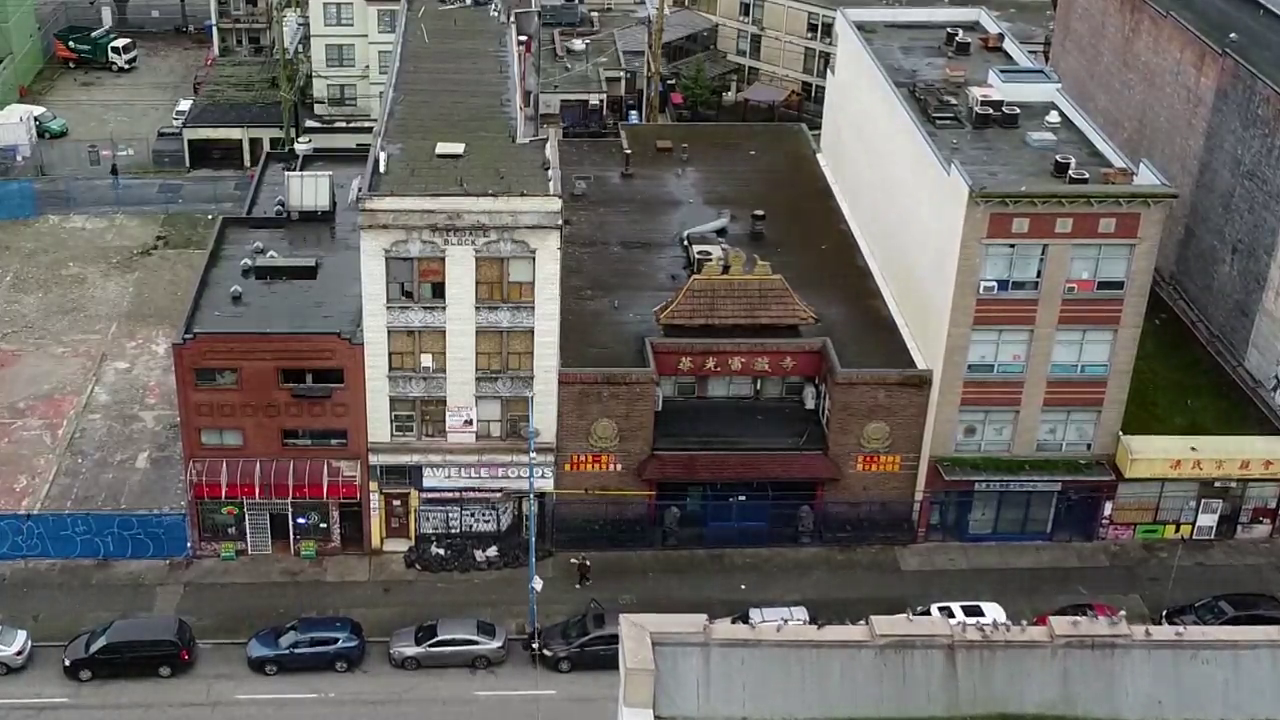
The smoke hasn’t even cleared from the latest "suspicious" fire in Northeast Calgary, and the script is already playing out with exhausting predictability. Local news outlets are running the same three photos of charred siding. Police spokespeople are leaning into microphones to use the word "investigation" as a shield for having zero leads. Neighbors are whispering about "safety" while checking their Ring doorbells for grainy footage of hooded figures.
It is a performance. It is theater designed to satisfy a public hunger for a villain. You might also find this related story useful: The $2 Billion Pause and the High Stakes of Silence.
When the Calgary Police Service and the fire investigator team label a blaze as "suspicious," the collective brain immediately leaps to the trope of the hooded arsonist—a chaotic agent of destruction roaming the residential streets of Falconridge or Castleridge. We want a boogeyman because a boogeyman is easy to hate. But if you’ve spent a decade digging into the mechanics of urban decay and the brutal math of property devaluation, you know the hooded arsonist is a statistical ghost.
The real story of "suspicious" fires in industrial or developing residential pockets isn't about crime; it is about the cold, hard desperation of the balance sheet. As discussed in detailed reports by NPR, the implications are worth noting.
The Myth of the Random Arsonist
Public perception of fire is stuck in a 1980s slasher movie. We think fires happen because someone is "crazy" or "evil." In reality, fire is a financial tool.
When a fire breaks out in a commercial-residential transition zone like Northeast Calgary, the media focuses on the how—accelerants, point of origin, witness statements. They rarely look at the why of the land title.
In 2024 and 2025, Calgary’s real estate market hit a fever pitch, but the "Northeast" tag still carries a stigma that suppresses property value compared to the glitzy southwest or the booming bedroom communities like Airdrie. When interest rates remained stubbornly high and construction costs for "vandalized" or "aging" properties began to exceed their market value, the incentive structure shifted.
I have watched developers and small-scale landlords scramble when a project goes sideways. When the cost of remediating a mold-infested or structurally compromised building hits a certain threshold, a "suspicious" fire isn't a tragedy. It’s a liquidation event.
The "suspicious" label is often a polite Canadian way of saying the math doesn't add up.
Fire as a Liquidation Strategy
Let’s dismantle the "suspicious" tag. In fire forensics, there is a clear hierarchy of classification:
- Accidental: Failed wiring, a stove left on, a cigarette in a planter.
- Natural: Lightning (rare in residential Calgary winters).
- Incendiary: A fire deliberately set.
- Undetermined: The "we don't know" bucket.
"Suspicious" is a law enforcement term, not a scientific one. It’s used when the fire is incendiary but the motive is obscured.
The lazy consensus says we need more police patrols to stop these fires. That is a waste of tax dollars. A patrol car driving down 52nd St NE isn't going to stop a fire that was planned inside a boardroom or a desperate kitchen three weeks ago.
If you want to stop suspicious fires, stop looking for matches and start looking at the "Notice of Default" filings.
The Staccato Reality of the Burn
Fire is fast.
Investigation is slow.
Insurance payouts are the goal.
When a property in a high-density area like Northeast Calgary goes up, the immediate risk isn't just to the structure. It’s to the neighboring units. This is where the "random arsonist" theory falls apart. A true chaotic arsonist doesn't care about the wind. A strategic fire-setter cares deeply. They want maximum damage to the target with minimum "collateral" that could trigger a more intensive federal investigation.
The "People Also Ask" Fallacy
People ask: "Is Northeast Calgary safe?"
They are asking the wrong question.
The question is: "Is the infrastructure of Northeast Calgary being intentionally neglected to facilitate redevelopment?"
When you see a string of fires in a specific geographic cluster, don't look for a serial arsonist. Look for the zoning applications. Look for the "Land Use Redesignation" signs that pop up six months after the rubble is cleared.
In the industry, we call this "Urban Renewal by Combustion." It is the most aggressive form of gentrification. It bypasses the months of heritage assessments, demolition permits, and neighborhood consultations. Fire is a Great Leveler. It clears the lot and provides the capital (via insurance) to build something more profitable.
Why the Police Won't Tell You the Truth
The Calgary Police Service (CPS) is in a bind. If they admit that many "suspicious" fires are likely linked to financial distress or strategic redevelopment, they have to prove intent. Proving arson for profit is one of the hardest lifts in the legal system.
The evidence is literally consumed by the crime.
By the time an investigator gets into the belly of a charred multi-family unit, the "accelerant" might have been nothing more than a carefully placed pile of oily rags—something that looks like "poor housekeeping" until it isn't.
So, the police stick to the script. They ask for "public assistance." They ask for "video footage." They do this to maintain the illusion of control. If the public realized how easy it is to erase a bad investment with a $2 lighter and a bit of knowledge about airflow, there would be a panic.
The Nuance of the "Suspicious" Label
We must distinguish between the "firebug" and the "investor."
The firebug is a nuisance. They set fire to trash cans and garages. They are caught because they are sloppy and crave the "high" of the flames.
The investor is a ghost. They aren't at the scene. They have an alibi in Canmore. The fire starts at 3:00 AM on a Tuesday when the response times are slightly lagged and the neighbors are in deep sleep.
If the fire in Northeast Calgary is truly "suspicious," the CPS shouldn't be looking for a man in a hoodie. They should be auditing the owner's debt-to-equity ratio.
The Hard Truth for Homeowners
If you live in a neighborhood seeing a spike in "suspicious" activity, your Ring camera is a placebo.
Real security in these zones comes from understanding the commercial health of your block. Are the nearby commercial units vacant? Is the "coming soon" sign for a new condo development faded and peeling? That is your warning.
A stagnant development project is a tinderbox.
I’ve seen developers lose their shirts on Northeast conversions. When the "flip" fails, the "burn" becomes an exit strategy. It’s a brutal, cynical reality that contradicts the "community-first" narrative pushed by city hall.
The Role of the Insurance Adjuster
The insurance industry is the only entity with the actual power to stop this. But they are caught in the same math. It is often cheaper for an insurer to pay out a $400,000 claim than to spend $600,000 on a three-year legal battle to prove arson.
They pay. The owner builds. The neighborhood "improves."
This is the cycle of the "suspicious" fire. It’s not a breakdown of law and order; it’s a grease trap for the gears of capitalism.
Stop Looking for the Boogeyman
The next time you read a headline about a "suspicious fire" in Northeast Calgary, do not feel bad for the "property owner" until you see the forensic audit.
Do not demand more "boots on the ground" in the form of police.
Demand transparency in property ownership. Demand that the City of Calgary track the "fire-to-redevelopment" pipeline.
The "lazy consensus" wants you to be afraid of a shadow in the alley. The reality is that the most dangerous person in the neighborhood is the one with the most to lose on a spreadsheet.
The fire isn't the problem. The fire is the solution to a different problem entirely.
Check the land titles. Watch the zoning. Follow the money.
The matches are just a formality.