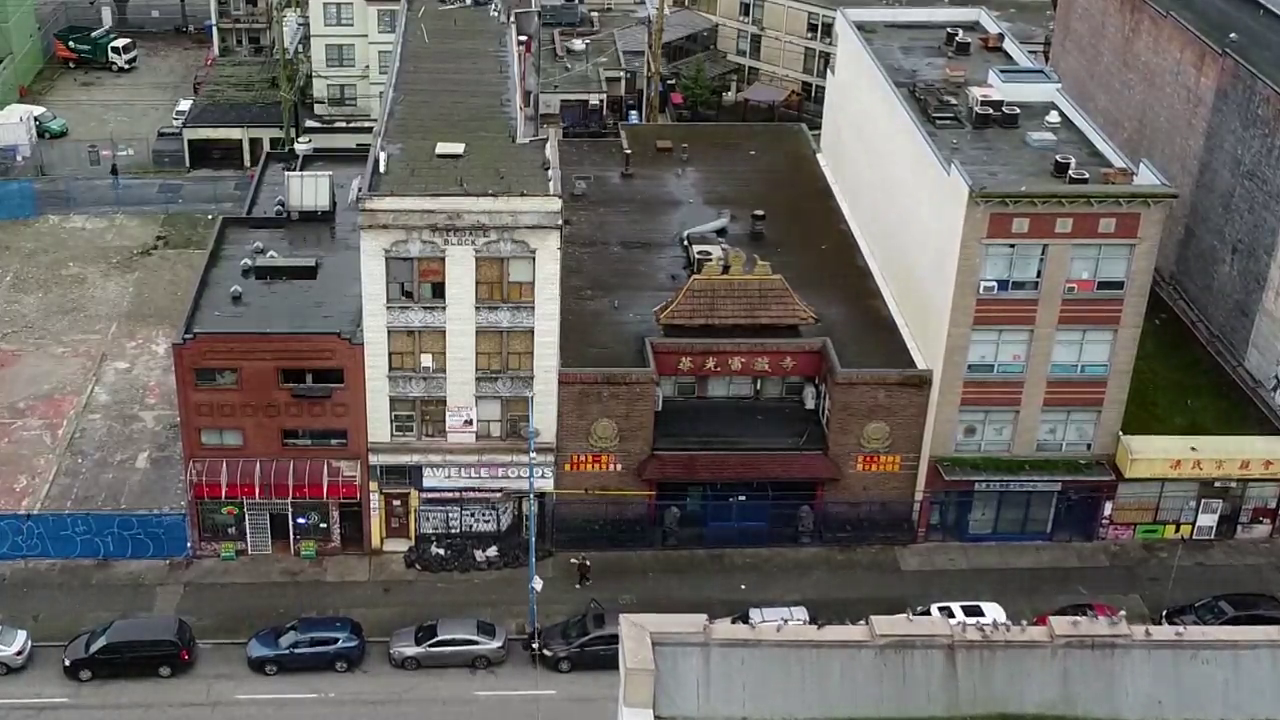
Vancouver is currently engaged in a dangerous game of chicken with a pile of rotting bricks. By granting the owners of the derelict Balmoral and Sahota-owned properties yet another chance to "save" buildings that have been described by structural engineers as a risk of collapse, the city has signaled a profound failure of regulatory will. This isn't just about a single Single Room Occupancy (SRO) building. It is about a systemic rot in how the city manages its most vulnerable housing stock. While officials cite legal hurdles and the high cost of expropriation as reasons for their leniency, the reality is far more cynical. The city is terrified of the bill that comes with actually fixing the problem, so it continues to hand the keys back to the very people who turned these heritage assets into death traps.
The Economics of Neglect
To understand why these buildings are falling down, you have to follow the money. In the world of low-income housing, neglect is a business model. For decades, certain landlords have realized that the fines for building code violations are significantly cheaper than the cost of a new roof or a functional plumbing system. Also making news in this space: Finland Is Not Keeping Calm And The West Is Misreading The Silence.
When a building reaches a state of near-collapse, the land underneath it often becomes more valuable than the structure itself. By allowing a building to deteriorate to the point of being uninhabitable, owners essentially clear the path for future redevelopment without having to navigate the messy business of mass evictions. The city’s current strategy of granting extensions for repairs plays right into this hand. It provides the illusion of enforcement while allowing the decay to continue under the guise of "ongoing renovations."
The Myth of Private Sector Salvage
The idea that the private market can or will "save" an SRO at this stage of decomposition is a fantasy. These buildings are past the point of minor cosmetic fixes. We are talking about systemic structural failure, black mold, and electrical systems that date back to the early 20th century. Further details regarding the matter are covered by NPR.
- Cost of Remediation: Bringing a severely neglected SRO up to modern safety standards often exceeds the cost of tearing it down and starting over.
- The Regulatory Loophole: Landlords can claim they are "making progress" by performing minor, non-structural work, which resets the clock on city enforcement actions.
- Public Risk: Every day these buildings sit empty and unbraced, they pose a physical threat to the surrounding neighborhood and the pedestrians walking below.
A veteran inspector once told me that you can't fix a foundation that has turned to sand. Yet, the city’s legal department continues to treat these cases as if they are dealing with a homeowner who forgot to mow their lawn. The disconnect between the physical reality of the buildings and the bureaucratic process used to manage them is where the danger lies.
Why Expropriation is the Only Real Path
The city frequently moans about the cost of expropriation. They argue that paying fair market value for a condemned building is a poor use of taxpayer funds. This is a short-sighted calculation.
When the city refuses to seize these properties, they are effectively subsidizing the landlord's liability. The public ends up paying for the emergency services, the temporary housing for displaced tenants, and the eventual cleanup when the building finally gives way. By taking the property over, the city gains control of the land—the only asset that still has value. It allows for the construction of purpose-built social housing that isn't dependent on the whims of a slumlord.
Instead, we see a cycle of "intent to repair" orders that lead nowhere. The legal dance continues for years, while the bricks continue to bulge and the interior supports continue to rot. It is a slow-motion disaster that everyone sees coming, yet no one in City Hall seems willing to stop.
The Human Cost of Bureaucratic Hesitation
We often talk about these buildings in terms of floor-space ratios and heritage designations. We forget that they were, until very recently, home to hundreds of people. When the city allows a building to reach the point of "risk of collapse," they aren't just failing an inspection; they are failing a community.
The displacement of SRO tenants doesn't just move people to a different neighborhood. It often pushes them into the street or into even more precarious, illegal housing situations. The "chance to save" given to owners is, in effect, a death sentence for the community that once lived there. There is no plan to return these people to their homes because the homes no longer exist in any functional sense.
Breaking the Cycle of Failed Enforcement
If Vancouver actually wants to solve the SRO crisis, it needs to stop playing nice. The current toolkit of fines and "compliance periods" has proven to be a total failure.
- Strict Deadlines: Give owners 30 days to begin major structural work. If a permit isn't pulled and a crew isn't on-site, the city should move to immediate receivership.
- Tax Liens for Repairs: If the city has to step in to make a building safe, the cost should be tied directly to the property tax bill. If the bill isn't paid, the city takes the building. No exceptions.
- End the Heritage Protection Trap: Sometimes, a building is too far gone. Using heritage status as a shield to prevent demolition—while also failing to fund the massive costs of heritage restoration—results in a "demolition by neglect" scenario that benefits no one.
The city's leniency isn't an act of fairness; it’s an act of negligence. Every extension granted to a negligent owner is a gamble with public safety. We are waiting for a tragedy to happen so that we finally have the political cover to do what should have been done a decade ago.
Stop giving these owners chances. They have already shown us exactly what they intend to do with them. They intend to let them rot until the city has no choice but to let them bulldoze the history and the poverty away to make room for luxury condos. The only way to stop that outcome is to take the buildings away now, before they fall down on their own.