The footage doesn't start with a bang. It starts with the mundane, rhythmic sounds of a Chicago evening—the hum of a patrol car, the rustle of a nylon duty belt, the crackle of a radio that spends most of its life broadcasting the background noise of a city in motion. Officer Alberto Covarrubias was sitting in that patrol car last year, breathing the same recycled air as his partner, Officer Jaime Gallucho. They were part of a team, a two-man ecosystem designed to survive the unpredictable.
Then the world fractured.
Body camera footage is often treated like a sports replay. We scrub through the timeline, looking for the moment of impact, the foul, the definitive proof of who did what. But watching the video released by the Civilian Office of Police Accountability (COPA) isn't about finding a smoking gun. It is about witnessing the terrifying, instantaneous decay of a human bond. It is about how a decade of training and a lifetime of partnership can be erased by the panicked geography of a dark alleyway.
The Geometry of a Mistake
Early in the morning on October 4, 2023, the air was crisp. Covarrubias and Gallucho were responding to a call about a person with a gun. This is the bread and butter of the Chicago Police Department’s tactical units, a high-stakes routine that requires a specific kind of mental armor. You don't walk into these situations thinking about your mortgage or your kid’s soccer game. You think about angles. You think about cover.
When they arrived at the scene in the 4300 block of West 25th Place, the narrative of their lives was still intact. They were the protectors. They were the ones holding the line.
As the officers moved toward a suspect, the environment became a labyrinth of fences, shadows, and narrow passages. In the tactical world, this is known as "the funnel." It is a place where your field of vision narrows and your heart rate pushes past the point of clear cognition.
The video shows the chaos of the foot pursuit. There is the heavy thud of boots on pavement. There is the breathless shouting. Then, the suspect fired.
In that moment, the "human-centric narrative" we like to apply to heroes breaks down. Biology takes over. The prefrontal cortex—the part of the brain that handles logic, identity, and the memory of your partner’s face—shuts down. The amygdala screams. It is a primal hijack.
The Sound of the Void
Covarrubias returned fire. He was doing what he was trained to do: neutralize a threat that was actively trying to kill him. But in the shifting shadows of the chase, the suspect wasn't the only one in the line of fire.
The camera captures the muzzle flashes. They are strobe lights in the dark, momentary glimpses of a nightmare. One of those flashes belonged to Covarrubias. One of those bullets found Jaime Gallucho.
There is a specific sound that occurs in these videos when the realization hits. It isn't a scream. It’s a hollow, guttural realization that the world has tilted off its axis and will never right itself. The footage records the frantic efforts to save Gallucho. It records the arrival of more sirens, more blue lights, more voices shouting into the void.
But beneath the noise, there is an invisible stake that the cold facts of a news report always miss. It is the weight of the "blue on blue" tragedy. It is the specific, soul-crushing guilt of a man who realized that in the process of trying to save a life, he took the one that mattered most to him.
The Architecture of Aftermath
We often talk about police shootings in terms of policy and procedure. Was the use of force justified? Was the pursuit within department guidelines? These are necessary questions for a functioning society, but they are clinical. They don't account for the fact that Alberto Covarrubias didn't just lose a coworker. He lost his mirror.
In the police world, your partner is the person who knows how you take your coffee, which streets you avoid after midnight, and what you’re afraid of. They are the only people who truly understand the weight of the badge. When that person is gone, and you are the reason they are gone, the "procedural justice" of a COPA investigation feels like a foreign language.
The investigation into the shooting has been a slow, agonizing crawl. For months, the facts were kept behind the veil of administrative review. Now, with the release of the video, the public sees the raw data. They see the suspect’s weapon. They see the chaos of the alley. They see the blood.
But the video cannot show the thousands of hours leading up to those two seconds. It can’t show the shifts where nothing happened. It can’t show the jokes shared over a steering wheel at 3:00 AM.
Consider the sheer statistical improbability of the event. Thousands of rounds are fired in training; hundreds of thousands of interactions happen between police and the public every year. For the trajectories of a suspect’s flight, a partner’s movement, and an officer’s reflex to align in such a devastating way requires a perfect storm of tragedy.
The Ghost in the Footage
The Chicago Police Department has struggled for years with the mental health of its officers. Suicide rates and PTSD are the silent killers in the background of every precinct. An event like this doesn't just create a victim in the person who was shot; it creates a ghost in the person who remains.
Covarrubias was placed on administrative duties. He became a man defined by a two-second window of time. The released video is intended to provide transparency to the public, to show that the city isn't hiding the grim reality of its streets. Yet, transparency is a double-edged sword. For the family of Jaime Gallucho, the video is a recurring trauma, a digital loop of a life ending. For Covarrubias, it is a permanent record of his greatest failure.
The "invisible stakes" here aren't just about police reform or gun violence. They are about the fragility of our systems. We ask human beings to perform with the precision of machines in environments that are designed to break them. We expect them to navigate the "gray zone" of a dark alley with the moral clarity of a courtroom.
Sometimes, the gray zone wins.
The Silence of the City
The video ends. The screen goes black. In the real world, the sirens eventually faded, and the alley was cordoned off with yellow tape. The suspect was eventually charged, but the legal resolution feels like a footnote to the human catastrophe.
We look at these videos because we want to believe that if we watch closely enough, we can find a way to prevent it from happening again. We want to find the exact moment where a better choice could have been made. We want to believe in a world where "accidents" don't happen to "good people."
But the static between those two seconds tells a different story. It tells us that for all our technology, all our body cameras, and all our tactical training, we are still remarkably vulnerable to the shadows.
The city moves on. The 10th District gets new officers. New partners are assigned. They sit in the same cars, breathe the same recycled air, and wait for the radio to crackle. They do this knowing that the line between a hero and a tragic figure is thinner than a copper jacketed bullet.
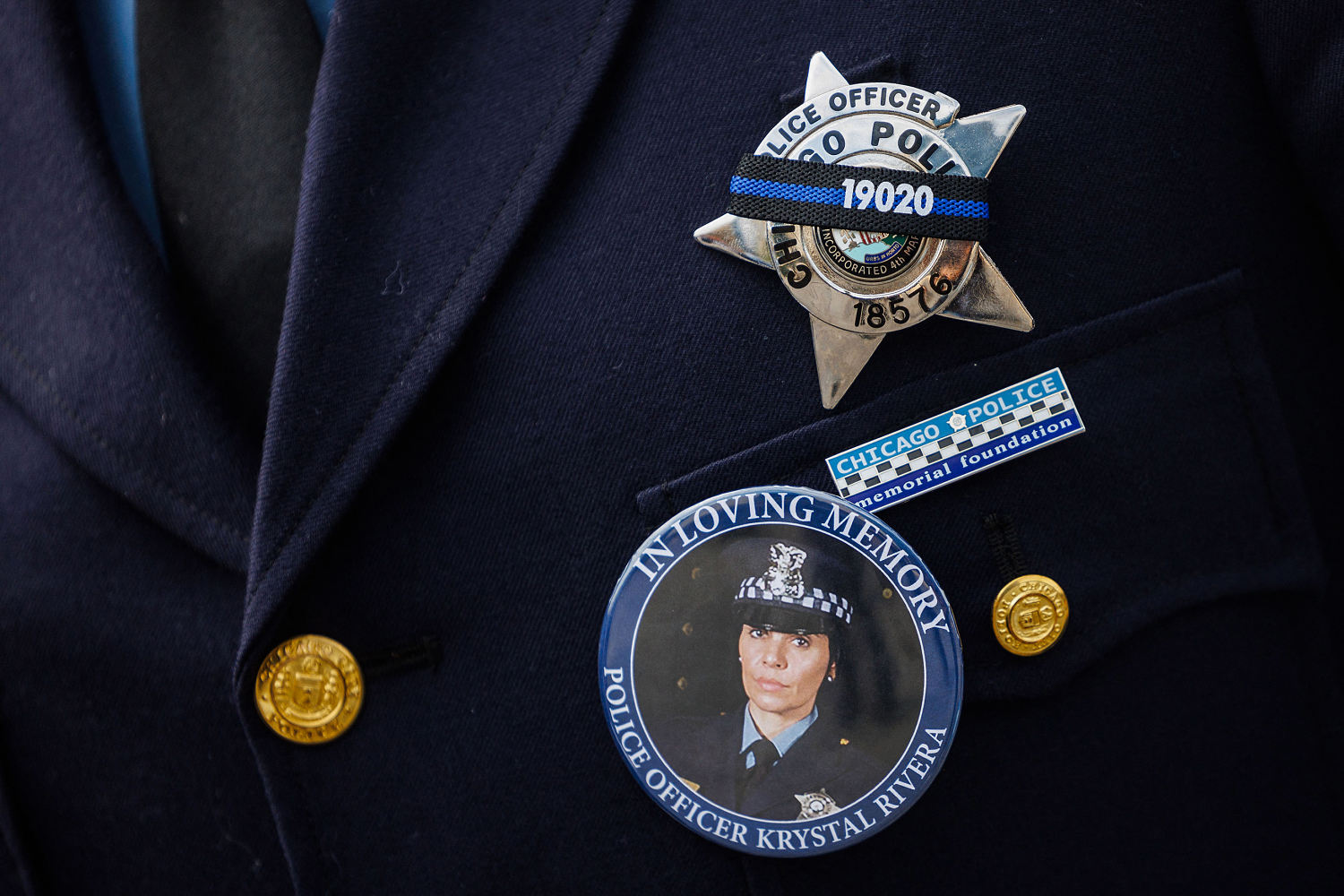
Jaime Gallucho is a name on a memorial wall now. Alberto Covarrubias is a man living in the echoing silence of a video that never stops playing in his head. And the rest of us are left to watch the footage, searching for a truth that isn't found in the frame rate, but in the heavy, heartbreaking reality of what it means to be human in a world that demands we be something more.
The camera records the movement. It records the sound. But it can never capture the weight of the hand that has to turn the camera off when the shift is over, and the realization sets in that the partner in the passenger seat isn't coming back.