The rhythmic clatter of the Tung Chung line is a lullaby to some and a headache to others. It is the heartbeat of Hong Kong, a pressurized tube of glass and steel where seven million lives intersect for twelve minutes at a time. Usually, the etiquette is silence. We stare at our glowing rectangles, or we stare at nothing, studiously ignoring the person whose shoulder is pressed against our own.
Then, there is the sound that doesn't belong. Discover more on a related subject: this related article.
It wasn't the screech of the brakes or the digital chime of the closing doors. It was a rhythmic, fleshy thud. A sharp slap. Then another. Then a stifled cry that was too small, too high-pitched to belong to anyone but a child who hasn't yet learned the words to ask for mercy.
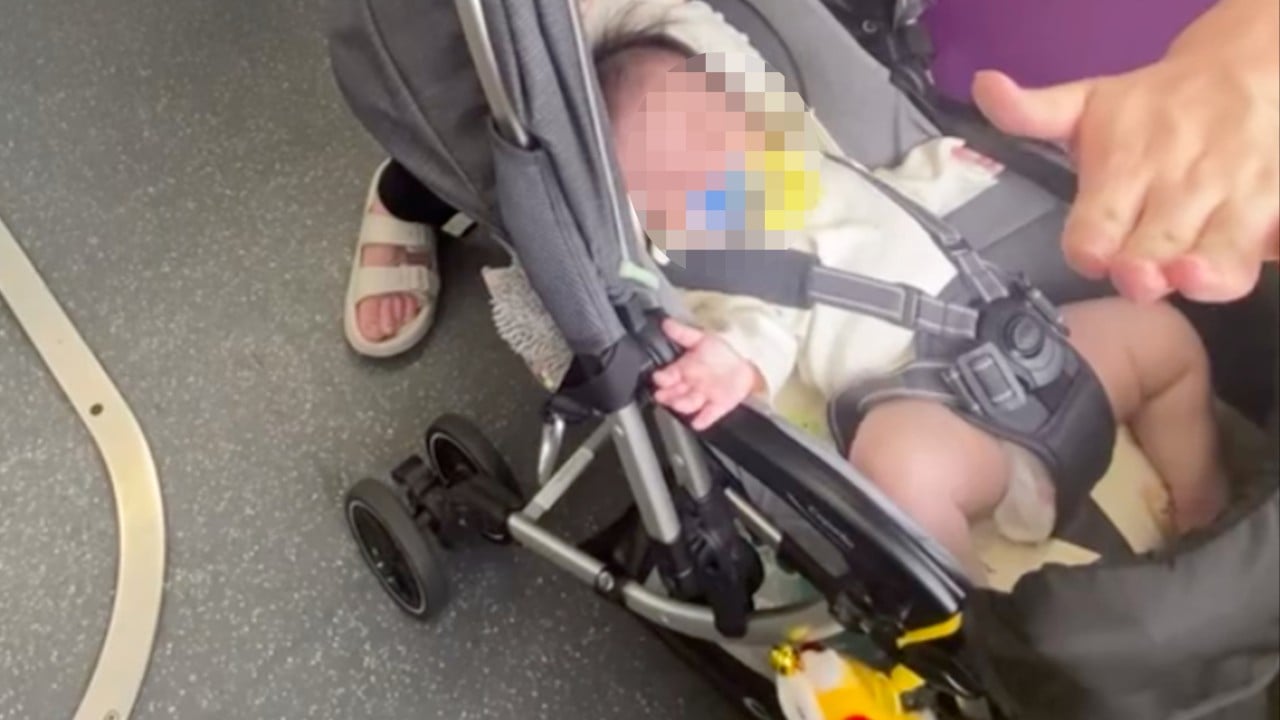
On a Tuesday afternoon, the communal contract of the MTR shattered. Passengers on a train bound for Hong Kong station watched, frozen in that peculiar modern paralysis, as a man repeatedly struck a baby’s foot. He didn't look like a monster. He looked like a commuter. He looked like someone you’d pass at a turnstile without a second thought. But with every blow delivered to that tiny, defenseless limb, he was rewriting what it means to be a neighbor in a crowded city. Additional journalism by USA Today explores related views on the subject.
The Anatomy of the Bystander
We like to think we are heroes in waiting. We tell ourselves that if we saw a wrong, we would right it. But the "Bystander Effect" is a biological heavy weight. In a packed train carriage, responsibility doesn't multiply; it divides. If there are fifty people watching, you only feel one-fiftieth of the obligation to act. You wait for the person to your left to move. They are waiting for the person to their right.
In the case of the man on the Tung Chung line, the silence lasted long enough for the violence to become a pattern. A witness finally broke the spell, capturing the scene on a smartphone—the modern era’s shield and sword. The footage is harrowing not because of its gore, but because of its casualness. The man isn't screaming. He isn't in a visible rage. He is simply, methodically, hurting a child.
Police were alerted. The machinery of the law began to groan into motion. But by the time the authorities arrived at the platform, the man and the child were gone, dissolved back into the humid gray of the city streets.
The Invisible Stakes of the "Private" Family
There is a cultural ghost that haunts these carriages: the idea that family discipline is a private matter. In many corners of Hong Kong, the "closed door" policy extends even to public transport. We see a parent shaking a child too hard, or a father delivering a "lesson" with his palms, and we look away. We tell ourselves we don't know the full story. We tell ourselves the child was likely being "difficult."
This is a lie we tell to stay comfortable.
When a man hits a baby’s foot on a public train, he isn't disciplining. He is exercising a terrifying brand of ownership. A baby's foot is a miracle of soft cartilage and brand-new nerves; it is the most vulnerable part of a creature that cannot yet walk away. To target it is to send a message of absolute dominance.
Consider the psychological landscape of that child. At an age where the brain is a literal sponge for sensory input, the primary lesson being absorbed isn't about "behavior." It is that the world is a place where pain arrives without reason, and the giants who are supposed to provide safety are the ones who provide the sting.
The Digital Witness
The Hong Kong police took the report seriously, launching an investigation into "ill-treatment or neglect by those in charge of a child or young person." It’s a clinical phrase for a visceral act.
The witness who filmed the encounter is now the pivot point of the story. Without that digital record, this would have been just another uncomfortable moment that faded into the collective amnesia of the evening rush hour. Because of that lens, the man is no longer an anonymous commuter. He is a file number. He is a person of interest.
But there is a lingering shadow here. The video exists, the police are searching, and the internet is outraged. Yet, what happens to the child tonight? While we debate the ethics of "shaming" parents online or the efficiency of the MTR security protocols, that child is back behind a literal closed door.
This is the terrifying reality of child welfare in a vertical city. We live on top of one another, separated by mere inches of concrete, yet we are often miles apart in terms of intervention. The "man on the train" is a reminder that the safety net is often made of nothing more than the courage of a stranger to speak up when the clatter of the train isn't loud enough to drown out a cry.
The Weight of the Look
If you were on that train, what would you have done? It’s easy to judge from the safety of a screen. It’s much harder when you’re standing three feet away, feeling the tension in the air, weighing the risk of a physical confrontation.
Maybe you would have moved to a different carriage. Maybe you would have pulled your headphones tighter.
But the real power in these moments doesn't always come from a dramatic, cinematic intervention. Sometimes, it is the weight of the look. It is the collective eyes of a carriage turning toward the aggressor, making it clear that the "private" act is now public property.
Violence thrives in the dark, but it also thrives in the indifference of a well-lit room. The man on the Tung Chung line felt emboldened to strike a child because he believed he was alone in a crowd. He believed that our desire for a quiet commute was stronger than our instinct to protect the small.
He was almost right.
The police continue their search, scouring CCTV footage and cross-referencing Octopus card data. They will likely find him. The legal system will process him. But the deeper scar remains on the social fabric. Every time we ignore the "minor" slap or the "small" shove, we lower the bar for what is acceptable in our shared spaces.
We are all on that train. We are all moving toward a destination we didn't quite choose, packed in tight with people we don't know. The only thing that makes the journey bearable is the unspoken agreement that we will look out for the ones who can't reach the handrails yet.
The doors open. The doors close. The train moves on. But somewhere in this city, a child is waiting for the next sound to fall, wondering if anyone is listening.