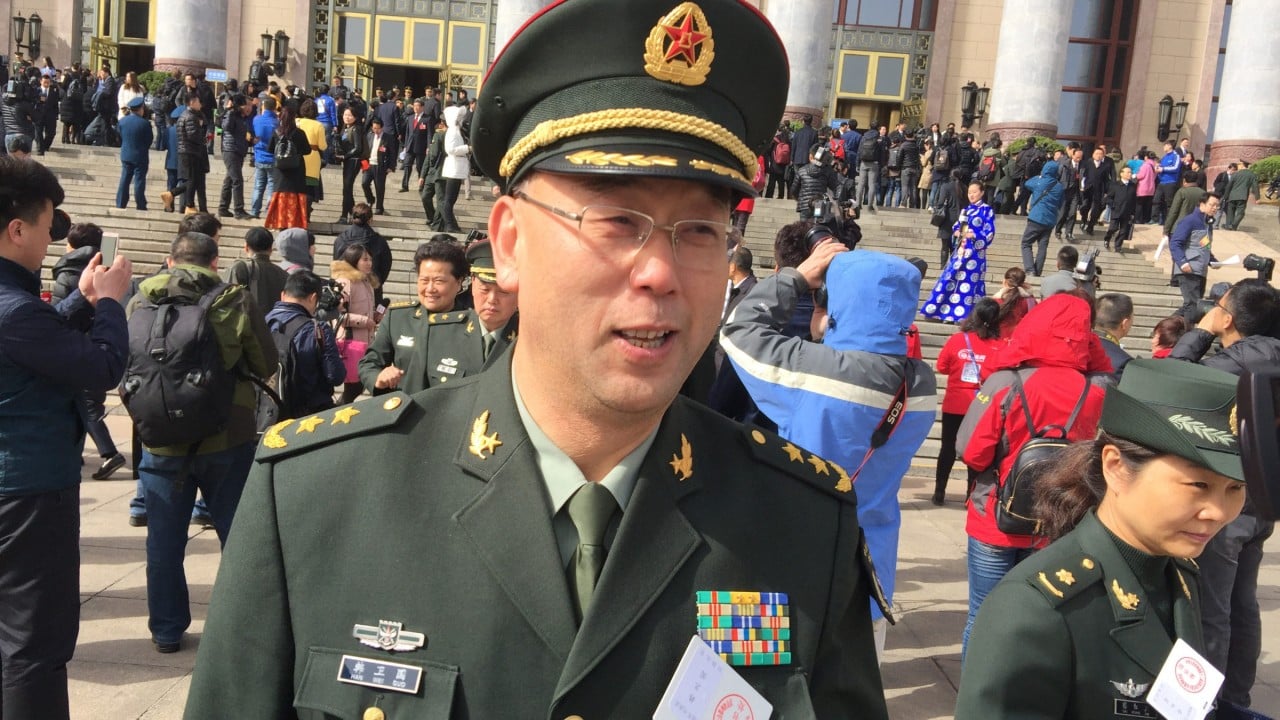
The removal of high-ranking generals from the Chinese People’s Political Consultative Conference (CPPCC) is not a simple house-cleaning exercise. It is a structural amputation. When Beijing strips military brass of their titles in the nation’s top advisory body, it signals a profound breakdown in the trust between the civilian leadership and the People’s Liberation Army (PLA). This is the culmination of a decade-long effort to tighten the grip on the "barrel of the gun," yet the recurring nature of these purges suggests that the rot is far deeper than individual greed. It is baked into the very procurement and promotion systems that define the modern Chinese military.
The latest wave of dismissals targeting the Rocket Force and equipment development departments exposes a terrifying reality for the Central Military Commission. Despite trillions of yuan funneled into modernization, the hardware meant to provide China’s strategic "deterrent" may be compromised by a culture of kickbacks and falsified data. This isn't just about generals hiding cash under mattresses. It is about whether the missiles actually fly.
The Rocket Force implosion and the price of secrecy
For years, the People’s Liberation Army Rocket Force (PLARF) was the crown jewel of China’s military expansion. It was the physical manifestation of a superpower’s ambition, housing the DF-21 "carrier killers" and the hypersonic DF-17. However, the sudden disappearance and subsequent formal removal of its top leaders—including former commanders Li Yuchao and Zhou Yaning—points to a systemic failure in the procurement of sensitive tech.
In a military where the party and the state are inseparable, procurement isn't just a business transaction. It is a political loyalty test. When a general oversees a multi-billion yuan contract for fuel systems or silo construction, the opportunity for graft is astronomical. The "corruption clean-up" currently making headlines is actually a desperate attempt to audit the reliability of the nation’s nuclear triad.
The purge in the CPPCC is the public-facing side of a much darker internal investigation. The advisory body serves as a prestigious "retirement home" or a platform for political influence. Stripping these roles is the final step before the judicial hammer falls. It is a signal to the remaining cadre that no amount of previous service or political connection provides a "safe landing."
Why the clean-up never actually ends
One must ask why, after twelve years of relentless anti-corruption campaigns, the PLA is still seeing its top tier gutted. The answer lies in the monopolistic nature of Chinese defense contracting.
Military industrial giants in China operate with almost zero external oversight. The auditors are often part of the same political networks as the people they are auditing. This creates a closed loop. A general in the Equipment Development Department can steer a contract to a state-owned enterprise, which then subcontracts to a firm owned by the general’s associates.
- The Promotion Trap: In the PLA, moving up the ranks historically required "contributions," which often meant financial tributes to superiors. While the current leadership has tried to pivot to a merit-based system, the ghosts of the old "buy-a-rank" era still haunt the senior colonel and general levels.
- The Complexity of High-Tech Graft: Modernizing a military requires buying things that are hard to price—software, stealth coatings, and advanced semiconductors. It is much easier to skim off the top of a stealth fighter program than it is to steal from a tank tread factory.
The purge isn't failing; it is simply reacting to a system that generates corruption as a byproduct of its own opacity. As long as the military remains a "black box" to the public and even to most of the civilian government, the temptation to monetize that secrecy will remain.
The cost to combat readiness
The most critical question for global analysts is how this affects the PLA's ability to fight. Purging the leadership of your most important missile wing during a period of heightened regional tension is a massive risk. It creates a vacuum of experience.
When you remove a general, you don't just lose one man. You lose his entire "clique"—the colonels and majors who were groomed to take over. This creates a paralysis of initiative. Lower-level officers become terrified of making any decision that involves spending money or changing protocols, fearing it will be interpreted as a sign of corruption or disloyalty.
Furthermore, there are persistent, though unverified, reports that the corruption reached the technical specifications of the weaponry itself. If solid-fuel missiles were filled with water instead of propellant, or if silo lids were manufactured with substandard steel to pad a contractor’s profit, the "Paper Tiger" label becomes a literal threat to national security. The current purge is a frantic effort to ensure that the military’s reported capabilities match its actual readiness.
Beyond the boardroom of the CPPCC
The CPPCC is often dismissed by Westerners as a "toothless" talk shop. In reality, it is the primary mechanism for the "United Front," the strategy of co-opting elites to support the party's goals. When a general sits in those sessions, they represent the military's voice in the broader national strategy.
Removing them from this body is a form of social and political death. It tells the business elites and the provincial governors that these men are now "untouchables." It severs their ability to protect their families or their assets. It is the definitive end of their public life, usually followed by a quiet disappearance into the military court system, where the conviction rate is effectively 100 percent.
This isn't just about ethics. It is about a leader who realizes that his legacy is tied to a military that must be able to win. If the generals are more interested in their real estate portfolios than their readiness drills, the entire national project is at risk.
The structural flaw in the civilian-military divide
The fundamental problem is that the PLA is a "party army," not a national one. This means that the mechanisms used to control it are political rather than legal. In a professionalized Western military, an Inspector General might flag a procurement anomaly. In the PLA, it takes a specialized task force from the Commission for Discipline Inspection to swoop in with "shuanggui"—an extra-legal detention system.
This reliance on "campaign-style" justice means that corruption is never truly solved; it is just suppressed until the next campaign. The generals being stripped of their roles today are the ones who survived the purges of 2014 and 2015. They learned how to hide it better, not how to stop doing it.
The focus on the Rocket Force suggests that the leadership has identified a specific, catastrophic failure in the country's most expensive and secretive projects. While the official narrative will focus on "purity" and "loyalty," the reality is likely a frantic scramble to fix a broken supply chain before a real-world conflict exposes the cracks.
The removal of these officials is a admission that the massive spending of the last decade did not buy as much security as the spreadsheets claimed. It bought a lot of luxury cars and offshore accounts, and now the bill has come due.
The pressure on the remaining officers is now immense. They are being told to innovate and modernize at breakneck speed, but they are also being told that any mistake in the accounting will be treated as treason. It is a climate of fear that produces compliance, but rarely produces the kind of creative military thinking required to win a modern war.
As the CPPCC meets and the empty chairs of the fallen generals remain, the message to the rest of the ranks is clear: the party will burn its own house down if that is what it takes to ensure the survivors are looking at the enemy, not the cash box. If you are an officer in the PLA today, your greatest enemy isn't a foreign navy; it's the auditor sitting in the next room.
The purge will continue because the system requires it to function. Without a transparent legal framework, the only way to ensure the military stays loyal is to keep it perpetually afraid. This is the "new normal" for the Chinese high command—a permanent state of internal war.