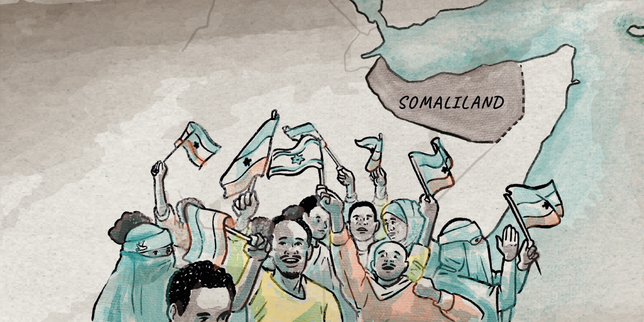
Somaliland functions as a fully realized state in every capacity except the one that matters most to the United Nations. It has its own currency, a functioning police force, democratic elections, and a distinct military. Yet, for over three decades, this former British protectorate has existed in a diplomatic vacuum, legally tied to a volatile Somalia it hasn't answered to since 1991. This lack of formal recognition is no longer just a bureaucratic quirk. It has become the centerpiece of a high-stakes geopolitical scramble where Ethiopia, the United Arab Emirates, and China are trading sovereign legitimacy for deep-water access.
The core tension lies in the Gulf of Aden. As global trade routes face constant threats from piracy and regional instability, Somaliland’s 850-kilometer coastline has transformed from a neglected strip of sand into the most valuable real estate in East Africa.
The Ethiopia Deal that Broke the Status Quo
In January 2024, the geopolitical chess board shifted violently. Ethiopia, a landlocked giant with over 120 million people, signed a Memorandum of Understanding (MoU) with Somaliland. The terms were simple but explosive. Ethiopia would receive a 20-kilometer lease of coastline for a naval base and commercial port access. In exchange, Ethiopia would become the first nation to formally recognize Somaliland as a sovereign state.
For Addis Ababa, this is about survival. Since losing its coastline following Eritrea’s independence in 1993, Ethiopia has been tethered to the port of Djibouti, paying nearly $1.5 billion in annual port fees. That is a stranglehold. By diversifying into Somaliland’s Berbera port, Prime Minister Abiy Ahmed is attempting to break a decades-long economic bottleneck.
The reaction from Mogadishu was swift and furious. Somalia views the deal as an act of aggression and a violation of its territorial integrity. But the reality on the ground tells a different story. Mogadishu exercises zero authority in Hargeisa. By treating Somaliland as a sovereign entity, Ethiopia isn't just buying port space; it is dismantling the African Union’s long-standing policy of maintaining colonial-era borders. This isn't just a local dispute. It is a fundamental challenge to how African statehood is defined in the 21st century.
Berbera and the UAE Blueprint
While Ethiopia provides the political muscle, the United Arab Emirates (UAE) provides the capital. DP World, the Dubai-based logistics titan, has already poured hundreds of millions of dollars into the Port of Berbera. This isn't a charity project. The UAE is building a "string of pearls" across the Red Sea and the Gulf of Aden to secure its maritime dominance.
The Logistics of Independence
The Berbera Corridor is a massive infrastructure project designed to link the port directly to the Ethiopian border. It includes:
- A modern multi-purpose terminal capable of handling 500,000 TEUs (twenty-foot equivalent units) per year.
- A dedicated economic zone modeled after Dubai’s Jebel Ali.
- New highway networks that bypass the congested and often dangerous routes through central Somalia.
For the UAE, Somaliland is a more stable partner than the federal government in Mogadishu, which is perpetually bogged down by the fight against Al-Shabaab. By investing in Hargeisa, Abu Dhabi gains a strategic foothold that monitors the entry point to the Suez Canal. They are betting that de facto independence is more profitable than waiting for de jure recognition.
The Cost of Non-Recognition
Living in a country that doesn't exist on a map creates a unique set of economic hurdles. Because Somaliland cannot access World Bank or IMF loans, it must rely on private investment and remittances from the diaspora. This has forced a level of fiscal discipline rarely seen in the region. The government in Hargeisa operates on a tiny budget, yet it manages to maintain a level of security that puts its neighbors to shame.
However, the lack of a "sovereign" credit rating means that large-scale infrastructure projects often require predatory or lopsided deals with foreign corporations. Without the ability to sign formal treaties, Somaliland is forced into the role of a merchant state, bartering its geography for bits of legitimacy.
Investors face a "sovereignty risk" premium. If a conflict breaks out between Hargeisa and Mogadishu, who adjudicates the contracts? Which international court has jurisdiction over a territory that doesn't legally exist? These aren't abstract questions. They are the primary reasons why Western capital, outside of the logistics sector, remains hesitant to enter the market.
The Rivalry Between the Giants
The West finds itself in a diplomatic bind. The United States and the European Union officially support the "One Somalia" policy, fearing that recognizing Somaliland would trigger a wave of secessionist movements across the continent. Yet, they are increasingly reliant on Somaliland’s stability.
China, meanwhile, views the situation through the lens of Taiwan. Beijing is one of the few powers actively hostile to Somaliland’s ambitions, largely because Hargeisa established diplomatic ties with Taipei in 2020. This move was a calculated gamble by Somaliland President Muse Bihi Abdi. By aligning with Taiwan, Hargeisa signaled that it was willing to defy the "One China" principle in exchange for technical aid and a partner that understands what it’s like to be an international pariah.
In retaliation, China has doubled down on its support for the federal government in Mogadishu. This has created a bizarre proxy battleground where the fight for East African ports is inextricably linked to the status of an island in the South China Sea.
Security as a Commodity
Somaliland’s greatest export is not livestock or frankincense; it is stability. In a region defined by the civil war in Sudan, the collapse of the Yemeni state, and the ongoing insurgency in Somalia, Somaliland is an anomaly. It has successfully integrated traditional clan elders into a modern bicameral parliament, creating a bottom-up peace process that has lasted for thirty years.
This security is now being monetized. Foreign powers are no longer looking at Somaliland as a humanitarian case, but as a security partner. The Berbera airport, featuring one of the longest runways in Africa (originally built by the Soviet Union and later improved by NASA as an emergency space shuttle landing site), is being eyed by various air forces.
But this militarization comes with a price. The Ethiopia-Somaliland MoU has pushed Somalia closer to Turkey and Egypt. Egypt, already at odds with Ethiopia over the Grand Ethiopian Renaissance Dam, sees a potential Ethiopian naval base in Somaliland as a direct threat to its influence over the Nile and the Red Sea. The risk is that Somaliland, in its quest for recognition, may accidentally become the flashpoint for a wider regional war.
The Economic Reality of the Hargeisa Dollar
The Somaliland Shilling is a symbol of the nation's grit and its limitations. You won't find it on any official currency exchange in London or New York. In the markets of Hargeisa, money changers sit behind massive stacks of bills, often requiring a wheelbarrow for large transactions.
Yet, the country has leapfrogged traditional banking by adopting one of the most advanced mobile money systems in the world. Zaad, the mobile payment platform, is used for everything from buying a cup of tea to paying government salaries. This digital economy thrived precisely because the physical currency was unrecognized and cumbersome. It is a masterclass in adaptation.
The Fractures Within
It would be a mistake to view Somaliland as a monolith. The quest for recognition has created internal pressures that are beginning to show. In the eastern regions, such as Las Anod, conflict erupted in 2023 between Somaliland forces and local militias who wish to rejoin Somalia. These groups argue that Hargeisa’s drive for independence is merely a project of the dominant Isaaq clan.
These internal border disputes undermine Somaliland’s strongest argument for recognition: its internal peace. If Hargeisa cannot maintain the consent of all the clans within its claimed borders, its claim to sovereign stability begins to erode. The international community is watching these fractures closely. Every skirmish in the east is used by Mogadishu to argue that Somaliland is not the beacon of order it claims to be.
The Merchant State's Gamble
The world is witnessing a shift from "diplomatic recognition" to "functional recognition." Major powers may not give Somaliland a seat at the UN tomorrow, but they are treating it as a state in every way that impacts their bottom line. When DP World signs a 30-year concession or Ethiopia promises to recognize the passport, the abstract concept of sovereignty is being traded for the concrete reality of trade and power.
Somaliland has realized that waiting for the world’s permission is a losing game. Instead, it is making itself indispensable. By positioning itself as the gatekeeper of the Red Sea, Hargeisa is forcing the hand of the international community. The question is no longer whether Somaliland deserves to exist, but whether the global economy can afford to keep pretending it doesn't.
Stop looking at the maps issued by the UN. They are relics of a world that no longer exists. The real map of the Horn of Africa is being drawn in the boardrooms of Dubai and the military headquarters of Addis Ababa. In this new geography, the "country that doesn't exist" is the only one standing on solid ground.