The air in West Java usually tastes of humidity and woodsmoke. It is a thick, predictable atmosphere that hangs over the emerald rice paddies of Cicalengka, a place where the rhythm of life is dictated by the sun and the steel tracks of the railway. On a Friday morning, that rhythm didn't just break. It shattered.
Imagine the cabin of the Turangga express. It is a long-distance vessel, carrying dreams and tired bodies from Surabaya. Inside, the climate control hums. Passengers are in that liminal space between sleep and arrival, perhaps folding a newspaper or staring at the blur of green outside the window. They feel safe. They feel the heavy, rhythmic thrum of progress beneath their feet. Then, from the opposite direction, comes the Commuter Line Bandung Raya.
Two giants of engineering, hurtling toward the same single patch of earth.
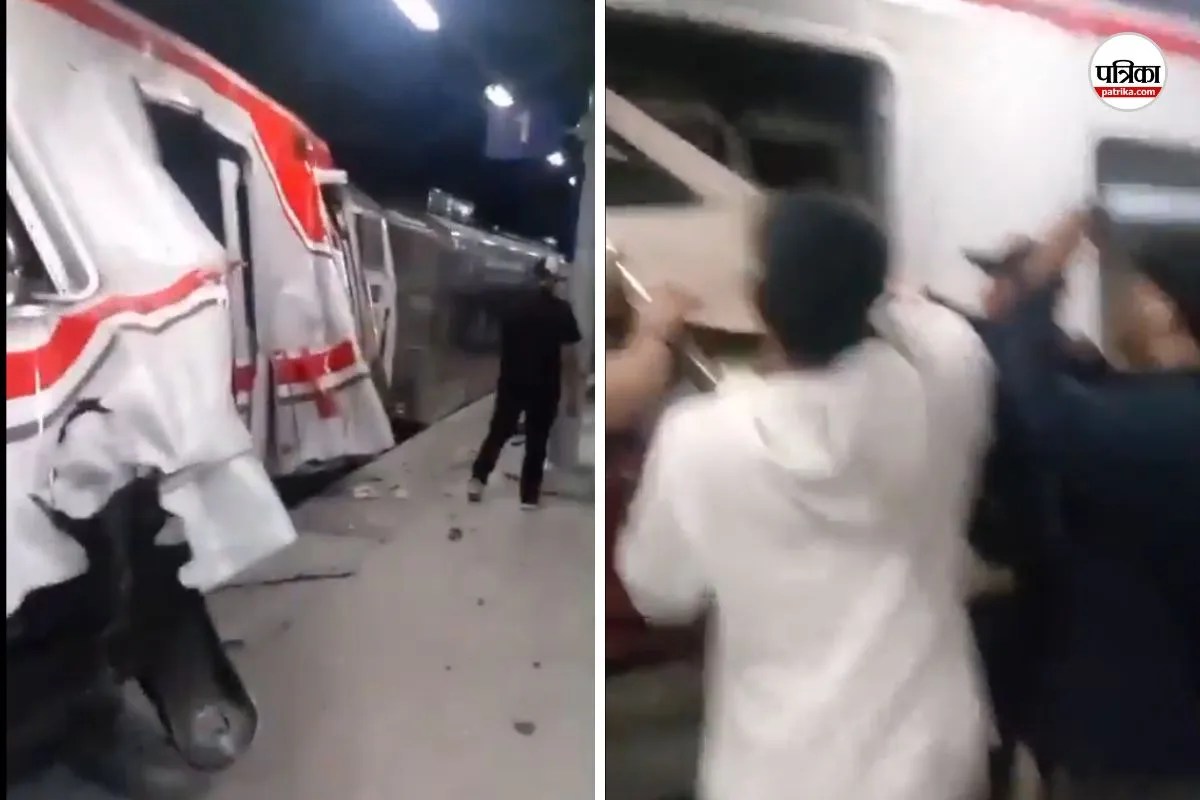
When steel meets steel at those speeds, physics ceases to be a textbook concept and becomes a predatory force. The sound is not a bang. It is a tectonic groan, a scream of twisting metal that drowns out human voices before they even have the chance to cry out. In an instant, the front carriages aren't carriages anymore. They are crumpled accordions of jagged iron and shattered glass.
Fourteen lives ended in that collision.
We often talk about train accidents in terms of signaling failures or mechanical fatigue. We look at the "14" as a statistic to be filed away in a government report. But numbers are a cold comfort when you are standing in the mud of a rice field, watching rescuers crawl through a wreckage that looks like a giant's discarded toy. To understand what happened in Cicalengka, you have to look past the casualty count and into the eyes of the people who were left behind.
The Anatomy of a Moment
The impact occurred at approximately 6:03 AM. At that hour, the light is still soft, a pale grey-blue that makes the world look unfinished. The local commuter train was packed with people going to work, people with lunch boxes and half-formed thoughts about their weekend plans. The express train was the heavy hitter, the long-haul traveler.
When they hit, the force was so immense that several carriages jumped the tracks entirely, diving into the adjacent paddies like silver fish gasping for air. One carriage was forced upward, tilting toward the sky at a nauseating angle, its wheels spinning uselessly in the humid air.
Survival in these moments is a matter of terrifying randomness. A person sitting in seat 4A might be untouched, while the person in 4B is gone. It is a lottery of physics. Rescuers arrived to a scene of discordant sounds: the hiss of escaping steam, the distant wail of sirens, and the heavy, oppressive silence of the dead.
They worked with saws and hydraulic jacks. They moved through the mud, their bright orange vests a stark contrast to the twisted, blackened remains of the locomotives. One of the victims was a driver, a man whose entire professional life was dedicated to the precision of the rail. There is a specific kind of tragedy in a captain going down with a ship made of land-bound iron.
The Invisible Infrastructure of Trust
We don't think about tracks when we buy a ticket. We think about the destination. We trust the invisible hands of dispatchers, the silent logic of the signaling systems, and the integrity of the rails themselves. This trust is the silent contract of modern civilization. When two trains end up on the same track, that contract hasn't just been breached; it has been incinerated.
In Indonesia, the railway is more than just transport. It is the connective tissue of an archipelago. It moves the economy. It moves the people. But the aging infrastructure often struggles to keep pace with the sheer volume of humanity it must carry. Single-track sections, like the one where this tragedy unfolded, require a level of coordination that leaves zero room for error.
Zero.
When that margin disappears, the results are visceral. The search and rescue teams, led by officials from Basarnas, didn't just find bodies. They found the remnants of lives. A stray shoe. A cracked smartphone. A bag of snacks intended for a child waiting at a station further down the line. These are the things that haunt the survivors. It isn't the memory of the noise, but the memory of the quiet things that remained after the noise stopped.
The Weight of the Aftermath
The investigation will eventually produce a thick binder. It will cite "human error" or "technical malfunction." There will be talk of upgrading the signaling blocks and installing more sophisticated automated braking systems. These are necessary conversations. They are the language of progress.
But for the families gathered at the local hospitals, the language is different. It is the language of grief, spoken in hushed tones in crowded waiting rooms. They are not waiting for a report on signal frequencies. They are waiting to hear if the person who left the house that morning is ever coming back.
Consider the rescuers. They are often overlooked in the narrative of the "event." These men and women spent hours maneuvering through a labyrinth of sharp metal and unstable wreckage. They did so knowing that every minute mattered, yet every movement was a risk. The ground was soft from recent rains, making the heavy machinery difficult to position. It was a slow, agonizing process of extraction.
The Turangga express and the local commuter train are now symbols of a day that Indonesia will want to forget but must remember. The 14 souls lost are not just a headline. They are a reminder that behind every "standard" news report, there is a pulse that has stopped.
The Path Forward is Paved with Questions
Why did the signal allow both trains into the same block? Was there a breakdown in communication between the stations? These questions are the jagged edges of a puzzle that the National Transportation Safety Committee must now solve.
In the meantime, the tracks will be cleared. The mangled steel will be hauled away to be melted down or studied. New sleepers will be laid, and the ballast will be leveled. Eventually, another train will pass over this exact spot. The passengers will look out at the rice paddies, perhaps admiring the way the morning light hits the water. They will feel the rhythmic thrum of the train, that comforting vibration of travel.
They won't know that for a few seconds on a Friday morning, the world ended right here.
The true cost of a disaster is never found in the repair bill. It’s found in the empty chairs at dinner tables and the sudden, sharp fear that grips a commuter the next time they hear a whistle blow. We build these machines to conquer distance and time, yet we remain remarkably fragile inside them.
The rails are cold now. The rescuers have finished their grim work. The silence has returned to Cicalengka, but it is a different kind of silence than the one that existed before. It is heavy. It is expectant. It is a silence that demands we do better, before the next whistle sounds in the dark.
The sun sets over the paddies, casting long, distorted shadows across the place where the iron screamed. The water in the fields is still. The only thing moving is the wind, whispering through the grass, carrying the ghosts of a journey that never reached its end.