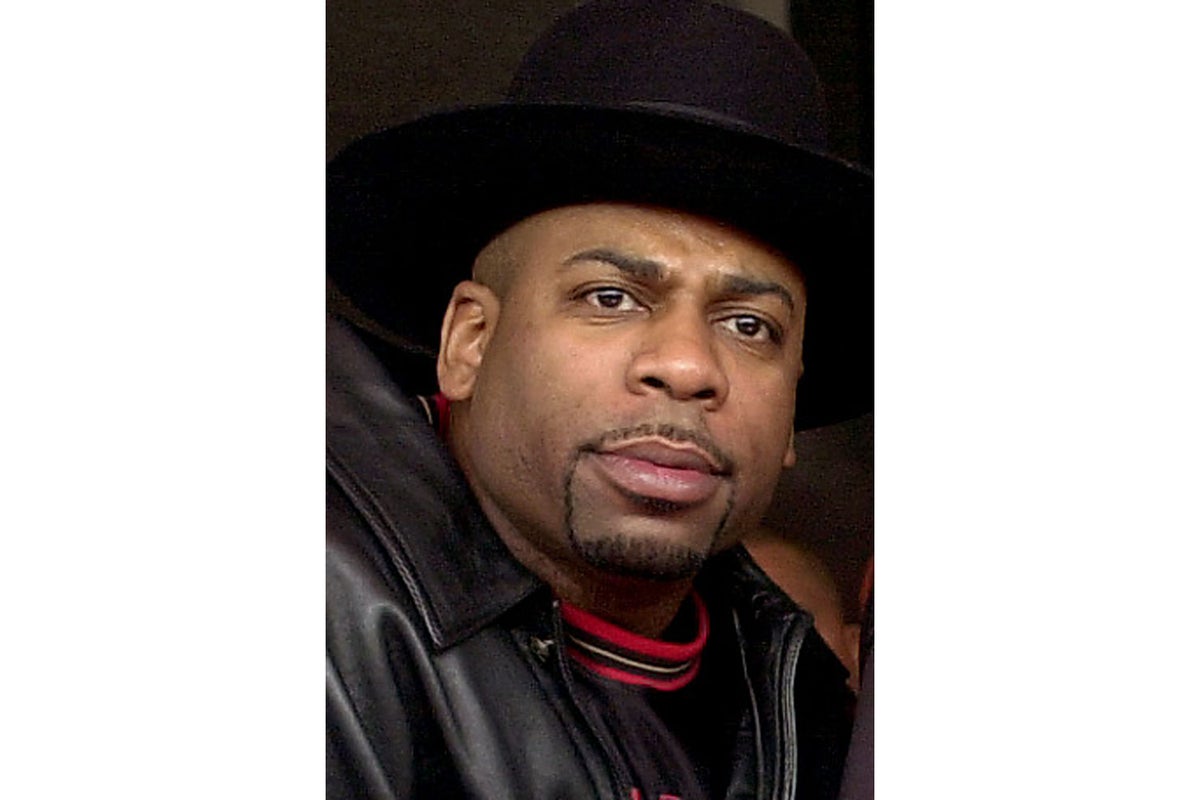
The conviction of Jay Bryant, the third defendant to plead guilty or be convicted in the 2002 murder of Jason "Jam Master Jay" Mizell, signals the total erosion of the "street-level silence" defense mechanism that shielded high-profile suspects for over two decades. This case does not represent a sudden discovery of new forensic evidence; rather, it demonstrates the Lag-Time Decay of Criminal Insulation. In complex homicides involving cultural icons, the initial barrier to prosecution is a social and economic ecosystem that prioritizes local protectionism over judicial cooperation. As time passes, the cost of maintaining this silence rises, while the legal leverage held by federal prosecutors increases, eventually forcing a structural collapse of the conspiracy.
The resolution of this case rests on three distinct pillars of failure: the breakdown of narcotics-based economic incentives, the strategic application of the federal Racketeer Influenced and Corrupt Organizations (RICO) statutes to individual acts of violence, and the psychological attrition of witnesses. Don't forget to check out our previous coverage on this related article.
The Economic Catalyst: Narcotics Distribution as a Risk Multiplier
The fundamental motive behind the murder of Mizell was not a personal grievance but a disrupted supply chain. The prosecution’s framework establishes that the 2002 homicide was a direct response to Mizell's decision to exclude his associates, Ronald Washington and Karl Jordan Jr., from a multi-kilogram cocaine distribution deal in Maryland.
To understand the violence, one must quantify the Opportunity Cost of Exclusion. Within the high-risk environment of illegal narcotics, an "expected profit" is often treated as realized capital. When Mizell cut these associates out of the transaction—reportedly worth nearly $200,000 in 2002 currency—he didn't just deny them future earnings; he created a perceived debt. In the logic of criminal enterprises, the murder served a dual purpose: To read more about the history here, The New York Times offers an in-depth summary.
- Direct Retribution: Liquidating the individual responsible for the financial loss.
- Signal Utility: Maintaining the credibility of the perpetrators' threats to ensure future compliance from other partners.
Jay Bryant’s role, specifically his admission to being the individual who facilitated entry into the 24/7 Studio in Jamaica, Queens, highlights the Operational Redundancy required for such an execution. Bryant was not the shooter—that role was attributed to Karl Jordan Jr.—but he provided the critical "insider" access that bypassed the studio's security protocols. His recent guilty plea to a count of second-degree murder reflects a strategic calculation by the defense: the probability of acquittal at trial had dropped to near zero following the convictions of his co-defendants in February 2024.
The RICO Framework and the Federalization of Local Crime
The pivot point in this 22-year investigation was the transition from local homicide inquiry to federal racketeering prosecution. The Eastern District of New York utilized federal resources to bridge the gaps that local law enforcement could not close.
The federal government’s involvement changed the Risk-Reward Calculus for potential witnesses. Unlike state-level prosecutions, federal cases offer more substantial witness protection resources and the "Global Settlement" leverage, where witnesses can trade information for immunity or reduced sentences in unrelated federal drug or firearm cases. This created a bottleneck for the defendants. Once the first witness "broke" the code of silence, the structural integrity of the defendants' alibis disintegrated.
[Image of federal court system hierarchy]
The legal strategy employed here focuses on Vicarious Liability. Even though Bryant did not pull the trigger, his presence at the scene and his role in the logistical preparation made him equally liable under the "felony murder" rule and federal conspiracy laws. By securing a guilty plea from Bryant, the government has finalized the narrative of the event, leaving no room for alternative theories regarding a "mystery fourth man" or unknown assailant.
The Attrition of Witness Silence
The two-decade delay in these convictions is a study in Social Insulation Decay. In 2002, the witnesses—many of whom were inside the studio—were young, vulnerable to intimidation, and deeply embedded in a subculture that viewed cooperation with police as a terminal social and physical risk.
Three factors contributed to the eventual cooperation of these witnesses:
- Generational Distance: As witnesses aged, their proximity to the criminal lifestyle decreased. The immediate threat of physical retaliation weakened as the social structures of 2002 Queens evolved or dissolved.
- Legal Compulsion: Federal grand jury subpoenas and the threat of perjury charges provided witnesses with a "forced exit" strategy. They could justify their testimony to their peers as a necessity to avoid their own incarceration, rather than a voluntary betrayal.
- The Inevitability of Conviction: Once the Department of Justice unsealed the indictments in 2020, the perceived power of the defendants vanished. Power in criminal organizations is a function of perceived untouchability; once the state proves it can reach a suspect, the incentive for others to protect that suspect evaporates.
Deconstructing the 24/7 Studio Breach
The tactical execution of the murder required bypassing a gated, monitored recording studio. This was not a "random" act of violence but a Targeted Breach. The investigation proved that the killers were known to the victim. Jordan and Washington were not seen as threats by the studio staff until the moment the weapons were produced.
Bryant’s DNA, found on a hat at the scene, served as the Forensic Anchor. While DNA technology existed in 2002, the sensitivity and database cross-referencing available in 2024 are exponentially superior. The presence of Bryant's genetic material in a restricted area of the studio—combined with eyewitness accounts placing him there—created a closed loop of evidence that made a trial defense non-viable.
The defense's attempt to frame the event as a robbery gone wrong falls apart under the Premeditation Metric. The arrival of three men, the specific targeting of Mizell, and the lack of any significant property theft suggest a "hit" rather than a larceny. The killers sought to remove a specific node in their financial network, not to clear the studio of its equipment.
The Residual Impact on Cold Case Strategy
The resolution of the Mizell case provides a blueprint for managing high-profile cold cases where the primary obstacle is witness intimidation rather than a lack of physical evidence. The strategy involves:
- Financial Mapping: Retracing the movement of money and contraband surrounding the victim at the time of death to identify "High-Friction Associates."
- Collateral Pressure: Investigating the current criminal activities of suspects to find leverage for older, unrelated crimes.
- Digital and Genetic Re-evaluation: Subjecting every piece of physical evidence to modern sequencing to find "Micro-Traces" that were invisible 20 years ago.
The limitations of this strategy are clear: it is resource-intensive and requires a degree of political and public pressure that is rarely afforded to non-celebrity victims. The "Jam Master Jay" case benefited from a cultural legacy that kept the pressure on the NYPD and the FBI for over two decades.
The final legal maneuver—Bryant’s plea—removes the possibility of an appeal that could have overturned the previous convictions of Washington and Jordan. By admitting his role, Bryant effectively closes the evidentiary record.
The strategic takeaway for law enforcement and legal analysts is the Certainty of Temporal Collapse. No criminal conspiracy is permanent; it is merely a waiting game between the decay of social loyalty and the persistence of state investigative power. The Mizell case proves that time is an asset for the prosecution, as it slowly stripped the defendants of their social protection until only the forensic and testimonial facts remained.
The immediate operational requirement for the justice system is to apply this "Persistence Model" to other unsolved high-profile homicides from the same era. By identifying the financial friction points that preceded the violence, investigators can move past the search for a "smoking gun" and instead focus on the "broken deal" that necessitates the gun’s use. The conclusion of this case is not just the end of a trial; it is the validation of a long-term investigative pressure model that prioritizes the structural dismantling of an alibi over the immediate pursuit of a confession.