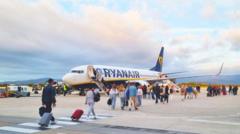
The mainstream media loves a David vs. Goliath narrative, especially when Goliath is an ultra-low-cost airline and David is a parent clutching a toddler. When headlines screamed that Ryanair "reluctantly" agreed to let parents sit with their young children for free, the public cheered. They framed it as a rare victory for consumer rights, a long-overdue capitulation from a corporate villain, and a win for family travel.
They got it completely wrong.
What the public views as a victory is actually a textbook lesson in how regulation stifles consumer choice, drives up baseline costs, and punishes the very people it claims to protect. By forcing an airline to give away a premium asset—spatial real estate on an aircraft—regulatory bodies and outraged public opinion have disrupted a beautifully efficient economic ecosystem.
The lazy consensus says seating families together is a basic human right that airlines monetize out of pure malice. The cold, operational reality is that unbundled pricing is the only reason budget air travel exists. When you force an airline to bundle services by fiat, the costs do not vanish. They just shift into the dark.
The Myth of the Free Seat
Let's dismantle the basic premise immediately. There is no such thing as a free seat on a commercial airliner. Every single square inch of a Boeing 737 cabin is engineered to generate a specific yield per seat-mile.
When Ryanair or any other budget carrier unbundles its product, it allows passengers to buy exactly what they need. If you are a solo backpacker who does not care if you sit next to the bathroom or in the middle seat between two strangers, you pay the bare minimum. You are subsidizing your own indifference. If you want the luxury of choosing your neighbors, you pay a premium.
[Basic Fare] -> Covers the weight of your body and one small bag.
[Seat Selection Fee] -> Covers the operational complexity of modifying the cabin manifest.
When regulatory pressure forces an airline to guarantee adjacent seating for families without an extra charge, the airline has to absorb that operational friction.
I have spent years analyzing airline revenue management systems, and I have seen how quickly a forced compliance mandate can cannibalize a carrier's bottom line. Airlines do not just say "oh well" and watch their margins shrink. They adapt. They adjust their algorithmic pricing models.
To compensate for the lost revenue of those "free" family seat assignments, the base fare for everyone goes up. The parent who used to hunt for the absolute cheapest base fare now pays more upfront, regardless of whether they wanted to select their seat or take their chances at check-in. The illusion of a freebie is shattered by the reality of inflation across the entire inventory.
How Unbundling Actually Benefits Families
The loudest complainers about budget airline fees are usually the ones who understand economics the least. They want the prices of a subterranean flea market but the service of a legacy flag carrier. It does not work that way.
Before the low-cost carrier revolution pioneered by Southwest and perfected by Ryanair, family vacations via air travel were a luxury reserved for the upper-middle class. Unbundled pricing democratized the skies. By stripping away everything from checked bags to seat assignments, airlines dropped the entry price of a flight to the cost of a decent dinner.
Consider a family of four. Under a strict unbundled model:
- They can choose to pay the absolute rock-bottom base fare.
- They can take the gamble on random seat assignment.
- If they get separated, they deal with it for a two-hour flight.
- Total savings: Hundreds of dollars compared to a legacy carrier.
By forcing Ryanair to guarantee adjacent seating, the regulator has essentially decided that parents are too financially illiterate to make this trade-off for themselves. The mandate removes the choice. It forces the family to buy a premium product—guaranteed group seating—by building it into the ecosystem's operational costs.
The Operational Nightmare of Forced Seating
To understand why this is a disaster, you have to look past the ticket counter and look at the gate. Airline operational efficiency relies on a metric known as Aircraft Utilization. A plane only makes money when it is in the air. On the ground, it is a massive liability. Ryanair built its entire empire on the 25-minute turnaround.
Plane Lands -> Passengers Deplane -> Cabin Swept -> Next Group Boards -> Wheels Up (25 Mins)
Now, introduce forced family seating allocations. If a flight is 95% full and three separate families book tickets at the last minute, the automated seating algorithm has to play a high-stakes game of Tetris. It must displace passengers who may have already been assigned seats randomly, or it forces gate agents to manually shuffle passengers at the boarding line.
I have watched gate agents frantically beg solo travelers to swap seats to accommodate a family that refused to pay the seat fee under the old system. It causes delays. A five-minute delay in Dublin ripples through the schedule, causing a 30-minute delay in Ibiza, and a missed slot in Frankfurt by the end of the day.
Who pays for those delays? The passenger, via missed connections, ruined vacations, and ultimately, higher ticket prices to cover the airline's operational inefficiencies.
Answering the Wrong Questions About Air Travel
If you look at online forums or consumer advocacy boards, the questions people ask are fundamentally flawed. They ask: How do I avoid getting separated from my child on a budget flight without paying?
The brutal, honest answer nobody wants to hear is this: If you value guaranteed adjacency so highly that its absence ruins your trip, you should pay for it.
Widespread consumer entitlement has created a culture where people believe they should receive premium operational perks for free. They view the seat selection fee as an arbitrary penalty rather than a market-clearing price for a scarce resource.
The alternative to the contrarian approach has massive downsides. If airlines are legally blocked from charging for family seating, they will simply find other, more aggressive ways to extract that revenue. Expect smaller carry-on allowances, higher fees for checking a stroller, or stricter cancellation policies. The house always wins. The revenue management algorithm always finds its equilibrium.
The Entitlement Trap
The real casualty in this regulatory shift is the consumer's autonomy. By applauding Ryanair's forced compliance, travelers are actively cheering for the death of the ultra-low-cost model. They are trading transparent, a-la-carte pricing for opaque, bundled pricing where you have no idea what you are actually paying for.
If you are a parent, stop celebrating this forced concession. You didn't win a free seat. You just lost the ability to choose a cheaper, stripped-down alternative. The next time you book a flight and notice the base fare is inexplicably higher than it was a few years ago, don't blame fuel prices or inflation. Blame the fact that you demanded a premium service and expected the airline to eat the bill.
Stop asking airlines to play nanny. Buy the ticket, pay for the seat if it matters to you, or accept the random assignment like an adult who understands how a market functions.