Moral outrage is the cheapest currency in geopolitics.
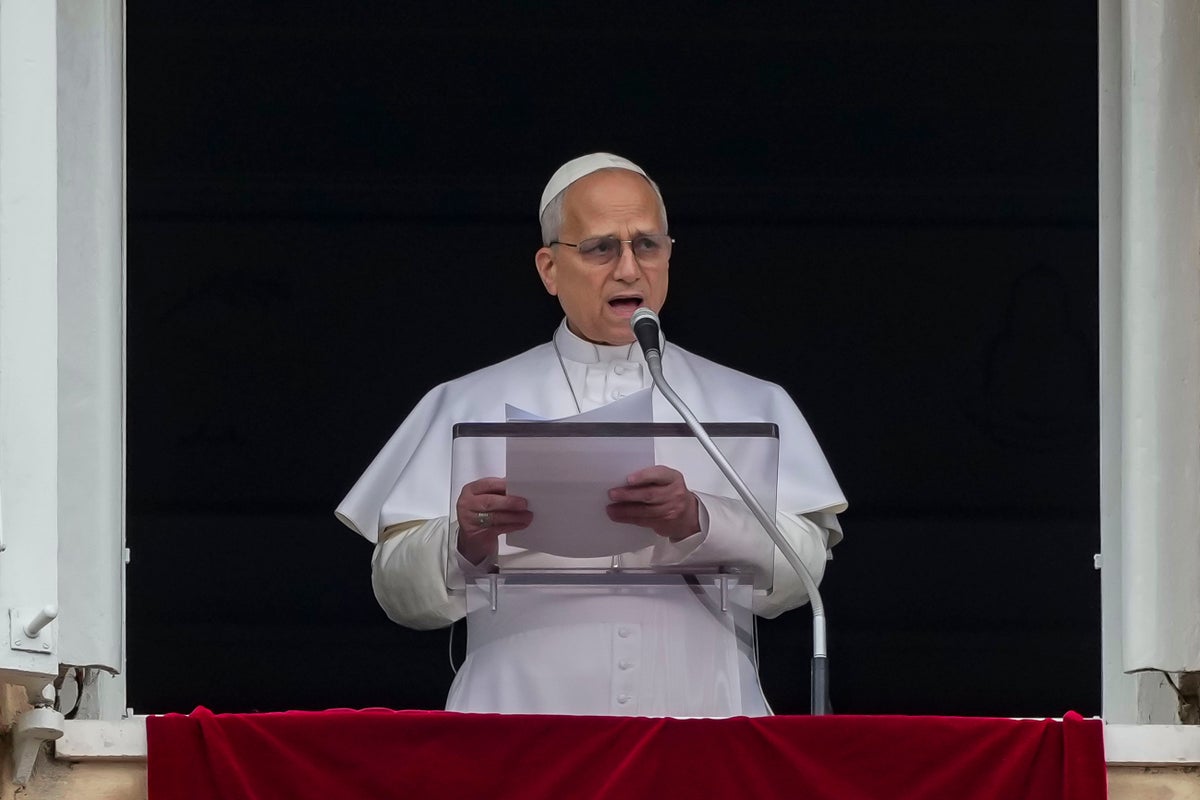
When Pope Leo issues a sweeping demand for a ceasefire following the horrific strike on an Iranian school, the world nods in collective, somber agreement. It feels right. It sounds holy. It fits the narrative of a global spiritual leader standing for the innocent. But if you have spent any time in the rooms where security policy is actually forged—not the cathedrals where it is preached—you know that these high-level calls for "immediate cessation" are often the very things that prolong the agony of a region.
The "lazy consensus" of the international press is that a ceasefire is an inherent good. The logic is simple: guns stop, children live. It’s a beautiful equation that fails the moment it hits the ground. By demanding a halt to operations based on a single, albeit tragic, event, the Vatican isn't brokering peace; it’s providing a tactical reset for the status quo that caused the violence in the first place.
The Myth Of The Neutral Arbiter
Western media loves the image of the Pope as a neutral, third-party observer. This is a fundamental misunderstanding of the Holy See’s role in Mediterranean and Middle Eastern history. The Papacy is a political actor with its own set of regional interests, specifically the protection of Christian minorities and the maintenance of "status quo" agreements over holy sites.
When the Pope demands a ceasefire, he is not just asking for peace. He is exerting soft power to freeze a conflict at a specific moment in time.
Imagine a scenario where a state-sponsored entity is on the verge of losing its ability to launch cross-border strikes. An external, moralizing force steps in and demands everyone stop. Who benefits? Not the civilian population that will be subjected to a "frozen" conflict for the next decade. The benefit goes entirely to the aggressor who was about to lose their leverage.
I’ve sat through enough "peace summits" to see how this plays out. One side uses the pause to re-arm, the other side loses its momentum, and three months later, we are right back to the same body counts—only this time, the weapons are more sophisticated because they had the "breather" the Vatican provided.
Why Ceasefires Often Increase Total Mortality
This is the counter-intuitive truth that people find repulsive: Intermittent ceasefires often lead to higher total death tolls than sustained conflicts that reach a definitive conclusion.
When a conflict is allowed to reach its natural "culminating point"—a term used by military theorist Carl von Clausewitz to describe the moment an attacker can no longer sustain an advance—it creates the conditions for a real, negotiated settlement. By artificially interrupting this process through "moral pressure," external actors ensure that neither side ever reaches that point.
- Resupply Cycles: A ceasefire is a logistical gift. In the Middle East, this often means the replenishment of rocket supplies and the shoring up of tunnel networks.
- Moral Hazard: If a group knows that attacking a school or a hospital will trigger an immediate international outcry that forces their opponent to stop, they have a tactical incentive to put civilians in harm’s way.
- The "Forever War" Loop: By preventing a decisive outcome, you guarantee that the conflict will reignite. Ten "one-week ceasefires" over five years result in more dead children than one decisive three-month campaign that actually shifts the political reality.
The Pope’s demand ignores the mechanics of deterrence. If the only consequence for a deadly escalation is a sternly worded letter from Rome and a temporary pause, there is no reason for any actor in the Middle East to change their behavior.
The Flawed Premise Of Religious Intervention
The "People Also Ask" section of any search engine is filled with queries like "Can the Pope bring peace to the Middle East?"
The brutal, honest answer is no. In fact, he might be the least qualified person to do so.
The conflict in the Middle East is not a misunderstanding that can be solved with a group hug and a prayer. It is a fundamental clash of Westphalian sovereignty, non-state proxy warfare, and existential security dilemmas. To approach it as a "crisis of the heart" is insulting to the people living through it.
When Pope Leo speaks, he frames the Iranian school attack as a failure of human empathy. It wasn't. It was likely a failure of intelligence, a calculated risk gone wrong, or a deliberate provocation by a specific military unit. Treating a surgical or structural failure as a generic "sin" prevents us from identifying and fixing the actual cause of the tragedy.
The Battle Scars Of Policy
I’ve watched diplomatic missions waste months trying to align their language with Vatican "peace frameworks" only to have the entire thing collapse because the framework didn't account for the reality of IRGC (Islamic Revolutionary Guard Corps) funding or the internal politics of the Levant.
The downside of my contrarian approach? It’s cold. It’s clinical. It acknowledges that sometimes, the road to a lower body count in 2030 requires a harder stance in 2026. It’s a hard pill to swallow for those who want the "quick fix" of a ceasefire. But the "quick fix" is exactly what has kept the Middle East in a state of perpetual combustion for seventy years.
Stop Asking For Ceasefires
Instead of asking "When will they stop fighting?", we should be asking "What conditions are necessary for a sustainable peace?"
A ceasefire is a band-aid on a gunshot wound. It stops the bleeding for ten minutes while the patient bleeds out internally. If the Vatican truly wanted to be a "game-changer"—to use a phrase the consultants love—they would stop calling for pauses and start calling for the total dismantling of the proxy architectures that make schools targets in the first place.
But they won't. Because calling for a ceasefire makes you look like a saint. Calling for the hard, grinding, and often violent work of dismantling terror networks makes you look like a politician.
Pope Leo chose the halo. The people in the Middle East will pay the price for his lighting.
Stop falling for the moral theatre. The next time you see a headline about a "Demand for Ceasefire," read it for what it actually is: an admission of intellectual and diplomatic bankruptcy. Real peace isn't the absence of noise; it's the presence of a stable, enforceable order. And you don't get that by hitting the pause button every time the situation gets uncomfortable for Western observers.
Get comfortable with the discomfort of a decisive resolution, or get used to reading about school attacks every six months for the rest of your life.