Japan just did something that would’ve been unthinkable a decade ago. On March 31, 2026, the Ground Self-Defense Force officially began deploying upgraded Type-12 surface-to-ship missiles at Camp Kengun in Kumamoto. This isn't just another routine hardware update. By extending the range of these missiles from a modest 200km to over 1,000km, Tokyo has effectively ended its era of "passive defense."
If you’re wondering why this matters, look at a map. From Kyushu, these missiles can now reach the Chinese mainland. They cover the Taiwan Strait and deep into the East China Sea. For the first time since 1945, Japan has the homegrown "teeth" to hit back at an aggressor's launch sites. Beijing isn't just annoyed; they're forced to rewrite their entire playbook for a Taiwan contingency.
The End of the Sanctuary
For years, China’s military planning relied on the fact that Japanese territory was a safe zone. Japan had interceptors to shoot things down, sure, but it couldn't punch back. That meant Chinese bases along the coast could operate with relative impunity.
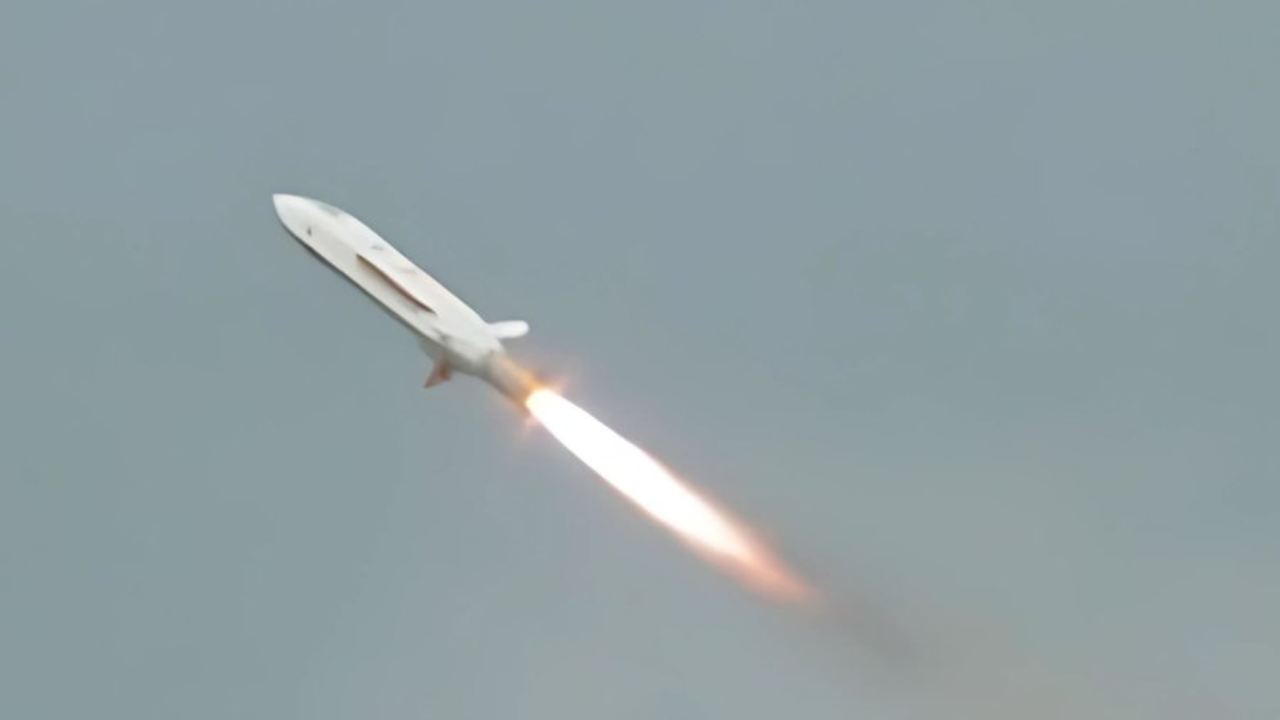
The upgraded Type-12 changes that math. Developed by Mitsubishi Heavy Industries, this version is essentially a new weapon. It features a stealthy, low-observable airframe designed to slip through radar nets. It doesn't just fly in a straight line, either. Recent tests by the Acquisition, Technology & Logistics Agency (ATLA) showed the missile performing complex terminal maneuvers—like barrel rolls—to dodge high-tech missile defenses.
This shifts the dynamic from "shield only" to "shield and spear." Beijing now has to consider that any strike on Japanese islands—or even a move against Taiwan that draws Japan in—could result in immediate, precision retaliation against its own ports and airfields.
Controlling the Chokepoints
The deployment in Kumamoto is strategic. It sits at the gateway to the Nansei Islands, a chain that stretches toward Taiwan like a defensive wall. When you combine these long-range Type-12s with the Tomahawk cruise missiles Japan is currently buying from the U.S., you get a "no-go zone" for the People's Liberation Army Navy (PLAN).
- Sea Denial: The PLAN's path to the deep Pacific runs through narrow chokepoints like the Miyako Strait. With 1,000km-range missiles, Japan can close these doors from hundreds of miles away.
- Mutual Sea Denial: Experts like John Bradford have noted this creates a "mutual sea denial" scenario. If both sides can sink each other's ships with land-based batteries, the massive carrier groups and destroyers become liabilities rather than assets.
- Taiwan’s Shield: By securing the northern end of the "first island chain," Japan allows Taiwan to focus its limited resources on its own immediate western coastline rather than worrying about a pincer move from the north.
The ISR Gap
You can't hit what you can't see. Having a 1,000km missile is useless if your radar only sees 200km. Japan knows this is its current weak spot. They only have a handful of intelligence satellites, which isn't enough for the real-time targeting a fast-moving conflict requires.
To fix this, Tokyo is pouring money into a satellite constellation project. Partnering with companies like ICEYE, they're launching a network of synthetic-aperture radar (SAR) satellites. These can see through clouds and smoke, 24/7. The first phase starts delivering data in April 2026. Until that network is fully operational by 2029, Japan will still lean heavily on U.S. "eyes in the sky" to guide its new long-range hammers.
Beijing's Reaction and the Risks
Don't expect China to sit still. Their defense ministry has already labeled this "new militarism." We're likely to see an increase in "gray zone" tactics—more Chinese ships lingering near the Senkaku Islands and more bomber flights skirting Japanese airspace.
There's also the risk of an arms race. If Japan builds longer-range missiles (there are already whispers of a 1,500km variant), China will simply build more sophisticated interceptors or expand its own missile batteries. It’s a classic security dilemma: what Tokyo sees as a necessary deterrent, Beijing sees as a provocative threat.
What This Means for Regional Security
This isn't just about Japan and China. It’s a signal to the whole region. The "division of labor" between the U.S., Japan, and the Philippines is becoming concrete. While the U.S. provides the heavy nuclear umbrella, Japan is taking over the role of the regional sentry, capable of holding the line with its own high-tech arsenal.
If you’re following this, keep your eye on the next deployment sites. Camp Fuji and sites in Hokkaido are next on the list later this year. These moves will expand the reach to cover North Korean launch sites and Russian facilities in the Far East, making Japan's "counterstrike" posture a 360-degree reality.
The days of Japan being a "pacifist bystander" are over. It's now a frontline actor with the hardware to back up its words. For anyone tracking the stability of the Indo-Pacific, the arrival of those missile launchers in Kumamoto is the clearest sign yet that the balance of power has shifted.
If you want to understand the technical side better, you should look into the specific propulsion upgrades of the Type-12, particularly the XKJ301-1 turbofan engine which provides the efficiency needed for such massive range jumps.