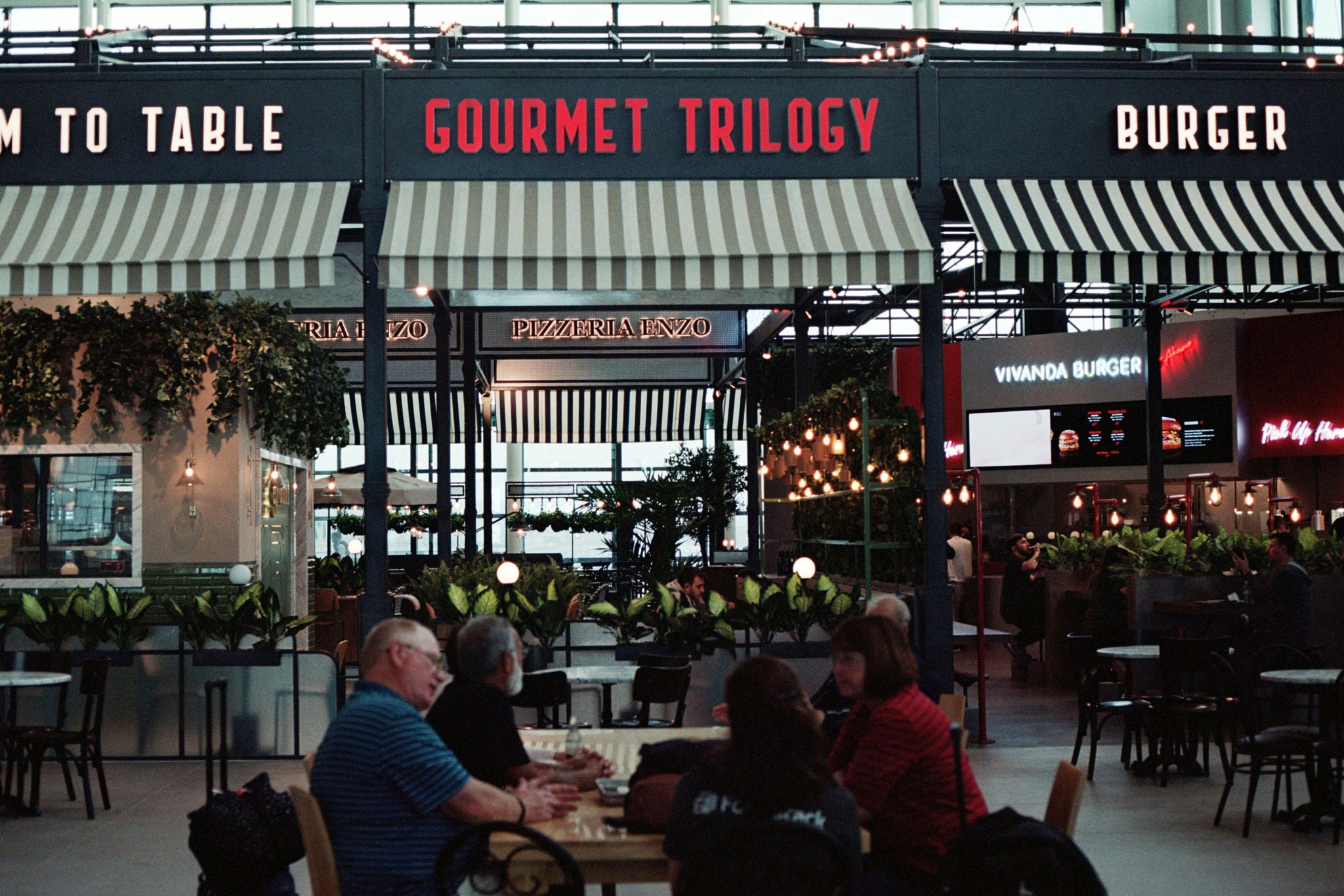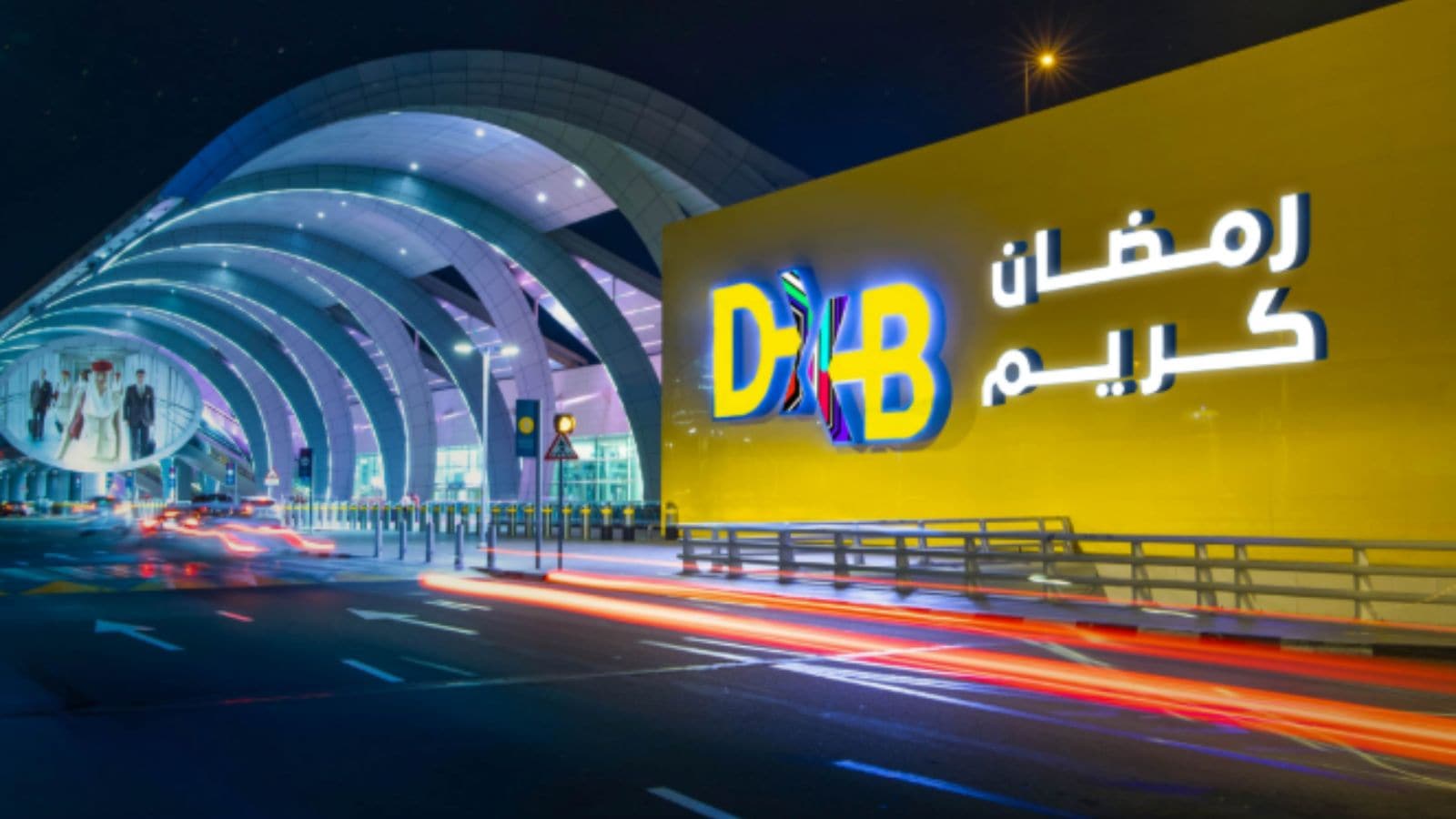
The marble floors of Dubai International Airport (DXB) are designed to reflect a specific kind of light. It is the glow of perpetual motion. In this space, time is usually measured not by clocks, but by the rhythmic flicker of the departure boards—a digital heartbeat that syncs the lives of eighty million people a year. London to Sydney. Mumbai to New York. The world meets here to change planes, buy gold-flecked chocolate, and keep moving.
Then, the boards went black.
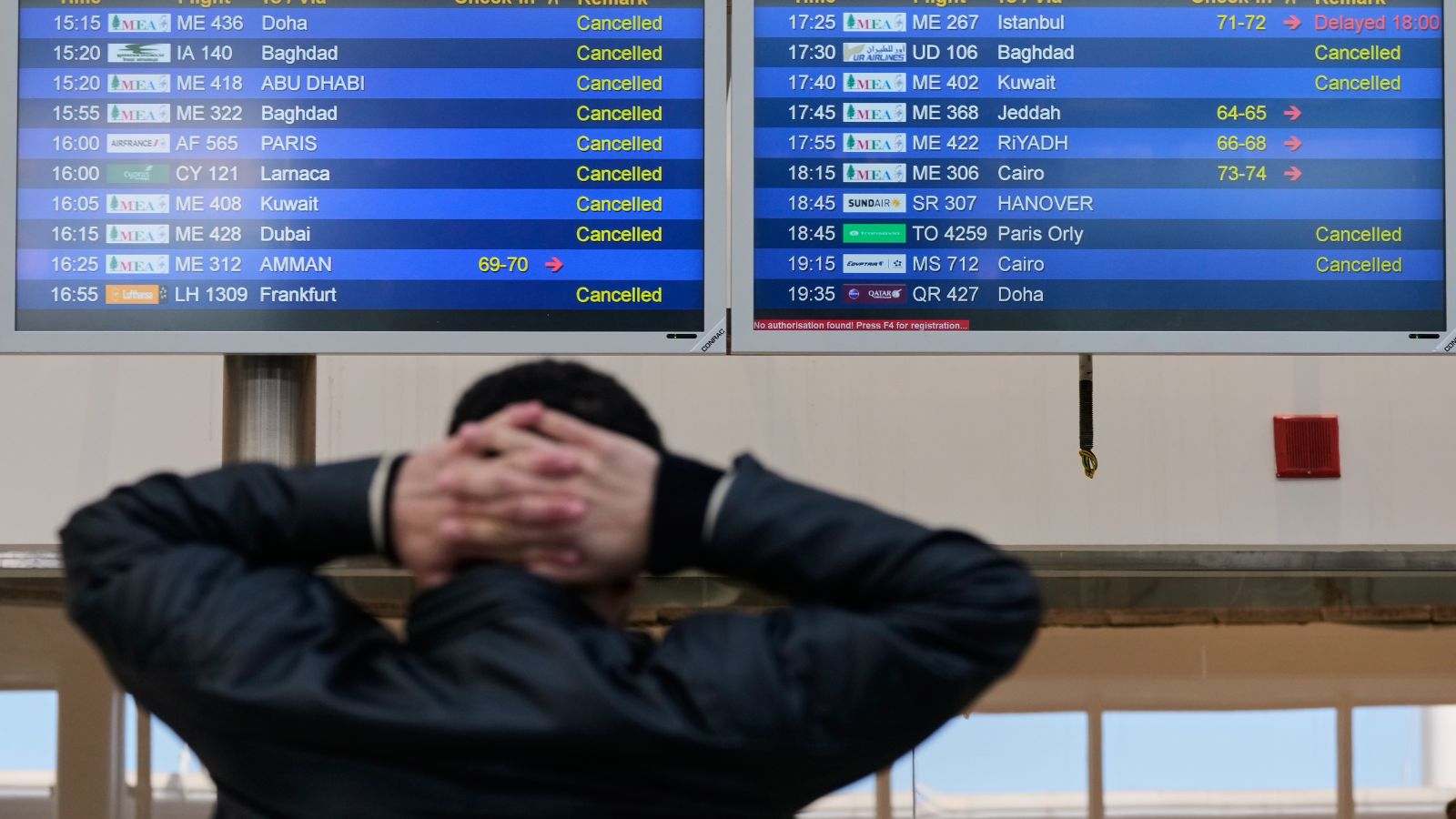
It started with a tremor in the digital infrastructure, a ripple of "delayed" status updates that quickly curdled into "cancelled." Within an hour, the world’s busiest international aviation hub didn’t just slow down. It froze. Outside, in the high-altitude corridors of the Persian Gulf, the sky was being carved up by something far less predictable than a Boeing 777. As missiles and drones from the Iran-Israel escalation crossed the stars, the civilian world was told, quite literally, to stay on the ground.
The Weight of a Stationary Wing
To understand the scale of a total ground stop at DXB, you have to visualize the physics of a bottleneck. Imagine a garden hose flowing at full pressure, and then suddenly, someone kinks the line. The pressure doesn't vanish; it builds until the plastic screams.
When the UAE authorities shuttered the airspace, they weren't just stopping planes. They were interrupting thousands of individual human dramas. Consider a hypothetical passenger—let's call her Elena. She is sitting in Gate B12, clutching a sourdough starter in a cooler bag and a ticket to Melbourne. She hasn't seen her daughter in three years. For Elena, the geopolitical chess match between Tehran and Jerusalem isn't a headline. It is the sudden, terrifying realization that she is trapped in a gilded cage of duty-free perfume and recycled air, 7,000 miles from home, with no idea when the sky will open again.
Silence in an airport is an unnatural thing. We are used to the low-frequency hum of engines and the polite chime of boarding calls. When that stops, the silence feels heavy. It feels like a physical weight pressing down on the shoulders of the transit passengers curled up on yoga mats and designer suitcases.
The Invisible Fortress
The decision to ground flights wasn't a choice made in a vacuum. It was a mathematical necessity born of modern ballistics.
When a conflict involves ballistic missiles and long-range interceptors, the "ceiling" of safety for a commercial airliner evaporates. A typical long-haul flight cruises at roughly 35,000 to 40,000 feet. A ballistic missile, during its mid-course phase, can reach altitudes of over 100 miles. As these projectiles re-enter the atmosphere or are intercepted by batteries like the Iron Dome or the Arrow system, the debris field becomes a lottery of kinetic energy.
No airline CEO is willing to play that lottery.
The logistical nightmare follows a cruel geometry. For every hour the gates stay closed, it takes roughly three days for the network to recover. Planes are in the wrong cities. Crews have timed out of their legal working hours. The "slip" begins.
Dubai is the hinge of the global East-West axis. When that hinge rusts shut, the friction is felt in Heathrow, in Changi, and in LAX. We often speak of the "global village," but on a night like this, the village feels like a series of isolated islands, separated by a sea of restricted coordinates and military "No-Fly" zones.
The Human Cost of High-Stakes Geopolitics
Walking through the terminal during the height of the grounding, you see the thin veneer of civilization start to fray. Luxury lounges, usually bastions of quiet privilege, become makeshift barracks.
There is a specific kind of exhaustion that comes from being "in transit" during a crisis. It is a suspension of identity. You are no longer a CEO, a student, or a grandmother. You are a barcode on a boarding pass that the machine refuses to read.
I spoke with a ground crew member—hypothetically, let’s call him Omar—who had been on his feet for eighteen hours. He described the look in people's eyes as "the blink." It’s the moment a passenger stops arguing about their "Platinum Status" and realizes that no amount of money can buy a path through a war zone.
"They look at the windows," Omar said. "They look at the planes sitting out there on the tarmac, perfectly fueled, perfectly clean, but as useless as paperweights. That’s when the panic turns into a very quiet, very sad kind of waiting."
The Digital Ghost Map
If you were to look at a flight tracking app during the clash, the visual was haunting. A massive, circular void sat over the Middle East. It looked like an eye staring back at the satellites.
Flights coming from Europe were performing massive, fuel-chugging U-turns over Turkey. Aircraft from Africa were hugging the western coast, adding hours to journeys that were already grueling. This isn't just a matter of lost time. It is a matter of carbon, of massive financial hemorrhaging for carriers already operating on razor-thin margins, and of the sudden fragility of our interconnected lives.
We live in an era where we expect the world to be accessible at the click of a button. We have been lied to by the ease of our technology. We believe that because we can see a map of the world on our phones, we own the world. But a few hundred kilograms of explosives and a shift in regional rhetoric can turn the world’s most sophisticated transport network into a parking lot in the desert.
The Dawn of Uncertainty
As the sun began to rise over the Burj Khalifa, the first signs of movement returned. Not a flood, but a trickle. A single flight to Riyadh. A cargo plane to Frankfurt.
The backlog, however, remained a mountain. Tens of thousands of people were now part of a secondary crisis: the scramble for a hotel room in a city that was already at capacity. The "chaos" reported by the news was actually a very orderly kind of desperation. People standing in lines that stretched past the high-end watch boutiques, waiting for a voucher, a meal, or a sign that the sky was safe again.
The conflict between nations is often discussed in terms of "strategic interests" and "proportional responses." These are cold, sterile words. They do not account for the smell of a crowded terminal where the air conditioning is struggling to keep up. They do not account for the father trying to explain to his crying toddler why they are sleeping on a linoleum floor next to a Starbucks.
The Fragile Thread
This event serves as a stark reminder of how thin the thread of our global mobility truly is. We move through the world on the assumption of a shared peace—or at least, a shared agreement that the lanes of commerce are sacred.
When that agreement breaks, the consequences ripple outward in ways that defy simple reporting. It isn't just about "grounded flights." It is about the sudden, jarring reminder that our modern lives are built on top of ancient fault lines.
The planes eventually took off. The marble floors of DXB were polished again, erasing the scuffs of a thousand frantic footsteps. The heartbeat returned. But for those who were there, the flicker of the departure boards will always carry a different meaning now. It is no longer a guarantee. It is a flickering candle in a very large, very dark room.
The world is smaller than we think, until the moment we are told we can no longer cross it. Then, suddenly, the distance between two gates feels like an ocean.
The next time you sit in a pressurized cabin, looking down at the clouds, remember the night the desert stood still. Remember that the "busy hub" is not a machine. It is a gathering of souls, held aloft by a peace that is far more precarious than the engines keeping you in the air.
The sky is only as open as the world below it allows it to be.