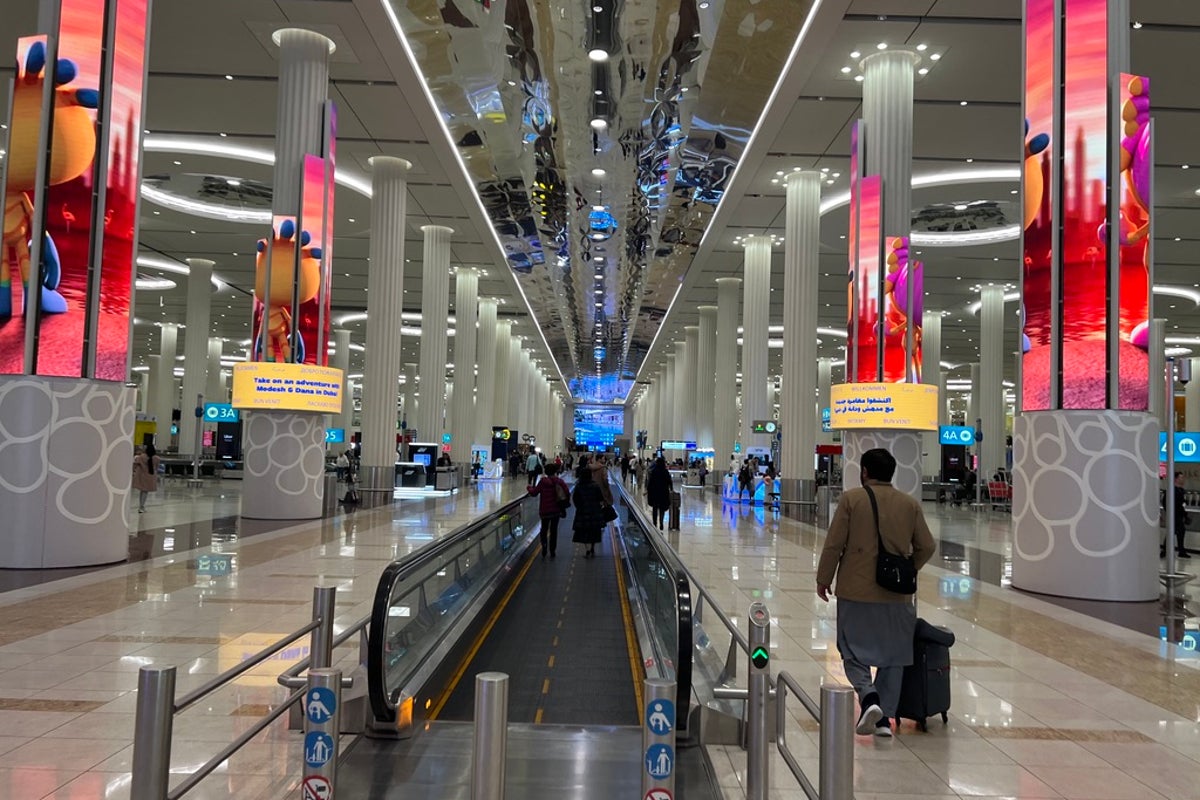
The coffee in Terminal 3 is never truly hot. It exists in a perpetual state of lukewarm readiness, much like the city of Dubai itself—a place built on the audacious premise that the desert can be tamed by air conditioning and chrome. On this particular Tuesday, the air inside the terminal carried the usual hum of a thousand different lives crossing paths. A businessman from London checked his watch; a family from Mumbai wrangled a toddler near the duty-free gold; a backpacker stared blankly at the flight board, waiting for a connection to Bali.
Then, the world outside the glass shifted.
It wasn’t a sound at first. It was a vibration. A low-frequency shudder that traveled through the soles of expensive loafers and worn sneakers alike. People stopped. The British businessman lowered his phone. The toddler went silent. For a heartbeat, the busiest international hub on the planet held its breath.
We often think of geopolitical conflict as something that happens "over there." We watch it through the filtered lens of a television screen or a scrolling social media feed. We see the grainy footage of interceptor missiles and the fiery streaks across a midnight sky in a distant capital. But when the geography of war intersects with the geography of global travel, the abstraction vanishes. The "incident" at Dubai International Airport wasn't just a logistical hiccup or a data point for a news ticker. It was the moment the ceiling of the world felt suddenly, terrifyingly thin.
The Anatomy of a Shiver
As reports began to trickle in of injuries and chaos following the Iranian strikes across the region, the reality on the ground was far more visceral than any headline could capture. At an airport, the primary currency is certainty. You give the airline your money; they give you a seat and a guarantee that the laws of physics and international diplomacy will hold firm until you touch down. When that certainty evaporates, the atmosphere curdles.
The injuries reported weren't just the result of falling debris or the physical manifestations of a regional escalation. They were the products of a sudden, collective panic. Imagine a space designed for fluid movement—wide corridors, moving walkways, open atriums—suddenly filled with thousands of people who realize, all at once, that they are trapped in a glass box.
In the rush to find cover, or simply to move away from the massive windows that overlook the runways, the human element took over. Shoulders collided. Luggage became obstacles. The very infrastructure meant to facilitate a luxury experience became a maze of hazards. One woman, reportedly traveling with her elderly mother, described the sound of the concourse as a "dull roar of sliding feet." It is a sound you never forget once you’ve heard it. It’s the sound of a crowd losing its center.
The Invisible Border
Geopolitics is often discussed in terms of maps and borders, but the most significant borders are the ones we can’t see. There is a psychological border between being a "traveler" and being a "civilian caught in a zone of tension." Dubai occupies a unique space in the global imagination. It is the neutral ground, the gleaming oasis where the world meets to trade, sleep, and transit.
When the Iranian strikes lit up the regional sky, that neutrality felt under siege. The strikes were a response to a long-simmering sequence of escalations, a kinetic dialogue between nations that has been written in smoke for decades. But for the person sitting at Gate B12, the history of the Middle East matters far less than the immediate reality of a diverted flight or a grounded aircraft.
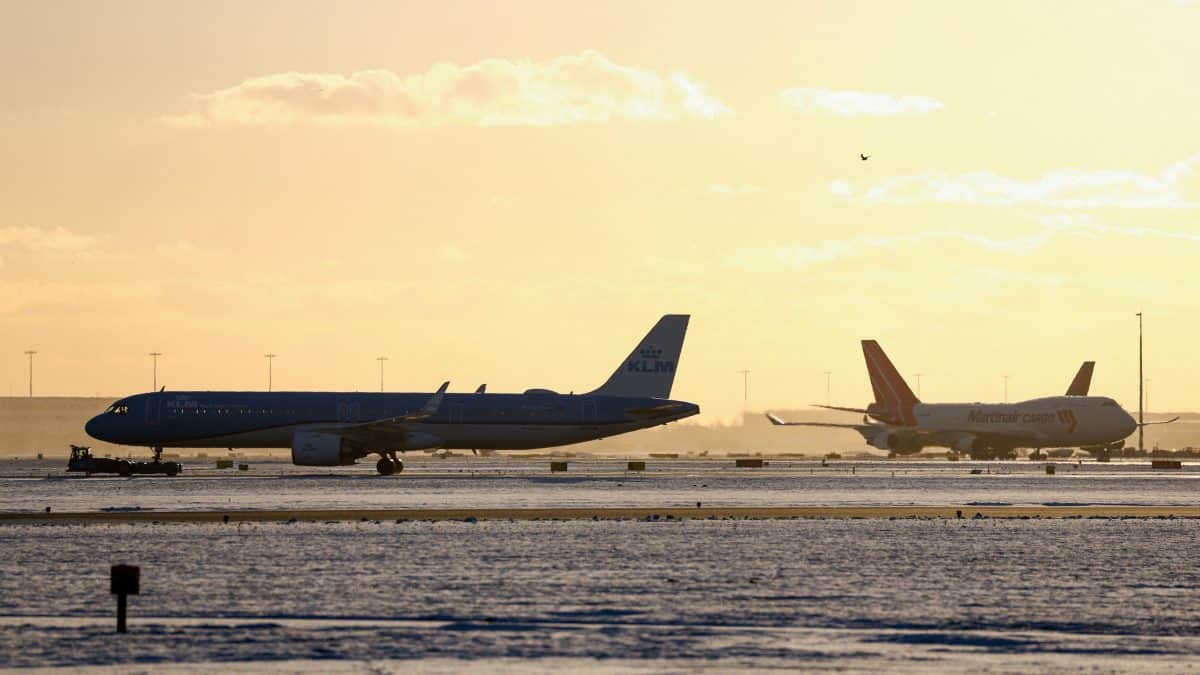
The logistical ripple effect of an incident like this is staggering. When Dubai stutters, the global aviation heart skips a beat. Flights originating in New York, Sydney, and Paris are suddenly redirected to airports that aren't prepared for them. Pilots are forced to calculate fuel loads against closed airspaces. Air traffic controllers, the unsung poets of the sky, must rewrite the poetry of flight paths in real-time.
Consider the sheer complexity of a single Airbus A380. It is a marvel of engineering, a $450 million statement of human capability. Yet, in the face of a regional missile barrage, it is remarkably fragile. It requires a specific corridor of peace to function. When that corridor closes, the plane becomes a very expensive piece of stationery.
The Weight of the Wait
By the time the sun began to crawl over the Hajar Mountains the following morning, the immediate physical danger had passed, but the weight remained. The "multiple injuries" cited in the official reports were treated. The glass was swept up. The flight boards began to flicker back to life with the cold, digital promise of "On Time."
But you could see it in the eyes of the passengers. They were looking at the ceiling.
There is a specific kind of exhaustion that comes from being caught in a historical moment you didn't ask to be part of. It’s a fatigue that settles into the bones. The traveler’s mask—that practiced expression of boredom and mild annoyance—had been stripped away, replaced by something raw.
We live in an age where we believe we have conquered distance. We have made the world small enough to fit into a boarding pass. We have convinced ourselves that the frictions of history can be smoothed over by high-speed internet and duty-free shopping. The incident in Dubai was a reminder that the world is still vast, still volatile, and still very much connected by the fragile threads of peace.
The businessman eventually got his flight. The family from Mumbai found a quiet corner to sleep. The backpacker watched the sky, no longer looking for a plane, but wondering if the blue was as solid as it looked.
The airport resumed its hum. The coffee machines hissed. The gold in the shops glittered under the LED lights. On the surface, everything returned to the standard operating procedure of the 21st century. Yet, beneath the polished floors, the vibration lingered—a reminder that we are all just guests in a landscape that occasionally remembers its own power.
The sky stayed open, but for those who were there, the horizon had moved just a little bit closer.