The siren in Tel Aviv doesn't sound like a warning. It sounds like a physical weight pressing down on your chest, a jagged, mechanical howl that tears through the humid Mediterranean air until the silence of the night feels like a distant memory. In a basement shelter off Rothschild Boulevard, a young woman named Maya holds her breath. She isn't looking at the ceiling. She is looking at her phone, watching a live stream of the sky she can no longer see.
Above her, the darkness has been replaced by a frantic, neon geometry. This is the "decisive phase" the generals speak of in televised briefings. To the military strategists, it is a matter of attrition, ballistics, and interceptor ratios. To Maya, it is the sound of her windows vibrating in their frames.
The conflict between Israel and Iran has finally shed its skin. For decades, it was a "shadow war," a series of whispers, cyber-attacks, and proxy skirmishes fought in the pomegranate groves of Lebanon or the sterile hallways of nuclear facilities. Now, the shadows have vanished. The war has stepped into the light, and it is louder than anyone predicted.
The Math of Survival
War is often reduced to a ledger. On one side, you have the Iranian arsenal—a staggering collection of Fattah hypersonic missiles and Shahed drones that swarm like angry hornets. On the other, you have the David’s Sling and the Iron Dome, Israel’s technological shield.
But ledgers don't account for the human cost of a "decisive" moment.
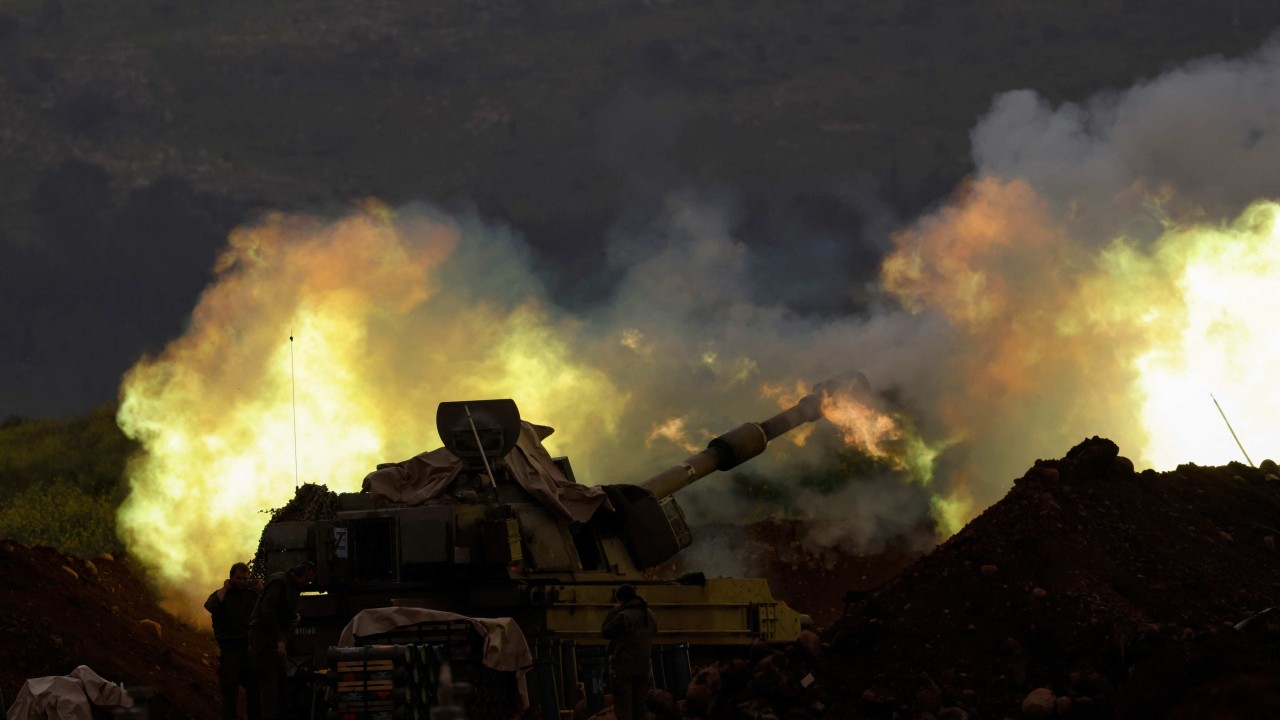
When an interceptor meets a missile mid-air, the result is a flash that illuminates the desert for miles. It looks like a celebration. It feels like a stay of execution. The Israeli defense ministry warns that the window for a diplomatic off-ramp is closing, replaced by a cold, hard corridor of military necessity. They call it a turning point. In reality, it is a staircase where every step is made of glass.
Consider the logistics of a single hour of this "decisive phase."
- Thousands of gallons of rocket propellant ignited in an instant.
- Millions of dollars in precision engineering vaporized in a heartbeat.
- A heartbeat that, for people like Maya, skips every time the ground shakes.
The technical term is "saturation." Iran's strategy is to overwhelm the defense systems, to find the one crack in the armor by sheer volume. It is a terrifyingly simple premise: if you throw enough stones, eventually one will shatter the window. Israel’s response is equally absolute. They are no longer content to simply catch the stones; they are looking at the person throwing them.
The Invisible Stakes
We talk about borders as if they are lines drawn in the sand, but in modern warfare, borders are vertical. They extend into the stratosphere and down into the fiber-optic cables under our feet. When Israel strikes back, they aren't just hitting launch pads. They are dismantling a network of influence that has taken forty years to weave.
There is a specific kind of exhaustion that settles into a population when the "decisive phase" begins. It is the exhaustion of living in a state of permanent "almost."
Almost a total war.
Almost a ceasefire.
Almost a normal life.
In Tehran, the mood is a mirror image of the anxiety in Tel Aviv. There, the "human element" is a shopkeeper named Arash who watches the news on a flickering television. He knows that every missile launched by his government is a paycheck that won't go toward the spiraling cost of bread. He knows that when the "decisive phase" arrives, the people who decided on it are usually the ones safest from its consequences.
The tragedy of the current escalation lies in its predictability. Analysts saw this coming. They mapped the trajectories and calculated the rhetoric. Yet, seeing the map is not the same as feeling the heat of the fire. The "decisive phase" is a euphemism for a gamble where the players are using other people's lives as chips.
The Architecture of the Strike
To understand why this phase is different, you have to look at the targets. We are moving away from symbolic strikes—the kind meant to "send a message" without starting a fire. Now, the targets are structural. We are seeing the systematic targeting of energy grids, command centers, and the very air defense systems that provide a sense of security.
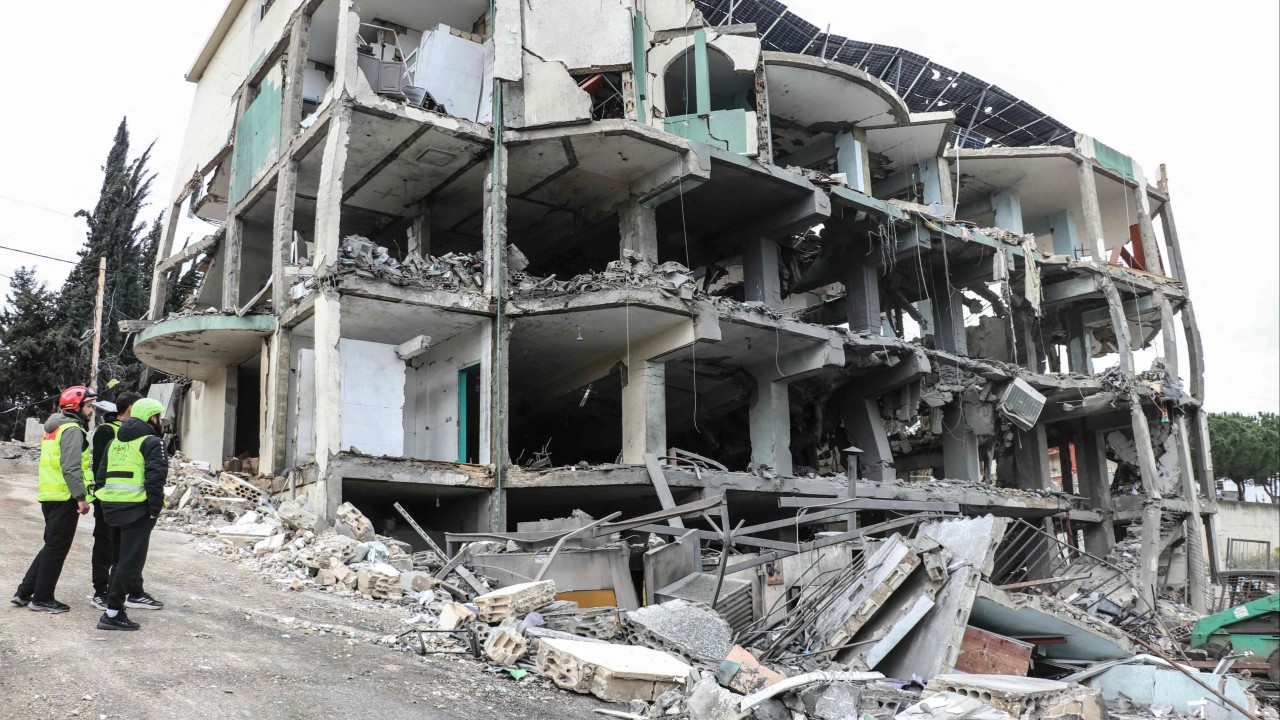
When a power plant is hit, the war enters the home.
It isn't just about the darkness. It’s about the insulin that spoils in a warm refrigerator. It’s about the elevator that stops between floors. It’s about the loss of the internet, the only thread connecting families separated by the chaos. This is the "human-centric" reality of the decisive phase. It is the dismantling of the mundane.
The military logic suggests that by increasing the pressure, one side will eventually break. But history is a stubborn teacher. It shows us that pressure often does the opposite. It hardens. It turns fear into a cold, sharp resolve.
A Sky Full of Ghosts
Imagine the cockpit of an F-35 screaming across the border at twice the speed of sound. The pilot is barely twenty-five years old. He is surrounded by the most advanced technology humanity has ever devised—augmented reality helmets, stealth coatings, AI-assisted targeting.
Yet, as he crosses into enemy airspace, he is as vulnerable as a knight in a suit of tin. He is a ghost in a machine, carrying the weight of a nation’s survival on a joystick. If he succeeds, he is a headline. If he fails, he is a catalyst for the next thousand missiles.
This is the hidden cost of the "decisive" moment. It forces individuals to become icons of a struggle they didn't start.
The media focuses on the hardware. They show diagrams of the "Arrow-3" interceptor and the range of Iranian ballistic missiles. They use words like "kinetic" and "strategic depth." But these words are bandages on a wound they can't quite cover. The real story isn't the range of the missile; it’s the distance between two people who can no longer find a reason to talk.
The Echo of the Last Siren
As the sun begins to rise over the Judean Hills, the smoke from the night’s interceptions lingers like a low-hanging fog. The "decisive phase" hasn't ended; it has merely paused to catch its breath.
Maya emerges from her shelter. She smells the ozone and the dust. She goes to a cafe that is opening its doors because, in this part of the world, opening a cafe is an act of defiance. She orders a coffee and watches the news on her phone. The headlines are the same. "Decisive Phase." "Ongoing Attacks." "Uncertain Future."
She realizes that "decisive" doesn't mean the end. It just means the beginning of something much harder to stop.
The war between Israel and Iran is no longer a geopolitical chess match. It is a living, breathing entity that eats sleep and dreams. It is a fire that has grown too large for its handlers. As the attacks continue, the world watches the screens, waiting for the final blow that never quite comes, while the people on the ground learn to live in the heartbeat between the flash and the bang.
The sky is blue now, clear and indifferent. But everyone knows the red is still there, waiting just behind the light, ready to map the night with the geometry of a new and terrible age.