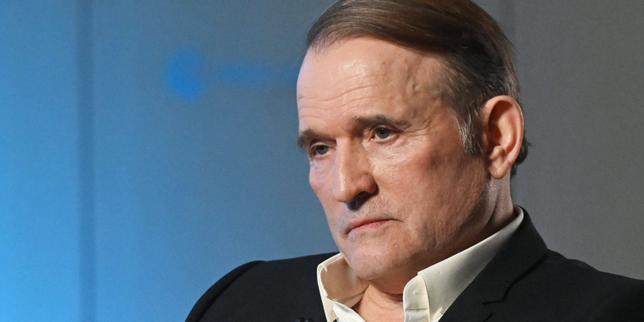
The failure of the Kremlin’s 2022 regime-change operation in Ukraine was not merely a military miscalculation but a fundamental breakdown in political intelligence and the misallocation of "influence capital." Viktor Medvedchuk, the primary vehicle for this projected transition, represented a specific model of high-stakes political brokerage that collapsed under the weight of its own internal contradictions. To understand why Medvedchuk failed to become the "Gauleiter" of Kyiv, one must analyze the structural mechanics of his influence, the disconnect between his reported assets and his actual mobilization capacity, and the systemic feedback loops that blinded Moscow to the reality of Ukrainian civil society.
The Triple-Asset Model of Medvedchuk’s Power
Medvedchuk’s utility to the Kremlin rested on three distinct pillars of perceived value. When these pillars were tested by the friction of a kinetic invasion, they disintegrated simultaneously, revealing a hollow core.
- Media Saturation as Surrogate Sovereignty: Through his associates, Medvedchuk controlled a triad of television channels (112 Ukraine, ZvoK, and NewsOne). The strategic assumption was that control over the information environment would translate into behavioral compliance. This represents a category error in political science: confusing "brand awareness" with "political legitimacy." While these channels could amplify specific narratives, they could not manufacture the localized grassroots support necessary to sustain a coup.
- Economic Intermediation: Medvedchuk functioned as a high-volume node for energy rents, specifically regarding the Prikarpatzapadtrans diesel pipeline. This gave him the ability to fund a sprawling party infrastructure (Opposition Platform — For Life) through gray-market dividends. In a stable environment, this creates a dependency network. In a revolutionary or wartime environment, these financial ties are the first to be severed by state emergency powers.
- The "Messenger" Monopoly: By positioning himself as the sole credible interlocutor between Putin and the Ukrainian elite, Medvedchuk created an information bottleneck. This gave him the power to curate the data reaching the Kremlin, leading to a "Yes-Man" feedback loop where the viability of a pro-Russian government was drastically overstated to maintain the flow of funding.
The Cost Function of Elite Capture
The Russian strategy relied on the principle of "Elite Capture," the theory that securing the top 1% of a nation’s political and economic hierarchy ensures the compliance of the remaining 99%. This strategy ignores the Elasticity of National Identity.
As Medvedchuk’s personal wealth grew—symbolized by the $200 million yacht "Royal Romance" and his opulent estate—his "social distance" from the average Ukrainian voter became an insurmountable barrier. The more resources Moscow poured into Medvedchuk, the more he became a localized caricature of the very oligarchic corruption that the 2014 Maidan Revolution sought to excise. This created a paradoxical outcome: Russian investment in Medvedchuk actually increased the political cost for any other Ukrainian politician to align with Russia, as such an alignment became synonymous with Medvedchuk’s specific brand of extraction.
Structural Blind Spots in Intelligence Acquisition
The reliance on Medvedchuk created a systemic failure in Russian Signal Intelligence (SIGINT) and Human Intelligence (HUMINT). When a single source is responsible for both the implementation of a strategy and the reporting on its success, the data becomes corrupted by "Survival Bias."
Medvedchuk’s party, OPZZh, consistently polled as a significant minority force. However, Moscow’s analysts failed to distinguish between "Pro-Russian Sentiment" (a desire for economic ties and cultural proximity) and "Collaborationist Intent" (a willingness to take up arms or manage a puppet administration during an invasion). Medvedchuk conflated the two to ensure his continued relevance. This led to the Russian military expecting a "bread and salt" welcome that never materialized because the "influence" Medvedchuk sold to the Kremlin existed only in the controlled environment of his own media ecosystem.
The Breakdown of the Transition Protocol
The operational plan to install Medvedchuk in Kyiv required three sequential phases of "Social Cascading" that were fundamentally flawed in their design:
- Phase 1: Decapitation and Vacuum: The removal of the Zelenskyy administration.
- Phase 2: The Legitimacy Bridge: Using Medvedchuk’s parliamentary faction to provide a veneer of constitutional continuity.
- Phase 3: Administrative Stabilization: The transition of local police and municipal leaders to the new center of power.
The breakdown occurred at Phase 2. Because Medvedchuk had been neutralized by treason charges and house arrest in 2021, the "bridge" was dismantled before the invasion even began. The Kremlin failed to pivot, showing a rigid adherence to a "Great Man" theory of history that ignored the decentralized nature of modern Ukrainian resistance.
Quantitative Failure: The Ruble-to-Influence Conversion Rate
Billions of dollars were allegedly funneled through the FSB’s 5th Service to cultivate pro-Russian networks in Ukraine over two decades. The ROI (Return on Investment) on this capital was effectively zero on February 24, 2022.
The mechanism of this failure is found in the Principal-Agent Problem. The "Principals" (the Kremlin) provided capital to the "Agent" (Medvedchuk and his network) to produce a specific outcome (political alignment). However, the Agent’s primary incentive was not the outcome, but the continued receipt of capital. This led to "Project Puffery," where the Agent builds a facade of capability while diverting the bulk of the resources into personal asset accumulation (real estate, luxury goods).
The Strategic Miscalculation of Ukrainian Institutional Resilience
A critical error in the Medvedchuk strategy was the underestimation of the Ukrainian State’s immune system. The 2021 sanctions against Medvedchuk’s media empire and his subsequent arrest were not just legal maneuvers; they were "Stress Tests" that Medvedchuk failed. When his channels were taken off the air, there was no mass uprising. When he was arrested, the streets remained quiet.
This data point should have signaled to any objective analyst that Medvedchuk’s "Power Base" was an illusion. Instead, the Kremlin interpreted these setbacks as a need for more aggressive kinetic action, rather than a failure of their primary political asset.
The Collapse of the Medvedchuk Model as a Global Precedent
The Medvedchuk saga serves as a definitive case study in the limitations of "Proxy Politics" in the 21st century. In a world of high transparency, digital footprints, and rapid social mobilization, the old-school model of the "Secretive Power Broker" is increasingly obsolete.
- Transparency as a Weapon: Modern anti-corruption NGOs and investigative journalists (like those at Bihus.Info) tracked Medvedchuk’s assets with a granularity that made his "hidden" influence impossible to maintain.
- The Digital Disconnect: Medvedchuk’s influence was built on traditional television—a medium for an aging demographic. He had almost zero penetration into the digital spaces where the younger, more mobilizable population resides.
- The Sovereignty Trap: Any leader installed by an invading force suffers from an immediate and terminal "Legitimacy Deficit." Medvedchuk, already a divisive figure, would have required a massive, permanent occupation force to maintain order, a requirement that Russian logistics were not prepared to meet.
The strategic play for any actor attempting to exert influence in a foreign theater is to move away from "High-Value Individual" (HVI) dependency and toward "Broad-Based Institutional Alignment." Relying on a single point of failure like Viktor Medvedchuk ensures that when the individual is compromised, the entire geopolitical objective collapses. The final move in this analysis is the recognition that "Influence Capital" is not a substitute for "Social Contract." Without a baseline of public consent, no amount of media control or elite brokerage can sustain a puppet regime against a mobilized population. Future operations of this nature will likely abandon the "Medvedchuk Model" in favor of more decentralized, algorithmic influence campaigns that do not rely on a single, vulnerable figurehead.
Identify the current nodes of influence within your own strategic environment that rely on a single point of failure. If your "Influence Map" depends on one individual's access or one specific media channel, your strategy is fragile. Diversify your influence assets or risk the same terminal disconnect that liquidated the Kremlin’s Ukrainian political project.