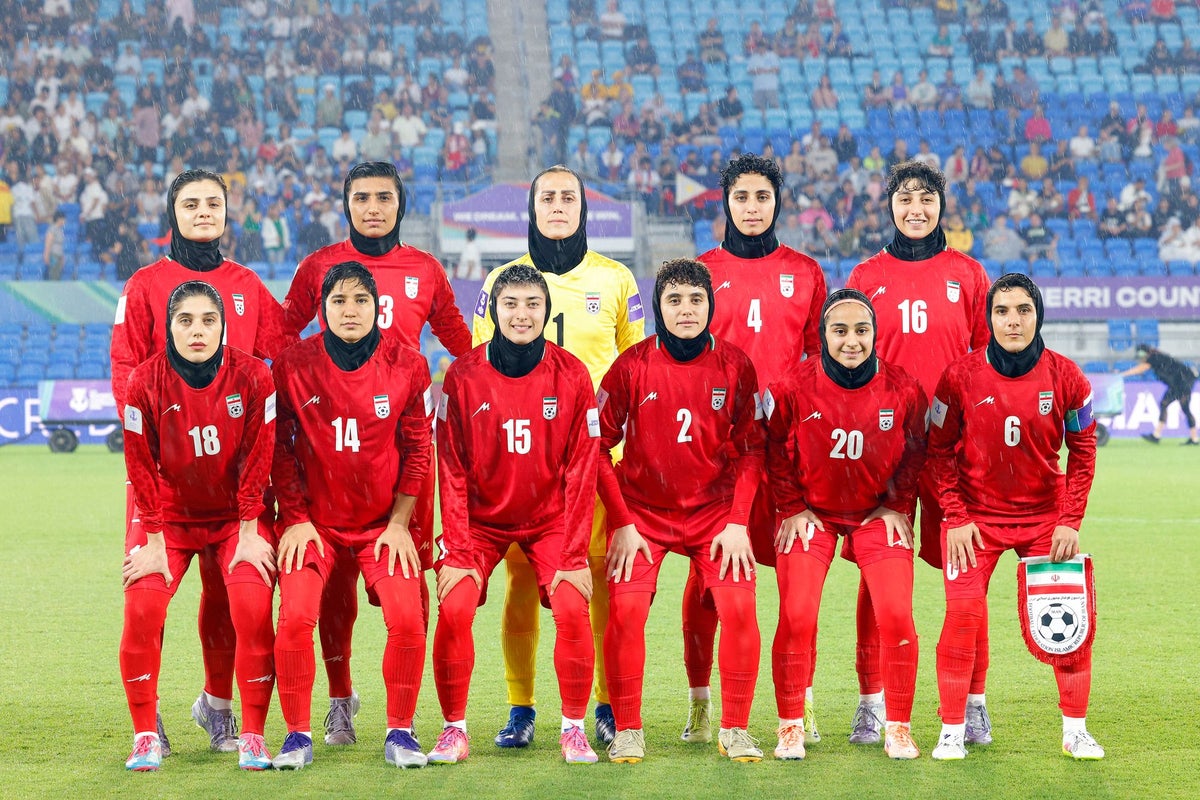
Freedom isn't always a simple choice. For the Iranian women’s national soccer team, a trip to Australia for the Asian Cup turned into a high-stakes survival drama that ended in a split at Sydney Airport. While headlines shout about "asylum," the real story is found in the gut-wrenching decisions made behind closed doors, under the watchful eyes of regime minders, and in the shadow of a brewing war at home.
By the time their flight departed for Kuala Lumpur on March 10, 2026, the squad was fractured. Only seven members of the delegation stayed behind in Australia. The rest—the vast majority of the team—boarded the plane. Why would world-class athletes choose to return to a country where they’d been branded "wartime traitors" by state media? It wasn't because they didn't want safety. It was because the price of freedom in Australia was the safety of the families they left behind in Iran.
The Anthem That Changed Everything
The trouble started on March 2. In their opening match against South Korea, the Iranian players stood in stony silence while their national anthem played. It was a move we’ve seen before from Iranian athletes, but this time it felt different. The geopolitical tension was at a breaking point, and the gesture was immediately framed as an act of defiance against the Islamic Republic.
State-controlled media back in Tehran didn't hold back. Commentators called for the players to be treated as traitors. When you're an athlete representing a regime that demands absolute loyalty, silence is a loud, dangerous scream. By the second and third matches, the pressure worked. The women sang. They saluted. They did what they had to do to survive the moment, but the damage was done.
Last Minute Offers at the Departure Gate
As the team prepared to leave, the Australian government made a move that felt like a scene from a spy thriller. Home Affairs Minister Tony Burke and Australian Federal Police didn't just offer asylum; they literally pulled players aside at Sydney Airport.
Imagine the scene: Each woman was taken to a private room, away from their coaches and "handlers," and told through an interpreter that they didn't have to get on that plane. They were told Australia would protect them. They were told they had a future here.
Seven women said yes. One of them, Zahra Ghanbari, the team's captain and a legend in Iranian football, was among the first to be granted a humanitarian visa. These women weren't just looking for a new life; they were escaping a literal war zone and potential imprisonment.
The Family Trap
So, why did the other 20-plus players go back? It’s easy to sit on a couch in Brisbane or Sydney and wonder why someone would fly back toward danger. But the Iranian regime is notorious for using family members as collateral.
Reports suggest that many players were terrified of what would happen to their parents, siblings, or children if they "defected." It's a brutal calculation. Do you save yourself and potentially condemn your father to a jail cell? For most of these women, the answer was a heartbreaking "no."
One player actually accepted the asylum offer, stayed behind, and then changed her mind hours later. She chose to return to Iran because she couldn't bear the thought of what her teammates and family would face in her absence. That's not a lack of courage—that's a different kind of bravery entirely.
Life After the Breakup
The six women who remain in Australia (following the one player's reversal) aren't just sitting in a hotel room. They've already been offered a place to train with the Brisbane Roar. They have a pathway to permanent residency. They have a chance to play football without a hijab, without fear of "morality" police, and without being used as political props.
But they’re also starting from zero. They’ve lost their homes, their status, and their ability to see their families for the foreseeable future.
What Happens to the Ones Who Left
The concern now shifts to the players currently landing in Malaysia and eventually heading back to Iran. With the country under bombardment and the government in a state of high alert, the "traitor" label isn't just rhetoric; it’s a legal threat.
FIFA and human rights groups like FIFPRO are watching, but history shows that international eyes don't always provide a shield once the cameras stop clicking at the airport. These women did their jobs on the pitch, but they were forced to play a much deadlier game off it.
If you want to support these athletes, keep the pressure on international football bodies to monitor the safety of those who returned. For the seven who stayed, the journey has just begun. They aren't just soccer players anymore; they're symbols of a struggle that is far from over.
Watch the A-League Women's news for updates on the "Sydney Seven" as they begin their trials with local clubs. Supporting their careers here is the best way to show that their risk was worth it.