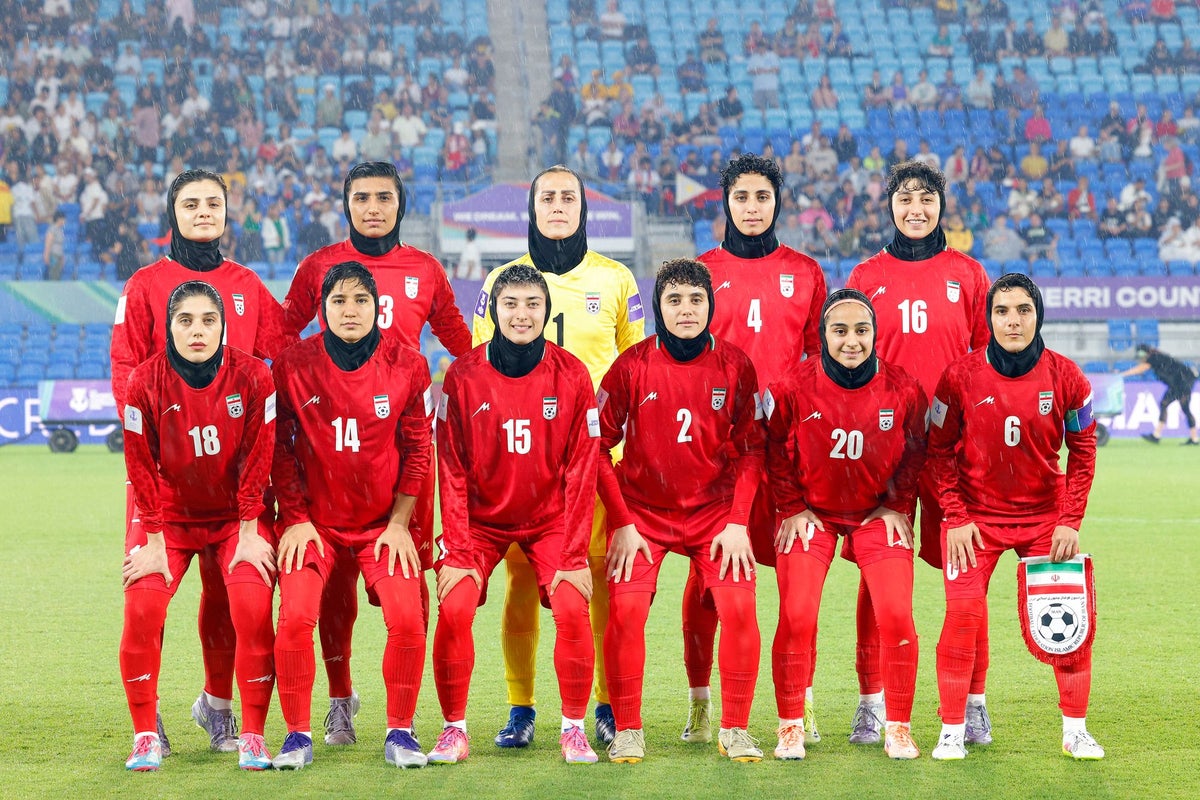
Western media loves a predictable script. A female athlete from a "restricted" nation travels to a liberal democracy, smells the eucalyptus of freedom, and begs for asylum. It’s a narrative that feeds the savior complex of the Global North while reducing the athlete to a helpless political pawn.
When an Iranian national team player initially explores asylum in Australia only to pull a dramatic U-turn and head back to Tehran, the press treats it as a tragedy or a mystery. They assume she was coerced. They assume she’s "lost." They assume she’s walking back into a cage.
They are wrong.
The real story isn't about fear; it's about the cold, hard calculus of influence, identity, and the hollow promise of the Western sports vacuum. For a top-tier athlete, being a second-class refugee in a suburban Australian club is a death sentence for a career. Returning home is often the only way to retain actual agency.
The Asylum Trap: Freedom is Not a Career Path
Let’s dismantle the "lazy consensus" that asylum is a golden ticket.
In the eyes of a Canberra bureaucrat or a Sydney journalist, asylum is the end of the story—the "happily ever after." In reality, for a professional athlete, it is the beginning of a slow, agonizing slide into irrelevance. I have watched world-class competitors from the Middle East and Eastern Europe defect, thinking their talent would transcend their legal status.
It almost never does.
When you seek asylum, you aren't just changing your zip code. You are nuking your professional standing. You lose your FIFA eligibility for international play while your paperwork sits in a dusty pile for three years. You lose your sponsorship hooks. You lose the infrastructure of a national training program.
Imagine a scenario where a starting midfielder for the Iranian national team stays in Australia. She doesn't walk onto a W-League pitch the next day. She enters a detention center or a halfway house. She spends the peak years of her physical prime navigating visa interviews instead of training drills. By the time she’s "free" to play, she’s a ghost.
Returning to Iran isn't a retreat; it’s a refusal to become a footnote in someone else’s human rights report.
The Myth of the Monolithic Iranian State
The "status quo" reporting on Iranian women's sports is stuck in 1985. The narrative insists that these women are constantly under the boot, playing in secret, terrified of the morality police.
If that were the whole truth, the Iranian women's national team wouldn't exist. They wouldn't be competing in AFC qualifiers. They wouldn't be ranked globally.
The internal reality is a constant, grinding negotiation. These athletes are some of the most politically savvy humans on the planet. They know exactly how to navigate the red lines of the Islamic Republic to carve out space for their sport. When a player returns after an asylum scare, she isn't just "coming home." She is returning with a massive piece of leverage.
The state doesn't want the PR disaster of punishing a returning star who "chose" the motherland over the West. On the contrary, the returnee often gains a bizarre kind of protected status. She becomes the living proof that the "Western lure" failed. In that friction, she finds the power to demand better facilities, better pay, and more autonomy for her teammates.
The Loneliness of the "Liberated" Athlete
We need to talk about the psychological cost of the Western "save."
The Australian media treats asylum like a change of clothes. Just put on the green and gold, and you're one of us! But for an Iranian athlete, the loss of cultural context is a lobotomy. In Tehran, she is a hero. She is part of a sisterhood that has fought for every inch of grass they play on.
In Melbourne, she is "the refugee girl."
I’ve interviewed athletes who made the leap. They describe a crushing isolation. They miss the shared struggle. They miss the specific intensity of Iranian sporting culture, which is fueled by a "us against the world" mentality. When you remove the "against the world" part, the "us" starts to crumble.
Returning home is an act of reclamation. It is a statement that her identity is not up for auction to the highest bidder in the human rights market.
The FIFA Double Standard
Why doesn't the media highlight the structural failures of international sports bodies? FIFA and the AFC (Asian Football Confederation) offer zero protection for athletes in political limbo.
If a player defects, FIFA doesn't fast-track her eligibility. They follow the rules of the member associations. If the Iranian Football Federation (FFIRI) refuses to release her transfer certificate—which they will—she is effectively banned from professional football.
- Fact: A player without a transfer certificate cannot play in any FIFA-sanctioned league.
- Fact: The asylum process does not override contract law in the eyes of sports governing bodies.
- Fact: The "freedom" offered by Australia does not include the right to earn a living as a footballer.
When faced with the choice between being a cashier in Brisbane or a national icon in Tehran, the "counter-intuitive" choice is actually the only logical one.
The Leverage of the U-Turn
Think about the optics. The Iranian government spends millions on propaganda to convince its citizens that the West is a cold, unwelcoming place that only wants to use them.
When a player returns, she hands them a win. But in the shadows, she’s cashing that check.
"I came back," she tells the Ministry of Sports. "Now, give my team the budget for the European training camp. Give us the stadium access we were promised."
This is the nuance the "freedom-loving" pundits miss. They see a victim. I see a high-stakes poker player who just bluffed the Australian government and the Iranian state simultaneously.
The Sports-Industrial Savior Complex
The Australian offer of asylum is rarely about the athlete. It’s about Australia’s brand as a "fair go" nation. It’s about the domestic political points scored by appearing "tough but compassionate."
If Australia actually cared about Iranian women's football, they would be funding grassroots programs in the region or using their diplomatic weight to force AFC policy changes. Instead, they offer a lifeboat to one individual while the ship continues to navigate treacherous waters.
For the athlete, staying in Australia means participating in this branding exercise. It means being the "success story" at every awards gala while her teammates back home continue to grind without her. For many, that guilt is worse than any restriction the Iranian state can impose.
The Brutal Reality of "Home"
Is it dangerous to go back? Of course.
Is there a risk of interrogation? Always.
But for these women, danger is the baseline. They have been navigating danger since the first time they kicked a ball in a public park. To suggest that they are suddenly "scared" or "coerced" into returning ignores the sheer grit required to reach the national level in the first place.
They aren't fragile. They are tactical.
The decision to return is a calculated risk based on the knowledge that their voice is louder in Tehran than it will ever be in Sydney. In Tehran, they are the vanguard. In Australia, they are just another immigrant trying to figure out the bus schedule.
Stop looking for a victim in the headlines. Start looking for the strategist.
The player who goes back isn't giving up. She’s just realized that the Western pedestal is actually a shelf—and she refuses to be put on it.
Pack your bags. Go back to the heat. Play the game where the stakes actually matter.