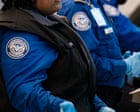
You’ve seen the photos of lines snaking out of terminals and heard the horror stories of missed connections. Starting this Monday, the federal government is trying something different to fix the chaos at US international airports. ICE agents are moving from their typical enforcement duties to the front lines of customs and border processing. This isn't about a new crackdown on travelers. It's a desperate play to keep the gears of global travel from grinding to a complete halt.
The decision comes as Customs and Border Protection (CBP) faces a massive staffing crunch. If you've flown through places like JFK, MIA, or LAX recently, you know the vibe. It’s tense. It’s slow. The Department of Homeland Security (DHS) is basically pulling a "all hands on deck" move by reassignment. They're taking agents from Immigration and Customs Enforcement—specifically those from the Enforcement and Removal Operations (ERO) wing—and putting them into airports to help clear the backlog of arriving passengers.
Why the sudden surge in airport staffing
The timing isn't accidental. We’re seeing a perfect storm of record-breaking passenger volumes and a CBP workforce that's stretched thinner than a budget airline’s legroom. International travel has surged past pre-pandemic levels, but the number of boots on the ground at customs hasn't kept pace.
When you land after a ten-hour flight, the last thing you want is a three-hour wait in a windowless hallway. That frustration isn't just a nuisance for you; it's a security risk and an economic drag. If people can't get through the gates, the whole system stalls. By bringing in ICE personnel, the government hopes to open more processing lanes and get people through primary inspection faster.
It’s a controversial move, sure. ICE and CBP have different training and different primary missions. But when the wait times hit a breaking point, the DHS secretary has the authority to shift resources where they’re needed most. Right now, that’s the arrival hall.
Understanding the role of ICE at the terminal
Let's be clear about what these agents will actually be doing. They aren't there to conduct sweeping raids in the middle of Terminal 4. For the most part, these agents will act as "support" personnel.
Their tasks involve:
- Managing the flow of the lines to prevent overcrowding.
- Verifying travel documents before passengers reach the main kiosks.
- Assisting with administrative data entry to speed up the interview process.
- Redirecting travelers to the appropriate lanes, such as Global Entry or mobile passport control.
Essentially, they’re being used as force multipliers. By taking over the manual, time-consuming parts of the process, they allow the highly specialized CBP officers to focus on the actual security screenings. It’s like a restaurant bringing in extra busboys so the chefs can stay in the kitchen and keep the food moving.
What this means for your privacy and rights
A lot of people get nervous when they see the ICE windbreaker. That’s understandable given the agency's reputation in domestic enforcement. However, your rights at the border remain the same regardless of which patch the officer is wearing.
The border is a unique legal zone. You have fewer Fourth Amendment protections against searches than you do on a street corner in Peoria. That’s just the reality of international travel. But the deployment of ICE agents doesn't technically change the scope of what the government can do. They still need to follow standard CBP protocols.
If you’re a US citizen, you can't be denied entry. You might be delayed, and you might be questioned, but you’re coming home. For visa holders and green card holders, the scrutiny remains the same. The goal here is speed, not extra interrogation. In fact, if this works, you’ll spend less time talking to an officer, not more.
How to bypass the long lines yourself
Don't just rely on the government's staffing shuffle to save your vacation. You need to be proactive. If you aren't using the tools available to you, honestly, you're doing it wrong.
The Mobile Passport Control (MPC) app is the single most underrated tool in travel. It’s free. It’s fast. Most people ignore the signs for it and stay in the massive general line while MPC users breeze through in ten minutes. You just upload your photo and info while the plane is taxiing to the gate.
Then there’s Global Entry. It’s the gold standard. Yes, the interview backlog is a nightmare, but once you’re in, you’re in. If you have a high-end credit card, check your benefits. Most of them will reimburse the application fee. It's a no-brainer.
The bigger picture of border management
This deployment is a band-aid on a much larger wound. The US border infrastructure wasn't built for the current volume of global mobility. We’re trying to run 2026 traffic through 1990s-era facilities.
Using ICE agents is a temporary fix for a permanent problem. We need more investment in automated biometrics and facial recognition technology that actually works without glitching every five seconds. We also need a more robust permanent hiring pipeline for CBP. Pulling agents from their regular duties at ICE creates gaps elsewhere. It’s a game of musical chairs where the stakes are national security and the global economy.
Expect some growing pains on Monday. There will likely be some confusion as these agents get settled into their new roles. You might see more uniforms than usual. Don't panic. Just have your documents ready, get off the plane quickly, and head straight for the line.
Check your flight status before you leave for the airport. Ensure your passport is valid for at least six months beyond your travel dates. Download the Mobile Passport Control app right now so it's ready when you land. If you see an ICE agent directing traffic, just follow the instructions and keep moving. The faster everyone moves, the faster you get to the luggage carousel and out the door.