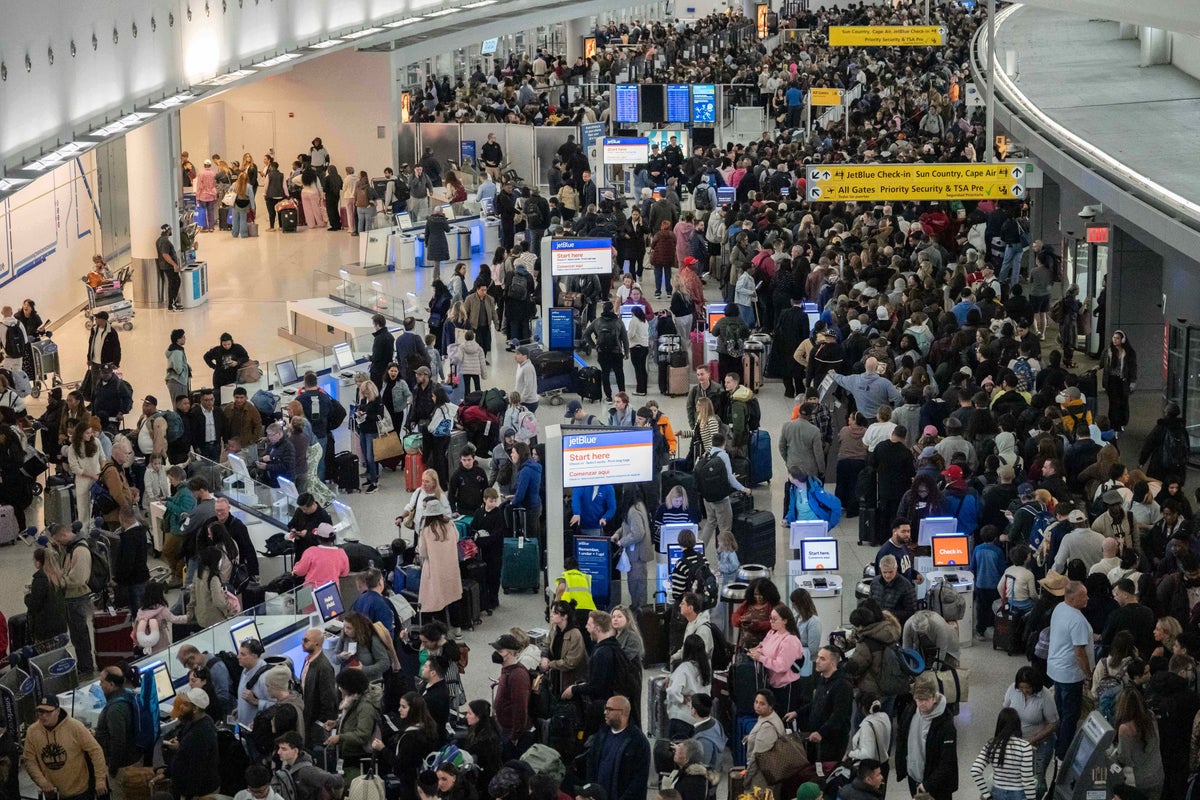
The standard media narrative during a federal shutdown is as predictable as a flight delay in July. You’ve seen the headlines. They focus on the "chaos" at the terminal, the "frustrated" immigration officers, and the "heroic" screeners working without a paycheck. It’s a tear-jerker designed to make you demand an immediate return to the status quo.
But the status quo is exactly what’s killing American infrastructure.
Let’s stop pretending that a fully funded Department of Homeland Security (DHS) is a well-oiled machine. It isn't. It is a bloated, bureaucratic monolith that confuses activity with security. When a shutdown hits, we don't see a collapse of safety; we see a forced prioritization of resources that should have happened a decade ago. The "crisis" isn't that the system is breaking—it’s that the system is finally showing us how much fat can be trimmed without the world ending.
The Security Theater Myth
The common complaint is that shutdowns lead to longer lines because TSA agents "call out" in protest. The implication is that we are less safe. This is a fundamental misunderstanding of how aviation security actually works.
I have spent years analyzing the flow of international transit hubs. In every "crisis," the data remains consistent: wait times are a function of staffing, but security efficacy is a function of technology and intelligence. The TSA’s own internal audits—the ones the public rarely hears about—historically show failure rates in detecting prohibited items that would make a private security firm go bankrupt in a week.
When staffing drops during a shutdown, the DHS is forced to deploy "Enhanced Roles" for immigration officers and Customs and Border Protection (CBP) personnel. They move bodies from the back office to the front line. For the first time all year, the agency has to decide who is actually essential and who is just pushing paper in a windowless office in D.C.
The "frustration" isn't about safety. It’s about the sudden exposure of administrative redundancy.
Stop Asking for More Screeners
The "People Also Ask" section of your favorite search engine is likely filled with queries like "How can we speed up TSA lines during a shutdown?"
You’re asking the wrong question.
The right question is: Why do we still rely on a labor-intensive, 19th-century "stop and frisk" model for 21st-century travel?
The shutdown proves that the current model is fragile because it relies on a massive, underpaid, and unmotivated workforce. If your security apparatus fails because a few thousand people didn't get a direct deposit on Friday, you don't have a security system. You have a jobs program.
True efficiency in travel comes from disintermediation. We should be moving toward:
- Biometric persistent identity: Eliminating the need for a human to look at a passport and then look at your face.
- Computed Tomography (CT) ubiquity: Removing the "take out your laptop" dance that serves no purpose other than to create bottlenecks.
- Privatized Screening: Look at San Francisco (SFO). They use private contractors under the Screening Partnership Program. They have better retention, better morale, and—shocker—they don't stop working when Congress throws a tantrum.
The Immigration Officer Pivot
Competitors love to moan about CBP officers being diverted to TSA checkpoints. They claim it weakens our borders. This is a logical fallacy.
The United States border doesn't start at the Rio Grande or the arrival gate at JFK. It starts at the point of origin. Through the "Preclearance" programs in places like Dublin or Nassau, we already know who is coming. The idea that we need a specific ratio of officers to passengers at the terminal to maintain "security" is a relic of pre-digital thinking.
When a shutdown forces an immigration officer to help with screening, it isn't a "failure of leadership." It is a cross-functional utilization of high-cost assets. In the private sector, we call this "agile resource management." In the federal government, we call it a disaster because it threatens the sanctity of departmental silos.
The Brutal Truth About "Essential" Workers
Let’s address the elephant in the terminal: the "unpaid" worker.
It is a PR masterstroke to frame TSA agents as victims of a shutdown. In reality, they are guaranteed back pay. They are essentially being forced into a high-yield savings account where the interest is a few weeks of political grandstanding.
I’ve worked with logistics firms where a 5% drop in headcount means the company dies. If the TSA can lose 10% of its workforce to "sick-outs" and the planes still take off and land without falling out of the sky, then that 10% was never necessary for the core mission.
The shutdown is a live-fire stress test. It reveals the Maximum Sustainable Throughput of our airports under duress. If we can move 2 million people a day with 80% of the staff, why are we paying for 100% during the other 11 months of the year?
The Cost of the "Safety First" Fallacy
We are told that any reduction in oversight is a gamble with human lives. This is the ultimate trump card used to justify endless spending.
But consider the Opportunity Cost.
Every billion dollars funneled into maintaining the current, inefficient TSA/CBP structure is a billion dollars not spent on:
- Hardening cockpit doors (actual security).
- Advanced AI-driven threat detection (actual technology).
- Streamlining legal immigration channels (actual border control).
We are burning capital to maintain a physical presence that acts as a placebo for the traveling public. We want to see a person in a blue uniform because it makes us feel like "someone is in charge," even if that person is currently staring at a screen they haven't been properly trained to interpret.
Your Travel Strategy for the Next Shutdown
If you want to navigate a shutdown like a professional, stop looking for "tips to beat the lines." Start changing your behavior to bypass the system entirely.
- Apply for Global Entry/PreCheck now: These programs are the "Fast Pass" of the federal government. They are revenue-positive for the DHS. Even during a shutdown, these lanes stay open because they require the least amount of human intervention per passenger.
- Fly Private or Semi-Private: If you can afford it, companies like JSX prove that security doesn't require a two-hour ordeal. They operate under different regulatory tiers that prioritize common sense over theater.
- Stop Checking Bags: 40% of the congestion in the terminal is caused by the infrastructure required to move, screen, and lose your luggage. If you carry on, you reduce your "surface area" for interaction with the failing federal machine.
The Nuance the Critics Miss
Is a shutdown ideal? No. It’s a stupid way to run a country.
But is it the "unmitigated disaster" for travel that the media claims? Absolutely not.
The real danger isn't that the lines are longer; it's that we might realize we've been overpaying for a mediocre product for twenty years. The "frustration" of the screeners is the friction of a dying business model being forced to justify its existence.
We should stop trying to "fix" the staffing levels during a shutdown. We should use the shutdown as a blueprint for what a lean, automated, and actually effective security apparatus looks like.
Strip away the layers. Automate the identity. Fire the bureaucrats.
If the system can't survive a two-week budget delay, it wasn't a system—it was a hostage situation.
Stop mourning the "broken" airport. Celebrate the fact that the mask is finally slipping.
The next time you see a long line at Newark, don't blame the shutdown. Blame the fact that we’ve spent two decades building a labyrinth and now we’re upset that there aren't enough people to hand out maps.
Fire the mappers. Tear down the walls.