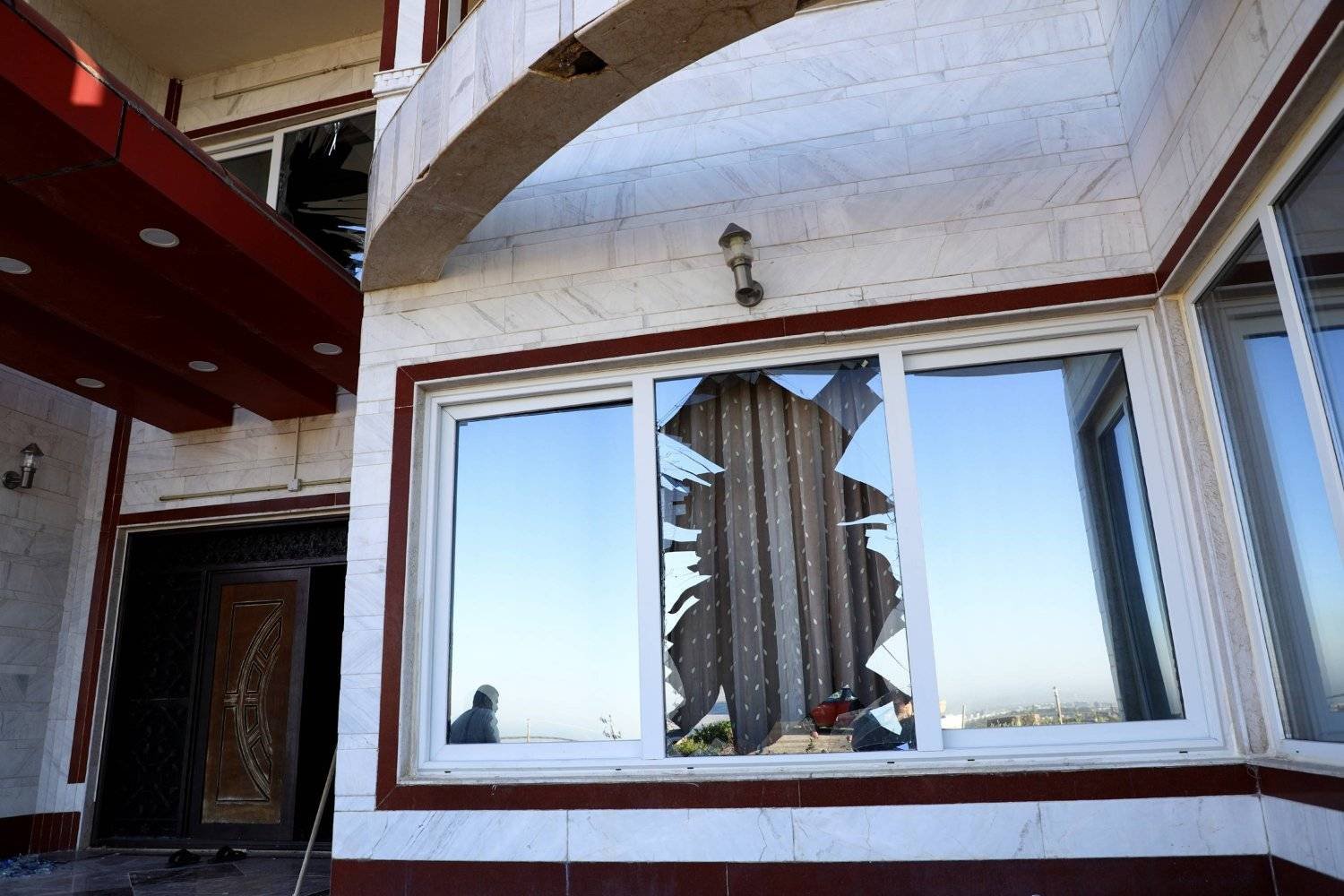
The targeting of the Kurdistan Region of Iraq’s (KRI) executive leadership represents more than a localized security breach; it is a calculated stress test of the post-ISIS regional security architecture. While diplomatic condemnations label such incidents as acts of cowardice, a clinical analysis reveals they are sophisticated tools of asymmetric statecraft designed to exploit the friction between federal Baghdad, the Erbil-based Kurdistan Regional Government (KRG), and external stakeholders. The primary objective of these kinetic operations is to increase the overhead cost of Kurdish autonomy and force a realignment of US-Iraq security cooperation.
The Triad of Deterrence Erosion
The security environment in Erbil operates within a delicate equilibrium maintained by three distinct pillars of deterrence. When an attack successfully reaches the vicinity of high-level officials, it signifies a failure in one or more of these defensive layers:
- Kinetic Interdiction Capability: The technical ability of the Peshmerga and allied forces to detect and neutralize unmanned aerial vehicles (UAVs) or ballistic projectiles before impact.
- Political Insulation: The degree to which the KRG is protected by its constitutional status within Iraq and its bilateral agreements with the United States.
- Proxy Accountability: The mechanism by which the sponsors of non-state actors are held liable for the actions of their subordinates.
The shift from targeting industrial infrastructure—such as the Khor Mor gas field—to targeting the physical security of the Presidency indicates a transition from economic sabotage to political decapitation strategies. This transition aims to create a "security vacuum" perception, discouraging foreign direct investment and weakening the KRG’s hand in budget negotiations with Baghdad.
The Mechanism of the Asymmetric Loop
Non-state actors utilizing low-cost drone technology create a significant cost-imbalance for the KRG and its Western allies. A drone costing less than $20,000 requires a multi-million dollar interceptor or a high-upkeep electronic warfare suite to defeat. This creates a "Cost Function of Defense" where the defender is financially and logistically exhausted by a persistent, low-intensity threat.
This loop functions through three phases:
- Provocation: The attack occurs, intentionally crossing a previously established "red line."
- Information Displacement: The subsequent diplomatic condemnation focuses on the immorality of the act rather than the technical failure that allowed it.
- Strategic Fatigue: Repeated incidents without a decisive counter-response normalize the threat, eventually leading to a withdrawal of civilian personnel or a reduction in diplomatic presence.
The US condemnation serves as a signal of continued interest, but without a corresponding shift in the "Rules of Engagement" (ROE) or the provision of advanced point-defense systems to the Peshmerga, the signal loses its value as a deterrent. The lack of a kinetic retaliatory framework allows the aggressor to calculate the maximum "allowable" level of violence they can exert without triggering a full-scale military response.
Structural Bottlenecks in the Erbil-Baghdad Security Axis
The primary vulnerability of the KRI is not a lack of military spirit, but a fragmented command-and-control structure. The integration of the Peshmerga into a unified national defense framework remains incomplete, leaving gaps in the radar coverage and intelligence-sharing protocols between Erbil and the federal government in Baghdad.
One critical bottleneck is the Airspace Sovereignty Paradox. While the KRG manages its internal security, the federal government in Baghdad holds legal authority over Iraqi airspace. This creates a delay in the deployment of counter-UAS (C-UAS) technologies, as Erbil must navigate a complex bureaucracy to legally operate advanced jamming or kinetic interception hardware. These delays are exploited by regional actors to conduct reconnaissance and strike operations with relative impunity.
Furthermore, the "Security Belt" between the Iraqi Army and Peshmerga lines—often referred to as the disputed territories—provides a geographic sanctuary for militant groups. This No-Man’s-Land acts as a launchpad where neither Erbil nor Baghdad exercises full tactical control. Until this geographic gap is closed through joint brigades, the KRI’s presidency and its vital infrastructure remain at a permanent geographic disadvantage.
The Economic Implications of Political Insecurity
Security is the foundational currency of the KRG’s economic model. Unlike southern Iraq, which relies heavily on state-led oil exports through federal channels, the KRI has historically positioned itself as a "Gateway to Iraq" for Western firms. This model relies entirely on the perception of Erbil as a "Safe Haven."
The impact of targeted attacks on the executive branch ripples through the following economic vectors:
- Risk Premiums: Insurance costs for international firms operating in the KRI rise sharply following high-profile security breaches, directly impacting the profitability of energy and construction projects.
- Expatriate Flight: High-level diplomatic and corporate staff are the first to be evacuated or restricted in their movements, stalling the technical implementation of development goals.
- Capital Flight: Local investors, sensing a shift in the regional power balance, may begin moving assets to more stable markets like Dubai or Istanbul, hollowing out the local banking sector.
If the KRG cannot guarantee the safety of its own President, the narrative of Erbil as a secure business hub is fundamentally compromised. This is a deliberate outcome sought by those wishing to reintegrate the KRI into a more centralized, Baghdad-dominated economic framework.
Redefining the US-KRG Strategic Partnership
The standard response of "condemnation" is increasingly viewed as an insufficient metric of support. To restore the deterrent balance, the partnership must evolve from rhetorical support to structural integration. This involves two specific maneuvers:
Tactical Hardening
The transfer of specialized C-UAS hardware directly to the KRG’s security forces is a technical necessity. Relying on US-manned systems at the Erbil Air Base provides a localized bubble of protection but leaves the broader government district exposed. Hardening the Presidency and parliamentary buildings with independent electronic warfare capabilities is the only way to shorten the reaction time to incoming threats.
Diplomatic Linkage
Security in Erbil must be linked to the broader Iraq-US Higher Military Commission (HMC) talks. If Baghdad cannot or will not prevent its soil from being used to launch attacks against the KRG leadership, then the US must pivot its support to ensure Erbil has the autonomous means to do so. This creates a "Dual-Track Diplomacy" where the federal government is incentivized to rein in militias to maintain its own standing with Washington.
The Regional Power Projection Variable
The KRI sits at the intersection of Turkish, Iranian, and Arab interests. Every drone strike is a message not just to Erbil, but to the other regional powers. For Iran, these strikes signal the ability to reach any target in Iraq, challenging the presence of "hostile" foreign elements. For Turkey, the instability in the KRI complicates their operations against the PKK and threatens their energy supply lines.
The inability to identify the specific launch point of these "cowardly" acts is often a political choice rather than a technical one. Sophisticated radar and satellite tracking can generally pinpoint launch locations. The failure to name and shame the specific actors—or to hold the host territory accountable—is a symptom of a broader desire to avoid a regional conflagration. However, this restraint is often interpreted as weakness, inviting further escalation.
Forecasting the Security Trajectory
The current trajectory suggests a period of sustained "Grey Zone" warfare. The KRG will not face a conventional invasion, but it will be subjected to a series of high-precision, low-yield strikes designed to degrade its political will.
The survival of the KRG’s autonomous experiment depends on its ability to:
- Unify the Peshmerga command to eliminate intelligence silos.
- Secure an independent air-defense mandate from the international community.
- Leverage its energy assets as a security guarantee for European and Asian consumers.
Failure to address the technical vulnerabilities exposed by the attack on the President will result in a "Salami Slicing" of Kurdish sovereignty. Each unpunished strike removes a layer of Erbil’s perceived invulnerability, eventually leading to a state where the KRG is autonomous in name but operationally subservient to the dominant regional powers.
The strategic play is the immediate establishment of a Joint Air Defense Command in Erbil, supported by US-funded sensor arrays and localized interceptors. This must be coupled with a formal "Security Guarantee" that treats attacks on KRI leadership as attacks on the stability of the Iraqi state itself, forcing Baghdad to choose between its internal militia alliances and its international sovereign responsibilities.