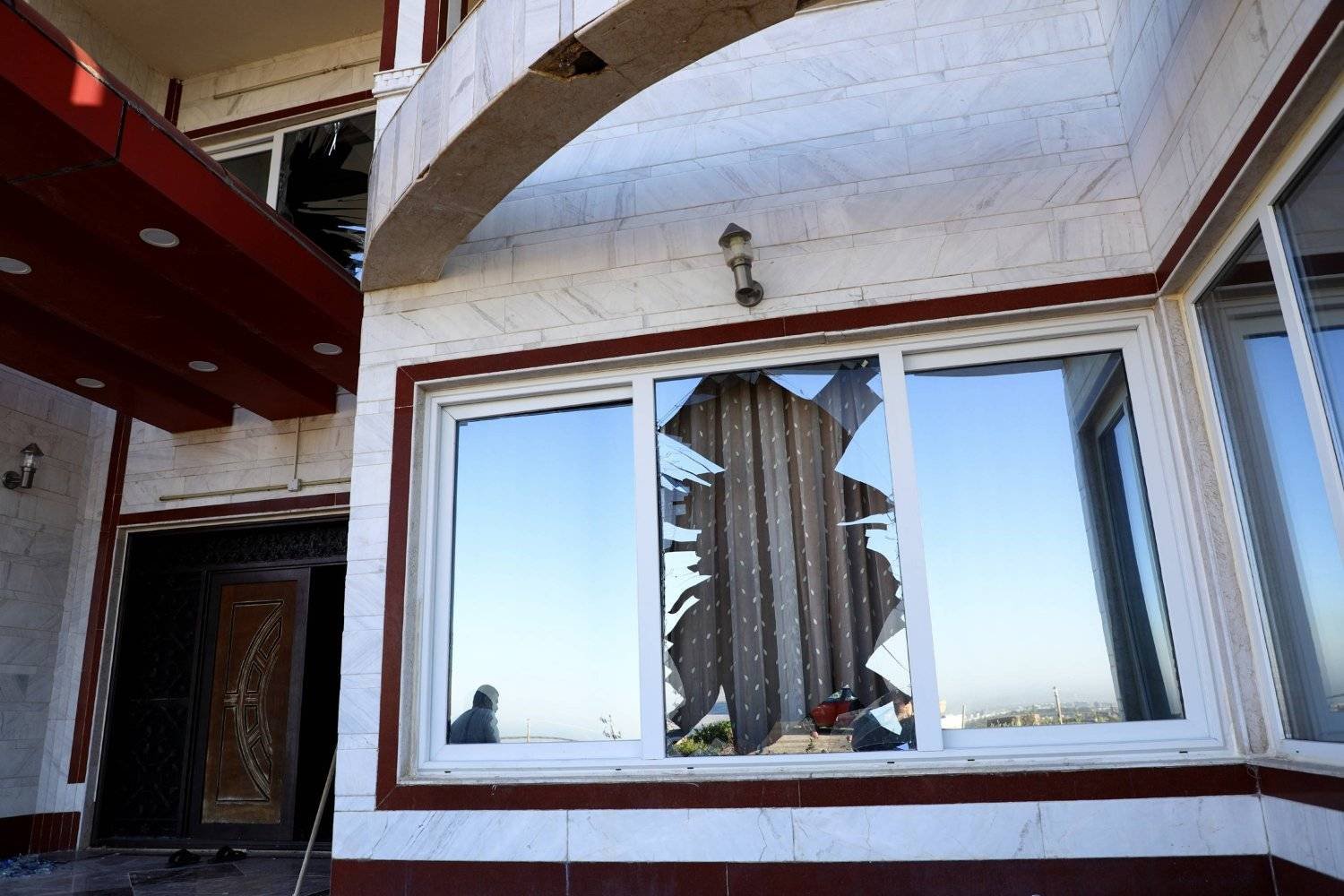
The Middle East just hit a new, jagged peak of tension. When the Islamic Revolutionary Guard Corps (IRGC) starts naming universities as legitimate targets, we've moved past standard sabre-rattling. This isn't just about missiles or maritime drones anymore. It’s a direct shift toward targeting the softest of civilian infrastructure under the guise of "reciprocal deterrence." If you’ve been following the shadow war between Tehran, Tel Aviv, and Washington, you know the rules are being rewritten in real-time.
Recent strikes on Iranian research and educational institutions have pushed the IRGC to a breaking point. They aren't just complaining to the UN this time. They're issuing a scorched-earth warning to American and Israeli-affiliated campuses across West Asia. The message is blunt. If Iranian academic sanctity is violated, no Western-backed classroom in the region is safe.
The logic behind the legitimate target label
Why would a military force target a library or a lab? From the IRGC's perspective, these aren't just places of higher learning. They view American universities in Lebanon, Iraq, or the UAE as intelligence hubs and cultural soft-power engines. It’s a cynical view, sure, but it’s the one driving the current strategy. They see a direct link between the scientists targeted inside Iran and the academic networks fostered by the West.
When the IRGC says "legitimate targets," they’re trying to create a balance of terror. They want the US and Israel to think twice before hitting a facility in Tehran by putting a campus in Dubai or Beirut on the chopping block. It’s a terrifying escalation. It moves the conflict from military bases and nuclear sites into the heart of civilian life.
History shows that the IRGC doesn't usually make these threats without a specific catalyst. The recent wave of technical and physical sabotage against Iranian state-linked universities provided that spark. Tehran claims these institutions were purely for civilian research. The West often counters that they're fronts for dual-use technology development, specifically regarding drone guidance and enrichment cycles.
Moving beyond the usual proxy warfare
We're used to seeing Kata'ib Hezbollah or the Houthis doing the dirty work. But this specific warning came with the weight of the IRGC’s central command. That matters. It suggests that any future "retaliation" might not be a deniable rocket attack by a local militia. It could be a state-sanctioned operation.
The geography here is what makes people nervous. Think about the American University of Beirut (AUB) or the various campuses in Qatar’s Education City. These are prestigious institutions. They're also physically vulnerable. By labeling them as military targets, Iran is essentially saying that the "academic immunity" usually granted during regional spats is gone.
Why the West Asia footprint is a liability now
The US has spent decades building a cultural footprint in the Middle East through education. It was supposed to be the "good" kind of influence. Now, that footprint looks like a series of stationary targets.
- Security costs for these institutions are about to skyrocket.
- Enrollment from international students will likely dip as parents weigh the risk of "legitimate target" status.
- Faculty recruitment becomes a nightmare when the IRGC mentions your workplace in a press release.
It’s a classic asymmetric move. Iran knows it can't win a conventional blue-water navy battle against the US Fifth Fleet. But it can make the cost of American presence in the region—cultural and educational—too high to maintain.
What the media gets wrong about the timing
Most outlets are framing this as a random outburst. It’s not. This is a calculated response to the "War of the Academics." Over the last few years, several high-profile Iranian professors with ties to the defense industry have met violent ends. Iran blames Mossad and the CIA. By broadening the target list to include Israeli and US universities in the region, Tehran is attempting to force a ceasefire on its own intellectuals.
They’re basically saying, "Stop killing our scholars, or we’ll make sure yours can’t teach."
The IRGC's rhetoric also serves an internal purpose. It signals to the hardliners in Tehran that the government is "protecting" its own. It’s theater, but theater with live ammunition. When a general stands up and threatens a university, he’s speaking to a domestic audience that feels the country is under a constant state of siege.
The intelligence failure in modern deterrence
Deterrence only works if both sides agree on what is "off-limits." For a long time, schools, hospitals, and cultural sites were in that category. That consensus is evaporating. If the IRGC follows through—even with a low-level cyberattack on a university's database—the threshold for what constitutes a "front line" disappears.
You have to look at the "West Asia" phrasing too. That’s IRGC-speak for the Middle East, plus parts of South Asia and the Caucasus. It’s a wide net. It covers everything from Israeli-funded tech incubators in Azerbaijan to American liberal arts colleges in the Gulf. The ambiguity is the point. They want everyone looking over their shoulder.
How institutions should respond to the threat
If you’re running a regional campus, "business as usual" is a dangerous fantasy. The threat level has shifted from "general regional instability" to "specific targeted threat."
First, physical security needs a total overhaul. Most of these campuses are designed to be open and inviting. That’s a vulnerability. You’ll see more blast walls and more biometric checkpoints. It’s sad, but it’s the reality of 2026.
Second, the digital front is where the first strike will actually happen. A massive data breach of student records or the theft of sensitive research is much "cleaner" for the IRGC than a physical strike. It sends the message without crossing the red line that would trigger a full-scale US military response.
Third, there has to be a diplomatic backchannel. Even at the height of the Cold War, there were "no-go" zones. Regional players like Oman or Qatar need to facilitate a conversation that removes educational institutions from the target list.
The IRGC is betting that the US and Israel care more about their regional universities than they do about hitting Iranian labs. It's a high-stakes gamble. If Tehran is wrong, we're looking at a cycle of escalation that doesn't just destroy buildings, but destroys the very idea of intellectual exchange in the Middle East.
Stop assuming these are empty threats. The IRGC has a history of telegraphing its moves months in advance. When they tell you who they’re looking at, believe them. The smartest move for any Western-affiliated organization in the region right now is to harden their infrastructure and prepare for a very long, very quiet winter. Move your critical data to off-site servers outside the region. Review your emergency evacuation protocols for staff. This isn't just politics—it's tactical survival in a zone where the rules of engagement just got a lot uglier.