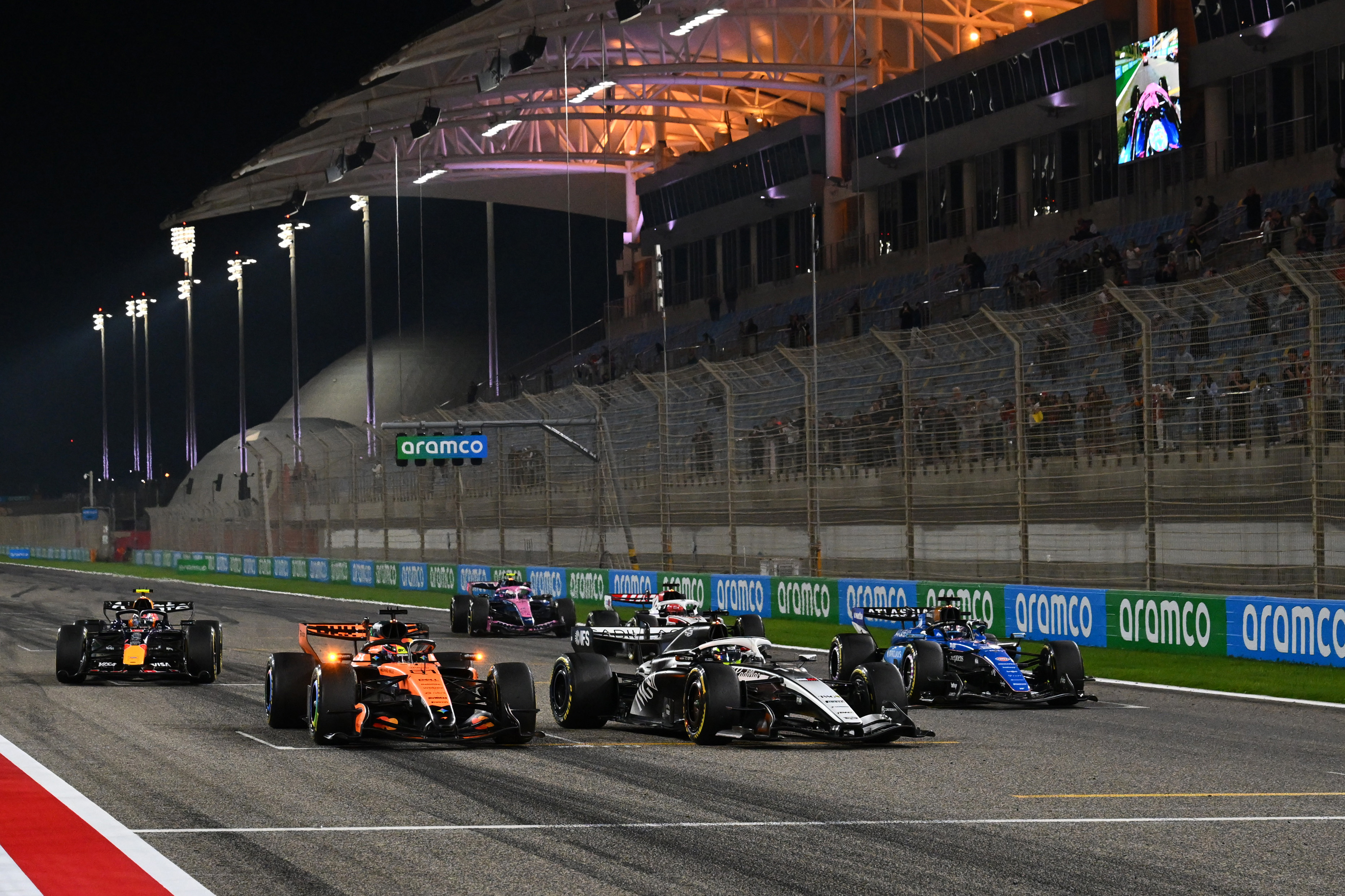
The headlines are screaming about a "crisis" because Formula 1 hit the brakes on Bahrain and Saudi Arabia. The mainstream press wants you to believe this is a moral stand or a panicked retreat from regional volatility. They are wrong. This isn't a retreat; it’s a strategic pivot.
Liberty Media doesn't do "panic." They do EBITDA. To suggest that Stefano Domenicali woke up and suddenly discovered that racing in a geopolitical tinderbox carries risk is an insult to the intelligence of everyone involved in the $17 billion circus. F1 isn't canceling these races because of the war. They are canceling them because the current optics-to-revenue ratio hit a temporary deficit.
The lazy consensus says F1 is "scared." The reality is F1 is being greedy.
The Force Majeure Myth
Every armchair analyst is citing "safety concerns." Let’s look at the data. F1 raced in Jeddah in 2022 while Houthi missiles were literally hitting an Aramco facility ten miles from the track. Smoke was visible from the cockpit. The drivers wanted to leave; the sport’s leadership told them to sit down and drive.
If a direct missile strike on a title sponsor’s refinery didn't cancel a race, why would a regional conflict—tragic as it is—suddenly trigger a conscience?
It wouldn’t.
The "cancellation" is a massive exercise in risk mitigation for the 2026 technical regulation cycle. F1 is currently in a hyper-growth phase in the United States. They have three races on American soil. The last thing Liberty Media wants is a split-screen on CNN showing a Red Bull RB22 screaming past a grandstand while news tickers report on regional escalations nearby. It’s bad for the "lifestyle brand" image they’ve spent billions cultivating through Netflix.
They aren't saving lives. They are saving the stock price.
The Logistics of the Lie
Moving an F1 paddock is a feat of engineering that makes a military invasion look like a weekend camping trip. We are talking about seven Boeing 747s worth of gear per team, plus the broadcast center, the hospitality units, and the FIA’s mobile laboratory.
When a race gets "canceled" this early, the public thinks it’s about the fans. It’s actually about the maritime insurance premiums. The cost of insuring the freight through the Red Sea and the Gulf has skyrocketed.
- Premium Spikes: Insurance underwriters have hiked rates by over 400% for high-value sporting cargo in "active zones."
- The Bottom Line: F1 realized that the hosting fees from Bahrain and Saudi Arabia—while massive—were being eaten alive by the logistical surcharge of just getting the cars to the grid safely.
I have seen teams scramble to find an extra $2 million for a front-wing upgrade. Do you honestly think they are going to eat a $15 million logistics hike just for the "prestige" of an opening round? Absolutely not. They are cutting their losses and refocusing on European rounds where they can drive the trucks across a border for the price of a tank of diesel.
Dismantling the "Human Rights" Narrative
Whenever F1 pulls out of the Middle East, a certain segment of the media starts patting the sport on the back for finally "taking a stand."
Stop.
If F1 cared about the ethics of its hosts, the calendar would be four races long. We race in Azerbaijan. We race in China. We race in Qatar. The sport’s DNA is built on "sportswashing." This isn't a judgment; it’s a business model. Dictatorships offer the highest hosting fees because they aren't accountable to taxpayers.
By labeling this a "cancellation due to war," F1 gets a free PR pass. They get to look like the "concerned global citizen" while simultaneously negotiating behind closed doors for a massive "re-entry fee" once the dust settles.
The 2026 Pivot: Why This Is a Blessing for Teams
Ask any technical director in the pit lane—off the record—how they feel about these cancellations. They are thrilled.
The 2026 season brings the most radical engine and chassis changes in a decade. The teams are drowning in R&D costs. By stripping the early-season Middle Eastern flyaways from the calendar, F1 just gave the engineers two extra months of wind tunnel time and saved the mechanics from a brutal triple-header at the start of the year.
The Hidden Technical Advantage
- Thermal Management: Bahrain and Saudi are high-heat, high-degradation tracks. They tell you nothing about how a car will perform in the cooler climates of Europe or North America.
- Parts Supply: Teams are currently facing a global carbon fiber shortage. Crashing a car in Jeddah—a track made of concrete walls and zero runoff—can bankrupt a small team's spare parts bin before April.
- Simulation Accuracy: Without the Middle Eastern rounds, teams can rely more on their simulators in Milton Keynes and Maranello, reducing the "unknowns" that usually lead to embarrassing reliability failures in the first three races.
The Fan Experience Fallacy
People ask: "Won't the fans be disappointed?"
F1 doesn't care about the fans in the grandstands in Sakhir. They care about the 70 million people watching on devices. The Middle Eastern races are timed for European prime time. If those races are gone, F1 will simply pivot to more European night races or double-headers in the Americas.
The "People Also Ask" section of your brain is probably wondering: Will F1 ever go back? Of course they will. They’ll go back the second the insurance premiums drop and the hosting fee check clears. This isn't a breakup; it’s a tactical pause to let the heat die down so they can return with a "Grand Reopening" that costs twice as much for a Paddock Club pass.
The Brutal Reality of the Calendar
The F1 calendar is a zero-sum game. There are only so many weeks in a year. For every Bahrain that falls off, there is a Madrid, a South Africa, or a fourth US race waiting in the wings with a briefcase full of cash.
The Middle Eastern promoters know this. They aren't crying; they are renegotiating. They know that F1 needs their state-of-the-art facilities and their bottomless oil wealth just as much as they need the prestige of the "F1" logo on their tourism brochures.
Stop Buying the Sob Story
The "war" is the excuse. The "logistics" are the catalyst. The "profit margin" is the reason.
If you want to understand why a race gets canceled, don't look at a map of the front lines. Look at the quarterly earnings report of Liberty Media. Look at the shipping routes of DHL. Look at the sponsorship contracts of Aramco and Petronas.
F1 is a shark. It has to keep moving forward to breathe. If the water in the Middle East gets a little too choppy for the sponsors, the shark just swims to a different part of the ocean where the meat is easier to catch.
Don't mourn the loss of the Bahrain GP. It was a sterile, corporate exercise in a parking lot surrounded by sand. The real "tragedy" here isn't the loss of a race; it’s the fact that people actually believe the corporate spin about "safety and solidarity."
Formula 1 is the most ruthless business on the planet. It doesn't have a heart. It has a turbocharger. And right now, that turbocharger is spooling up for a future where the Middle East is just one of many bidders, not the only game in town.
Go watch the 2021 highlights if you miss the desert. The rest of us are busy looking at the balance sheet.
Move the freight. Cut the check. Forget the sentiment.