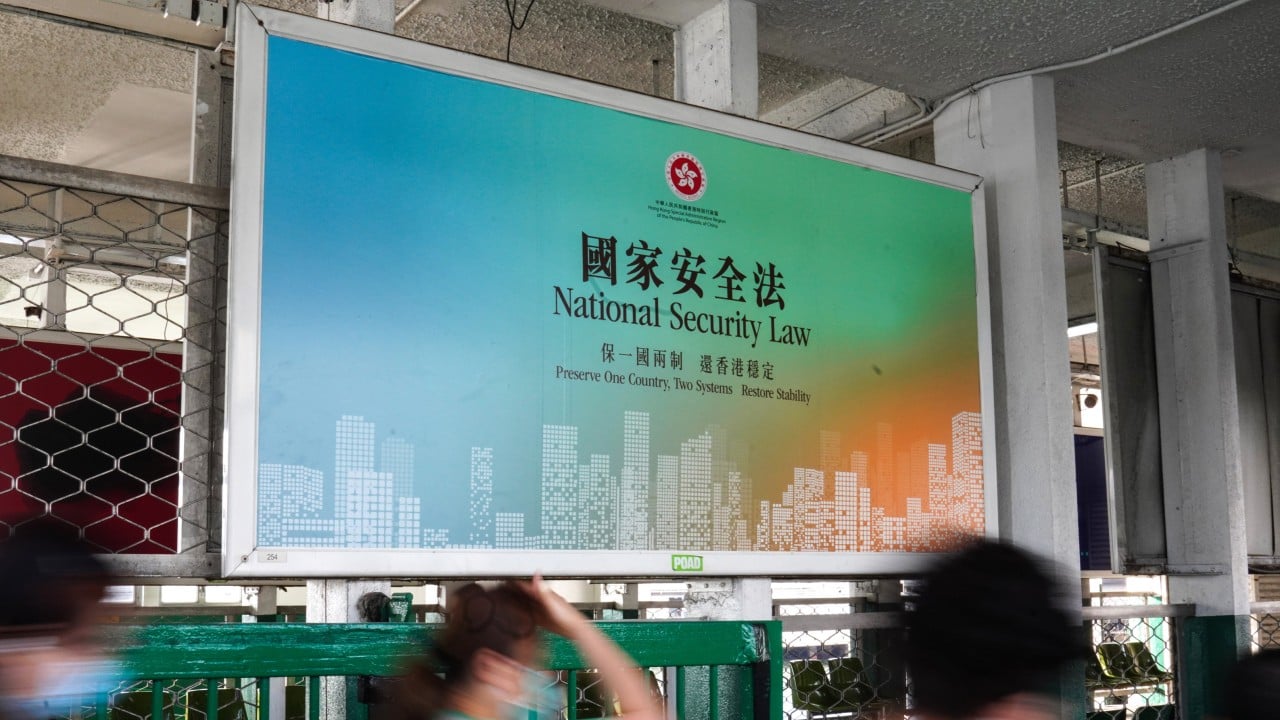
Global boardrooms are currently trapped in a cycle of wishful thinking regarding Hong Kong’s regulatory framework. The prevailing narrative, pushed by mainstream legal commentators and cautious trade chambers, argues that the city’s expanded national security framework will only succeed if exercised with extreme restraint. They plead for prudence, hoping that soft implementation will preserve the international financial hub.
This perspective is fundamentally flawed. It misinterprets how global capital operates and misunderstands the mechanics of sovereign risk management. In related developments, we also covered: The Illusion of the Iran Oil Windfall.
Markets do not price risk based on the vague hope of regulatory self-restraint. They price risk based on predictability, structure, and clarity. Demanding that a state apparatus exercise its legal mandates softly is a failed corporate strategy that creates the very ambiguity businesses claim to fear. For international enterprises operating in Asia, survival requires discarding the illusion of the pre-2019 status quo and adapting to the hard realities of binary compliance.
The Illusion of Regulatory Self-Restraint
The consensus argument insists that the preservation of Hong Kong’s financial status hinges on the government holding back its regulatory powers. This logic assumes that global investors are comforted by a system that possesses immense authority but simply chooses not to use it. The Wall Street Journal has provided coverage on this important subject in great detail.
The exact opposite is true.
In the financial sectors of New York, London, and Tokyo, ambiguity is the enemy of allocation. When a regulatory body or state authority hints that it will use its powers selectively or prudently, it injects subjective interpretation into corporate compliance. Compliance officers cannot build risk models around the concept of administrative goodwill. They need hard lines.
Consider the historical precedent of global financial regulations, such as the US Foreign Corrupt Practices Act (FCPA) or the introduction of the Sarbanes-Oxley Act. When these frameworks were introduced, industry insiders argued they would cripple American competitiveness. Critics demanded a soft touch. Yet, capital did not flee because the rules were enforced strictly; it adjusted because the boundaries became explicit.
Sovereignty operates under identical mechanics. The codification of national security rules under Article 23 provides a explicit legal baseline. Expecting authorities to dilute that baseline through arbitrary restraint creates a gray zone. A gray zone is far more dangerous for an international bank or asset manager than a strict, clearly defined red line.
Capital Chases Stability Not Western Political Models
For decades, Western analysts argued that Hong Kong’s economic vitality was inextricably linked to its adoption of liberal political norms. This assumption has been disproven by global capital flows over the past five years.
Money does not care about the ideological flavor of stability; it cares about the permanence of stability.
Imagine a scenario where a multinational financial institution must choose where to locate its regional data infrastructure. It does not evaluate the local jurisdiction based on editorial opinions about civil liberties. It evaluates the jurisdiction on infrastructure resilience, contract enforcement, and the absence of physical disruption. The civil unrest of 2019 presented an existential threat to that operational infrastructure. The subsequent legal consolidation eliminated that specific variable of physical disruption.
Data from the Hong Kong Monetary Authority reveals that total deposits in Hong Kong’s banking system have remained resilient, even growing during periods of intense geopolitical friction. Global wealth management assets continue to flow into the city, driven by its proximity to mainland wealth and its highly developed financial infrastructure. The capital moving into the city today is not blind to the regulatory shift; it has simply priced it in.
The mistake Western chambers of commerce make is confusing their own political preferences with the cold calculations of sovereign wealth funds and institutional investors. The latter are entirely comfortable operating in highly regulated jurisdictions globally, provided the rules governing asset ownership and capital flight remain untouched.
The Flawed Premise of Selective Enforcement
Commentators frequently ask: "How can business confidence survive if the scope of national security laws is too broad?"
This question is built on a false premise. It assumes that global corporations are routinely engaging in activities that touch the periphery of national security. They are not. The vast majority of international businesses in Hong Kong sell insurance, manage asset portfolios, orchestrate supply chains, and facilitate trade.
The friction arises not from the core commercial activity, but from the analytical and research sectors within these firms. Investment banks publish economic forecasts; compliance firms conduct due diligence; corporate intelligence firms probe supply chains. This is where the lack of clarity causes paralysis.
Instead of lobbying for overall administrative prudence, the business community should demand precise definitions regarding what constitutes a state secret or foreign intervention in a commercial context.
If assessing the financial health of a state-owned enterprise is classified as commercial due diligence, it proceeds without issue. If the definitions are left vague under the guise of flexible enforcement, firms will self-censor and pull back, reducing market transparency. The solution is not for the government to promise it will be gentle; the solution is for the government to detail exactly where the boundary lies.
Redefining Corporate Compliance in Asia
The era of navigating Hong Kong as a frictionless, Western-style tax haven with zero political overhead is over. The sooner multinational corporations accept this, the faster they can secure their operations.
Relying on the hope that authorities will exercise power prudently is a systemic vulnerability. If your business model requires the state to pull its punches to remain viable, your business model is broken.
True operational security in the current environment requires a complete restructuring of corporate compliance. Organizations must treat sovereign compliance as a fixed operational cost rather than a variable political risk. This involves several distinct shifts:
- Decoupling Data Infrastructure: Firms must compartmentalize regional data storage, ensuring that information relevant strictly to mainland and Hong Kong operations is physically and digitally ring-fenced from global corporate networks.
- Localizing Legal Advisory: Relying on international legal counsel located outside the jurisdiction to interpret domestic security laws invites disaster. Firms require local legal experts who understand the intersection of mainland legal philosophy and Hong Kong’s common law tradition.
- Objective Risk Modeling: Replace qualitative assessments of political sentiment with quantitative compliance metrics. Acknowledge that the legal environment has shifted permanently, and adjust the firm’s risk premium accordingly.
There is a distinct downside to this approach. It increases the cost of compliance and reduces the flexibility that multinational firms enjoyed for decades. It forces companies to make difficult choices about what data they hold and where they conduct sensitive research. But it eliminates the catastrophic risk of crossing an unmapped line.
The demand for prudence is a symptom of corporate denial. The global market is not waiting for Hong Kong to revert to its 1990s playbook. The capital that remains, and the new capital entering the ecosystem, recognizes that clear authority is preferable to unpredictable leniency. Stop asking the state to moderate its laws. Start adjusting your infrastructure to match them.


