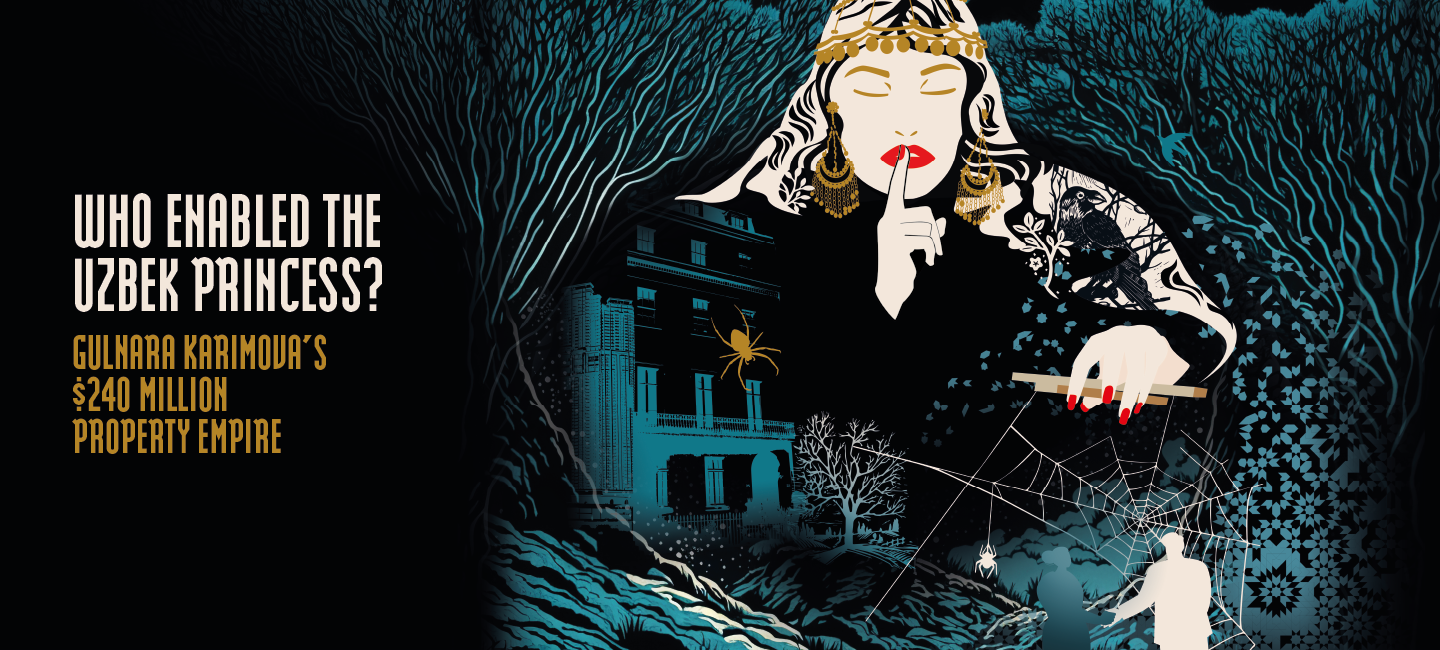
The "Uzbek Princess" is finally having her day in court, though she will be watching it from behind the bars of a Tashkent prison cell. On April 27, 2026, the Federal Criminal Court in Bellinzona, Switzerland, opened the most significant kleptocracy trial in a generation. At its heart is Gulnara Karimova, the eldest daughter of the late Uzbek dictator Islam Karimov, and Lombard Odier, a pillar of the Swiss private banking establishment.
The prosecution’s thesis is simple but devastating. They allege that between 2005 and 2013, Karimova operated a sophisticated criminal syndicate known internally as "The Office." This entity reportedly extorted hundreds of millions of dollars in bribes from international telecommunications firms in exchange for access to the Uzbek market. The money didn't stay in Central Asia. It flowed into the gilded vaults of Geneva, allegedly assisted by a former Lombard Odier banker who looked the other way while the "Princess" built a $350 million fortune on Swiss soil.
Lombard Odier finds itself in a precarious position. While the bank is not accused of being a willing accomplice in money laundering, it faces charges of "corporate criminal liability." In the world of high finance, this is a polite way of saying the bank’s internal controls were so porous that a foreign dictator’s daughter could move mountains of illicit cash through their system without triggering the alarms.
The Office and the Art of the Shakedown
Gulnara Karimova was once the most powerful woman in Central Asia. She was a pop star, a diplomat, and a fashion designer. But prosecutors say her most lucrative role was that of a gatekeeper. For global telecom giants like Telia and VimpelCom (now VEON), entering the Uzbek market required more than just business acumen. It required paying the "tax" to The Office.
The mechanism was a masterclass in bureaucratic extortion. Karimova allegedly used her influence to squeeze foreign investors, demanding massive payoffs that were funneled through shell companies. These weren't small-time bribes. We are talking about transactions that reached $800 million in total across multiple jurisdictions.
The trial in Bellinzona focuses on roughly $350 million of that haul. Prosecutors argue that the money was laundered through a series of offshore accounts before landing in Switzerland. The defense's challenge is significant. They must explain why a diplomat on a government salary was moving hundreds of millions of dollars into private accounts while her father presided over one of the most closed economies on earth.
Lombard Odier and the Failure of Swiss Neutrality
For the Swiss banking sector, this trial is a nightmare that refuses to end. Lombard Odier has spent years trying to distance itself from the Karimova era, even claiming it was the one to first report suspicious activity to the Swiss Money Laundering Reporting Office (MROS) in 2012.
However, the prosecution argues the bank’s cooperation was too little, too late. The indictment centers on a former employee who allegedly helped manage Karimova's accounts. By focusing on organizational shortcomings, the Swiss Attorney General is putting the entire concept of "Know Your Customer" (KYC) on trial.
If Lombard Odier is convicted, it will join the ranks of Credit Suisse and Banque Pictet as a legacy institution tarnished by its dealings with politically exposed persons (PEPs). The bank’s defense rests on a technicality: that they didn't know the money was dirty. But in 2026, the standard for Swiss banks has shifted from willful ignorance to a mandatory duty of curiosity. If you don't ask where the money came from, you are now liable for the answer.
Why This Trial Took Fifteen Years
The wheels of Swiss justice turn with agonizing slowness. This investigation began in 2012, yet the trial is only now commencing in the spring of 2026. Several factors contributed to this delay:
- Diplomatic Deadlock: For years, Swiss investigators couldn't get access to Karimova. After she fell from grace in 2014, she was placed under house arrest and later moved to a prison in Uzbekistan.
- The Tashkent Interrogation: In a rare move, Swiss judges traveled to Tashkent in early 2026 to question Karimova. The session was conducted under strict Uzbek supervision, with questions funneled through local prosecutors. This "interrogation by proxy" has already been criticized by legal experts who argue it may not meet the evidentiary standards of a Swiss court.
- Procedural Consolidation: It took until May 2025 for the court to merge separate investigations into a single, massive case.
This delay has worked in the favor of the defendants. Evidence grows cold, witnesses' memories fade, and the political landscape of Uzbekistan has shifted entirely since the death of Islam Karimov in 2016.
The Shadow of the 130 Million Dollar Return
While the trial proceeds in Bellinzona, a parallel drama is unfolding over the assets themselves. Switzerland has already agreed to return approximately $131 million to Uzbekistan, provided the funds are used for social projects under UN supervision.
This creates a bizarre legal paradox. The Swiss government is returning the money because they believe it was stolen from the Uzbek people, yet the bank that held the money is fighting a legal battle to prove it didn't know it was doing anything wrong.
The outcome of this trial will set the tone for how Switzerland handles other frozen assets belonging to global autocrats. If the court is lenient on Lombard Odier, it signals that the era of "no questions asked" banking hasn't truly ended. If the ruling is harsh, it could trigger a mass exodus of high-risk PEP capital from Geneva to more "accommodating" jurisdictions like Dubai or Singapore.
The End of the Princess Protection Program
For Gulnara Karimova, the stakes are largely symbolic. She is already serving a 13-year sentence in Uzbekistan. A Swiss conviction won't change her immediate physical reality, but it will shatter any remaining hope of reclaiming her frozen global assets.
The real target of this trial is the system that allowed her to operate. The prosecution is aiming to prove that "The Office" wasn't just a group of individuals, but a criminal organization that utilized the Swiss financial system as its primary infrastructure.
Banks often hide behind the "rogue employee" narrative. They claim a single bad actor bypassed internal systems to facilitate crime. This trial is designed to dismantle that myth. When a person of Karimova’s profile moves hundreds of millions of dollars, it isn't a failure of a single banker; it is a failure of the institution’s DNA.
The court in Bellinzona is expected to sit until late May 2026. A verdict will likely take months. But regardless of the final judgment, the evidence already presented has pulled back the curtain on how easily the world’s most prestigious banks can be turned into laundromats for the elite.
The days of the Swiss vault being a black box are over. The only question left is how many more "Princesses" are still hiding in the ledgers. The prosecution has laid out a clear roadmap of extortion and institutional negligence that cannot be ignored by any compliance officer still operating under the old rules of Geneva.