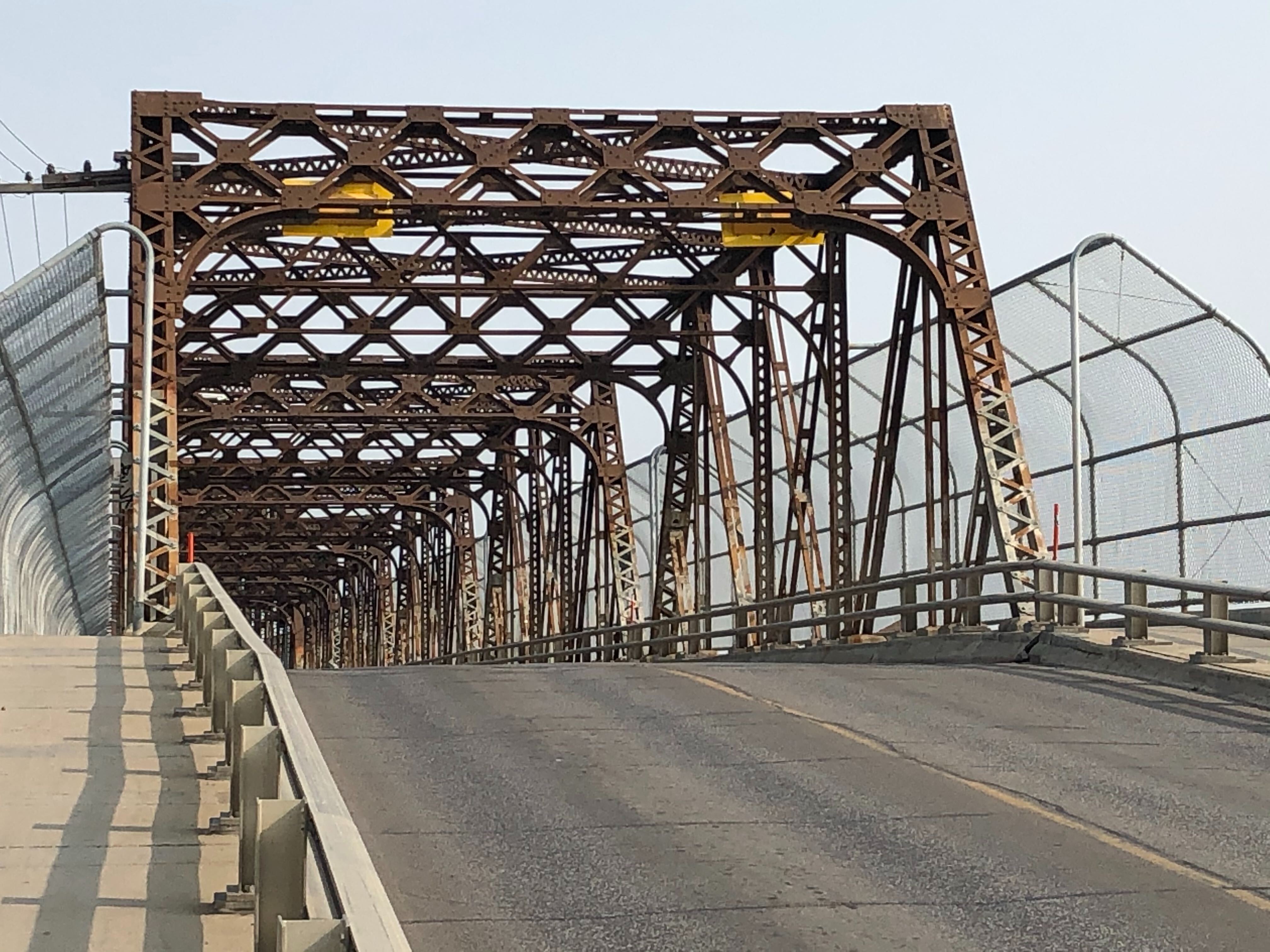
Winnipeg is finally pulling the plug on a century-old neighborhood lifeline, but the financial math behind it is already getting messy.
Crews will start dismantling the southern portion of the rusted Arlington Street Bridge as early as June 1, 2026. If you drive anywhere near the North End or the inner city, you already know the massive headache this structure has caused since its emergency closure back in late 2023. Commuters have been forced onto the Slaw Rebchuk Bridge and the McPhillips Street Underpass, pushing an extra 5,000 vehicles per day onto each of those alternative routes.
But here is the real issue. The City of Winnipeg has greenlit a $10 million contract to tear down just the first third of the bridge while admitting they don't actually have the money secured to build its replacement. It is a classic municipal puzzle, and local drivers are stuck right in the middle of it.
The Broken Math of the $22 Million Budget
City Hall originally set aside $22 million in a four-year budget pool. That cash was supposed to cover two things: completely flattening the old bridge and drawing up the blueprint for a shiny, accessible replacement.
It is not working out that way.
On Monday, the city's public works committee rushed through a special meeting to approve a $9.9 million contract to tear down the southern slice of the bridge, running from Logan Avenue to midway over the active Canadian Pacific Kansas City (CPKC) rail yard. When you add that $10 million chunk to the $5.3 million already spent on preliminary decommissioning and design, plus another $2.4 million in upcoming side contracts, the city has already burned through $17.7 million.
That leaves less than $5 million in the kitty.
With that remaining pocket change, Winnipeg still needs to figure out how to tear down the remaining two-thirds of the bridge stretching north to Dufferin Avenue. That northern side holds the bulk of the heavy iron and historic steel truss work. Public works chair Councillor Janice Lukes did not mince words about the financial outlook, noting that the ultimate cost to finish the job is currently listed as a giant "TBD."
If one-third of the structure costs $10 million to drop, you don't need a degree in civil engineering to see that the final two-thirds will likely break the bank.
Why You Can't Just Blow Up a Bridge Anymore
Many residents have asked why the city can't just plant some explosives, drop the spans, and clear out the scrap metal over a long weekend. Honestly, that was the original game plan.
The city was chatting with CPKC Railway about a strategy to layer the active train tracks with old rubber tires, blast the bridge apart, and let the chunks land below for quick removal. It sounds aggressive, but it would have saved millions.
Then the logistics shifted.
Taking down a 124-year-old steel monster over one of the busiest, most critical rail corridors in Western Canada is an absolute nightmare. CPKC backed away from the explosive plan due to safety concerns and scheduling anxieties. Now, crews have to meticulously piece the bridge apart by crane and torch, piece by painful piece.
Because the yard is heavily utilized, the railway is only giving the city a tiny window to work over the central tracks. Engineers have to execute the most dangerous parts of the removal during July and August of 2027, which are the months when freight traffic traditionally slows down. If they miss that summer slot, the timeline stalls for another full year.
What Happens to Area Traffic Next Month
The phase one demolition kicking off in June 2026 will take about six months to wrap up. The city claims it won't entirely shut down the surrounding major arteries, but you should expect intermittent lanes to close down at Logan Avenue and Arlington Street.
- June 2026 to October 2026: Heavy equipment moves into the south side. Expect frequent lane closures, slow-moving construction trucks, and sudden detours around Logan.
- Late 2026 to Early 2027: A temporary lull while the city secures more funding and finalizes the tougher engineering plans for the central spans.
- Summer 2027: The big headache. Total shutdowns over the rail yard will complicate north-south transit as cranes dismantle the core iron structure over Dufferin Avenue.
If you are already tired of the bottleneck on McPhillips, things are going to get worse before they get better.
The Ghost of a $166 Million Replacement
Let's look at the long-term reality. The Arlington Bridge opened in 1912. It was never meant to survive the weight and volume of modern SUVs, delivery vans, and transit buses. When city engineers pulled the plug in November 2023, they discovered the structural steel was corroding at an accelerated rate. The concrete foundations are so crumbly they can't even be reused to hold up a new deck.
The projected price tag for a brand-new, modern two-lane bridge is currently sitting at $166.3 million.
Mayor Scott Gillingham has insisted that removing the old hazard is a mandatory step toward building a new connection for the North End. The proposed design promises wider sidewalks, dedicated active transportation lanes for cyclists, and gentler approach ramps that won't feel like a roller coaster.
But right now, that new bridge is entirely unfunded. Winnipeg is banking on provincial and federal infrastructure handouts to cover the $166 million bill.
City project engineer Damir Muhurdarevic dropped a sobering timeline for anyone hoping for a quick fix. Even in a perfect world where the money magically appears on a council agenda tomorrow, actual construction on a replacement won't even start until two or three years after the old bridge is completely gone.
Since the demolition won't wrap up until late 2027, you are looking at 2029 or 2030 before a single new girder is laid down.
Your Next Practical Steps
If this corridor is part of your daily life, you need to adjust your habits now rather than waiting for the cranes to block your view in June.
First, stop waiting for the bridge to reopen or hoping for a quick patch job. The bridge is dead, and the steel is worth nothing as salvage because of its age and degradation. It's coming down.
Second, adjust your morning navigation routes permanently. The Slaw Rebchuk Bridge and McPhillips Street Underpass are handling an extra 10,000 combined cars daily, and that number will spike during phase one construction on Logan Avenue. Shift your departure times by 15 minutes or look at using Salter Street or Route 90 to bypass the central core entirely.
Third, if you own a business or live near the intersection of Arlington and Logan, attend the upcoming community zone meetings. The city will be issuing localized trucking detours that will directly impact neighborhood parking and storefront access over the next six months. Stay ahead of the city's shifting barricades.