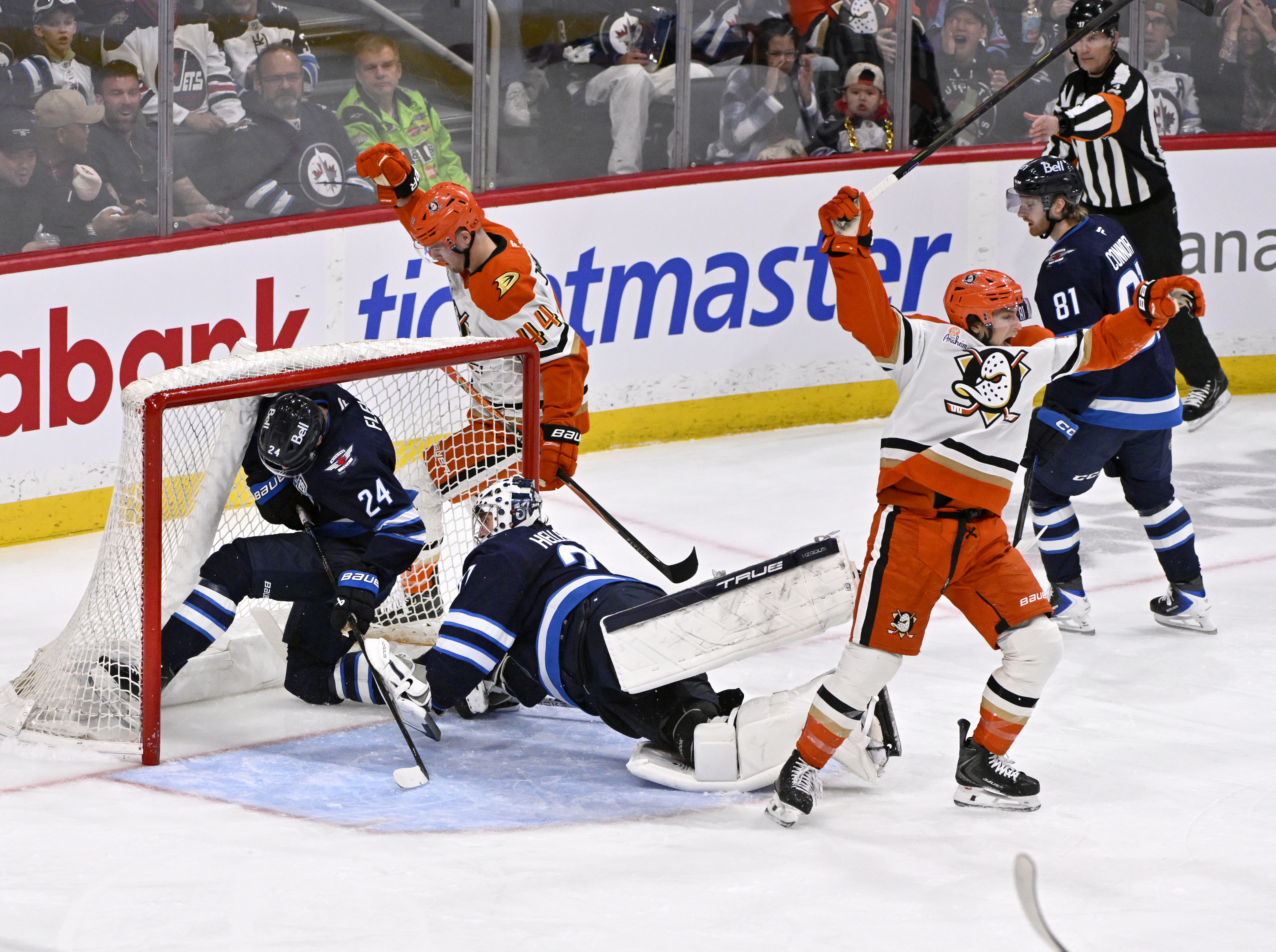
Winning streaks in the NHL often act as a veil. They hide the structural cracks and the creeping fatigue that eventually brings a contender down to earth. For the Winnipeg Jets, a 4-1 loss to the Anaheim Ducks didn't just end a run of victories; it laid bare a recurring identity crisis that haunts this roster when the lights aren't at their brightest. This wasn't a tactical masterclass by Anaheim. It was a self-inflicted wound by a team that forgot that talent without work rate is a recipe for an early spring exit.
The scoreboard tells a simple story, but the tracking data reveals a nightmare. Winnipeg looked heavy. They looked slow. Most importantly, they looked uninterested in the dirty work required to beat a team sitting near the bottom of the standings. When a powerhouse loses to a cellar-dweller, the post-game quotes usually lean on "puck luck" or a "hot goaltender." That is a convenient lie. The truth is that the Jets failed to dictate the terms of the game, allowing a younger, hungrier Anaheim squad to outrun them in the transition game.
The Mirage of puck possession
On paper, the Jets controlled large swaths of the game. They had the zone time. They had the shot attempts. But these are empty calories.
The investigative reality of this loss is found in the quality of shots versus the quantity. Winnipeg spent the night firing pucks from the perimeter, hoping for a bounce that never came. Anaheim, conversely, focused on high-danger scoring chances. They attacked the "home plate" area in front of the net with a physical urgency that Winnipeg couldn't, or wouldn't, match.
The Jets' defensive core, usually a model of stability, appeared porous. There were massive gaps in the neutral zone. This allowed Anaheim to bypass the forecheck with simple, north-south passes. When you give a professional hockey team that much oxygen, they will eventually burn you. It doesn’t matter if they are in last place or first.
Fatigue is a Choice
Critics will point to the schedule. They will say the road trip caught up to them. They will argue that every team has an "off" night.
That is a loser's mentality.
The elite teams in this league—the ones with rings—find ways to win when their legs are gone. They shorten their shifts. They simplify their breakouts. They play a boring, suffocating style that grinds the opponent into submission. Winnipeg did the opposite. They tried to "skill" their way out of a slump, making cross-crease passes that were easily intercepted and taking lazy penalties born of frustration.
The Leadership Vacuum
Where were the veterans? When the game started to slip away in the second period, there was no pushback. No one stepped up to deliver a momentum-shifting hit or a desperate shot block. The bench remained quiet.
Connor Hellebuyck can only do so much. He is often the band-aid that covers up the defensive bleeding, but against Anaheim, even the best goaltender in the world looked human because his teammates left him on an island. You cannot expect a Vezina-caliber performance to bail out four lines of disinterested forwards every single night.
The Anatomy of a Collapse
The 4-1 scoreline was inflated by an empty-netter, but the damage was done long before the final horn. Let's look at the second goal—the one that broke the Jets' spirit.
It started with a lost puck battle along the boards. Two Jets players were caught puck-watching, leaving the backside wide open. It was a fundamental breakdown. A "listless" performance, as some called it, is actually a failure of discipline. It is the result of players cheating on their defensive assignments to try and pad their offensive stats.
- Failure to clear the porch: Anaheim's forwards had a permanent residency in Hellebuyck's crease.
- Neutral zone turnovers: The Jets turned the puck over 14 times in the middle frame alone.
- Special teams stagnation: A power play that looked static and predictable.
The Ducks didn't reinvent hockey to win this game. They simply showed up and did the chores. They cleaned the glass, they moved the bodies, and they took the points.
The Western Conference Arms Race
The danger for Winnipeg isn't this specific loss. It is what this loss signals to the rest of the Western Conference. If you can frustrate the Jets' top six and force their defensemen to handle the puck under pressure, they fold.
Colorado is watching. Vegas is watching. Vancouver is watching.
They see a team that struggles with the "trap" and lacks a Plan B when their primary rush attack is neutralized. If the Jets want to be taken seriously as a Stanley Cup threat, they have to prove they can win ugly. They have to prove they can beat the teams they are supposed to beat, even when the energy levels are at 20 percent.
Correcting the Course
There is no magic trade that fixes a lack of effort. This is an internal issue. The coaching staff has to address the complacency that set in during the win streak. Success breeds bad habits, and those habits were on full display in Anaheim.
The next few games will define the Jets' season. Not because of the points in the standings, but because of the response. Do they double down on the flashy, high-risk play that failed them, or do they return to the gritty, puck-protection game that made them successful in the first half of the year?
Management needs to look hard at the bottom six. If the depth players aren't providing energy on nights when the stars are quiet, they aren't doing their jobs. There are hungry players in the AHL who would kill for a chance to hit someone in an NHL sweater. Maybe it’s time to remind the regulars that their spots aren't guaranteed.
The Anaheim loss wasn't a fluke. It was a warning. A team that thinks it can coast through the dog days of the season will find itself playing golf in early May. The veil has been lifted, and what’s underneath isn't pretty.
Watch the tape. Count the missed assignments. Then go out and hit someone. That is the only way forward for a team that just got embarrassed by a bottom-tier opponent.
Go check the practice lines tomorrow morning. If there aren't changes, the message hasn't been received.