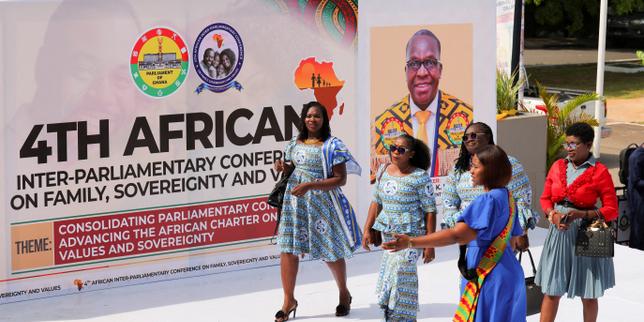
Mainstream Western commentary has stumbled into its favorite trap again. When a coalition of African nations collaborates on policies regarding family structures and traditional values, the immediate reflex of European and American analysts is to slap a label on it: "an ultraconservative offensive." It is a lazy consensus that views every geopolitical shift through the narrow lens of Western culture wars.
They are missing the entire point.
This movement is not some imported, right-wing conspiracy cooked up to mimic American political theater. It is a calculated, pragmatic exercise in regulatory sovereignty. For decades, international aid and developmental funding have arrived in Africa with heavy strings attached—specifically, the mandatory adoption of Western social frameworks. What secular commentators misinterpret as a regressive backlash is actually a pushback against ideological strings. It is a declaration that African nations intend to define their own social contracts, rather than outsourcing them to external donors.
The Flawed Premise of the Imperial Gaze
The standard narrative alleges that local lawmakers are merely puppets of foreign religious groups. This argument treats African leaders as passive actors incapable of independent strategy. I have spent years analyzing regional policy shifts across the continent, and the reality on the ground contradicts this patronizing view.
Local policymakers are hyper-aware of their leverage. They are using family-centric legislation to build a unified regional front. By establishing a shared baseline on social policy, these nations create a diplomatic shield. When an external entity threatens to pull funding over domestic legislation, they no longer face an isolated country; they face a bloc.
Let us dismantle the typical "People Also Ask" query that dominates this discussion: Why is Africa turning toward conservatism?
The question itself is broken. It assumes a sudden shift away from a previous, progressive norm that never existed. Africa is not "turning" conservative. The vast majority of its societies have maintained deep-rooted, communal, and traditional structures for centuries. What has actually changed is the willingness of these nations to formalize these structures into law, explicitly rejecting the universalist assumptions of Western non-governmental organizations (NGOs).
The Economics of Social Cohesion
Western analysts love to look at social policy in a vacuum, completely divorced from economic reality. This is a massive analytical failure. In many developing economies, the nuclear and extended family unit is not just a emotional preference; it is the primary social safety net.
- State Welfare Deficits: When a government cannot provide unemployment benefits, universal healthcare, or elder care, the family system absorbs those shocks.
- Economic Risk Mitigation: High-density kinship networks function as informal credit unions, childcare providers, and employment agencies.
When international bodies push policies that decouple individual rights from communal responsibilities, they risk destabilizing the only functioning welfare system millions of people have. If you erode the traditional family structure in a society without a robust state safety net, you create an economic vacuum. The state cannot afford to fill that void.
Imagine a scenario where a government aggressively dismantles traditional kinship obligations to align with global funding requirements. The immediate result isn't a sudden burst of individual prosperity; it is a spike in elderly abandonment and a collapse in informal youth employment networks. Local politicians understand this risk perfectly well, even if a Brussels-based think tank does not.
The Cost of Drawing the Line
To be absolutely clear, this contrarian reality carries undeniable friction. There is a real, measurable cost to breaking rank with global normative standards.
When a nation codifies strict traditionalist laws, it risks capital flight from socially conscious corporations. It faces immediate sanction threats from major bilateral donors. It can restrict the personal freedoms of minority populations within those borders, creating domestic tension and driving away highly educated, secular talent.
But from a purely state-centric perspective, leaders have weighed these costs and decided that internal stability and regional alignment are worth the price of external disapproval. They are trading western approval for domestic political legitimacy.
Stop Misreading the Room
The Western media needs to drop the shock-horror routine. The consolidation of family-centric policies across the African continent is not a sudden, mysterious infection of foreign ideology. It is a deliberate consolidation of domestic authority.
If you want to understand where the region is heading, stop looking at it through the lens of a Parisian editorial board or a Washington DC advocacy group. Stop asking when Africa will finally catch up to Western social trends. Start looking at the structural realities of governance, state sovereignty, and economic survival.
The era of accepting ideological packages as a prerequisite for development loans is closing. The new playbook is about setting terms, drawing boundaries, and forcing the West to decide whether it values its specific social exports more than its geopolitical alliances.