The air inside the Prime Minister’s office in Jerusalem always smelled of stale coffee and heavy tobacco, but by the third day of July, it tasted like ash.
Yitzhak Rabin sat at his desk, his eyes bloodshot, staring at a map of an airport four thousand kilometers away. He was a man trapped between two kinds of ghosts. Behind him were the historical phantoms of a people who had sworn never again to let their identity be a death warrant. In front of him were two hundred screaming, weeping citizens who had literally broken through his security gates the day before, pounding their fists against the walls of his office, demanding he sign whatever piece of paper it took to bring their children home.
For five decades, the world believed a clean, mythic story about the Entebbe rescue. We were told that when Palestinian and German militants hijacked Air France Flight 139 and forced it down in Uganda, Israel chose audacity over surrender. We were told it was a straight line from a crisis to a lightning-fast commando raid.
The truth is much darker, more human, and profoundly messy. Newly declassified files from the Israel State Archives have finally opened the vault on those six days. The thousands of pages of raw transcripts, frantic late-night phone logs, and secret Cabinet minutes do not reveal a flawless, hyper-confident military machine. They reveal a room full of terrified, deeply conflicted leaders who were fully prepared to surrender—and who spent days desperately trying to buy time because they believed a rescue mission would turn into a slaughterhouse.
Consider the reality of June 27. When the news hit the Cabinet room that four hijackers had seized the plane after an Athens stopover, Rabin did not call for the special forces. He called Paris. The recently opened transcripts capture his exact words, sharp and cold: "My intention is to hold the government of France responsible for the fate of the Israelis flying on the Air France plane and not to absolve them from this responsibility."
It was a classic diplomatic hand-off. The plane was French. The crew was French. The airspace was international.
But then the hijackers landed at Entebbe Airport under the warm, welcoming gaze of Uganda’s eccentric dictator, Idi Amin. And on June 29, the hijackers did something that changed the physics of the crisis entirely. They tore down a wall in the old terminal building and began a selection process.
They ordered everyone with an Israeli passport or a Jewish-sounding name to step to one side of the room.
For Yitzhak David, a hostage who had survived the Nazi concentration camps, the sound of boots on the concrete floor and the casual sorting of human beings based on their birthright was a waking nightmare. In a newly released interview from the archive, his testimony carries the weight of a heavy sob: the selection process instantly dragged him back to the gas chambers of his youth.
The non-Israeli passengers were put on planes and sent to Paris. The world breathed a sigh of relief. The French passengers were safe. The international community, as Israeli lawmaker Zerach Warhaftig noted with bitter frustration in the secret debates, essentially went back to sleep.
Suddenly, it was not a global crisis. It was just a Jewish problem.
Menachem Begin, then the leader of the opposition, captured the sudden isolation in a closed-door meeting: "The world has already calmed down. The countries from which the people came to Entebbe are all right. It is a problem of Israel alone."
The hijackers’ ultimatum was simple: release fifty-three convicted militants or the executions begin. The deadline was forty-eight hours.
Imagine being the person who has to calculate the cost of a human life in real time. Rabin’s ad hoc crisis team initially ruled out negotiations. But as the clock ticked, the political resolve dissolved. The declassified memos show a frantic pivot. The government agreed to talk. They authorized concessions. They were ready to trade prisoners.
They did it not because they wanted to, but because they had no alternative. The military option was blind. Entebbe was thousands of miles outside the reach of Israel’s radar, in a country they no longer controlled, surrounded by Ugandan soldiers with heavy weaponry. To fly there was a suicide pact.
So they played a double game. They negotiated in public to buy hours, while a handful of intelligence officers frantically looked for a crack in the wall.
They found that crack in the most unlikely place: the blueprint of the airport itself. A local Israeli construction firm had actually built the Entebbe terminal years prior. Engineers quickly built a full-scale mock-up of the building out of wood and canvas in the middle of the Israeli desert. Soldiers practiced breaching doors they had only seen on paper.
Simultaneously, an aging Israeli military attaché named Baruch Bar-Lev was assigned to pick up the phone and call Idi Amin directly in Uganda. The declassified audio files are surreal. Bar-Lev speaks to the dictator like a patient therapist handling a volatile patient.
"I believe you have a God-given opportunity to save people," Bar-Lev told Amin over a crackling transcontinental phone line, trying to stroke the tyrant’s massive ego. "If you save the people, you will be a holy man."
Amin boomed back over the line, boasting of his power, playing the mediator while his troops set up machine-gun nests around the hostages. The calls yielded nothing but empty promises. The clock was running out again. The extended deadline was noon on July 4.
By July 2, the intelligence picture was finally clearing up, largely because the non-Israeli hostages who had been released in Paris were questioned by intelligence agents. They remembered details. The position of the doors. The mood of the captors. The fact that the German hijackers, Wilfried Böse and Brigitte Kuhlmann, seemed more volatile than the Palestinians.
On Saturday, July 3, at 11:15 AM, the top military commander, Mordechai Gur, walked into Rabin’s office. He didn't bring certainties. He brought an assessment that there were "very good chances." It was the closest thing to a green light Rabin was going to get.
At 2:00 PM, the Cabinet met in absolute secrecy. The vote to launch the operation was unanimous, but the mood was somber, not triumphant. They knew they were sending a hundred commandos into a meat grinder. An hour later, Rabin gave the order: "Let the troops take off."
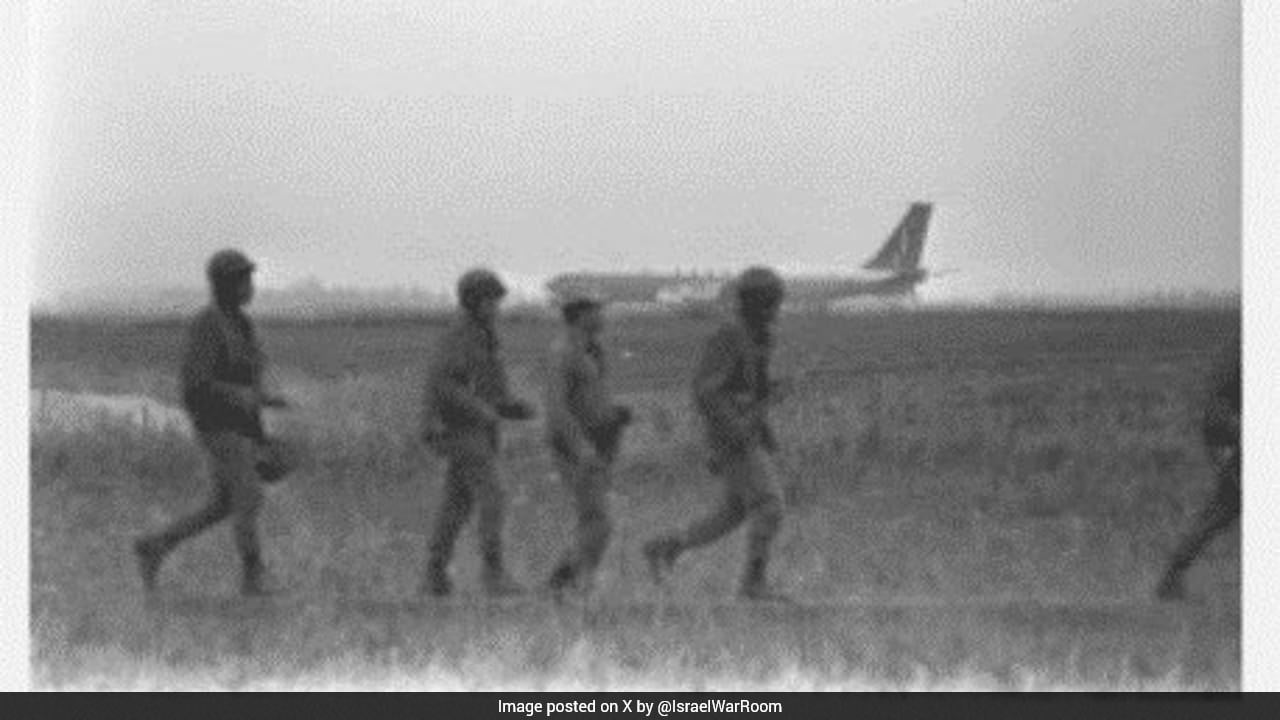
Four C-130 Hercules transport planes lifted off into the Mediterranean dusk, flying ultra-low to avoid Egyptian and Saudi radar, their bellies packed with commandos, medical supplies, and a black Mercedes-Benz painted to look exactly like Idi Amin's personal staff car.
The rest is the part that became legend. The midnight landing. The black Mercedes rolling down the tarmac. The sudden, chaotic erupting of gunfire in the dark. The entire assault lasted less than an hour. One hundred and two hostages were dragged out of the terminal and loaded onto the rescue planes while Ugandan MiGs burned on the tarmac nearby.
It was the most successful rescue mission in modern history. But when the planes landed back in Israel to a nation delirious with joy, the man who ordered the raid did not celebrate.
The cost was staring him in the face. Three hostages had been killed in the crossfire. A fourth, an elderly woman named Dora Bloch who had been taken to a Kampala hospital earlier in the week, was murdered by Ugandan forces in retaliation.
And then there was the sole military fatality.
Lieutenant Colonel Yonatan Netanyahu, the thirty-year-old commander of the elite Sayeret Matkal unit, took a bullet to the chest near the terminal entrance and bled out on the tarmac. His death shattered his family, including his younger brother, Benjamin, altering the trajectory of Israeli political history forever.
The newly released papers include a private note Rabin wrote in the immediate aftermath of the euphoria. It contains no boasting, no grand declarations of a new era. It reads like a warning from a man who knew that tactical victories are just temporary pauses in a much larger tragedy.
"Let us not deceive ourselves," Rabin wrote, his handwriting steady but his words heavy. "It was an extraordinary operation and achievement. However, the problem is not over. Terrorism continues to operate... We have finished one battle, but the war continues."
Fifty years later, those words do not read like history. They read like the morning news. The archive reminds us that behind the black-and-white photographs of soldiers returning home to cheering crowds, the true cost of security is never paid in full. It is just financed, day after agonizing day, by those who sit in the dark, waiting for a phone to ring.