The air inside the state capitol always carries a specific weight. It smells of old marble, polished wood, and the invisible friction of opposing wills. In the corridors of power, weakness is a currency nobody wants to trade in. You mask it. You bury it under a flurry of press releases, sharp suits, and tightly scripted briefings.
But sometimes, the mask slips.
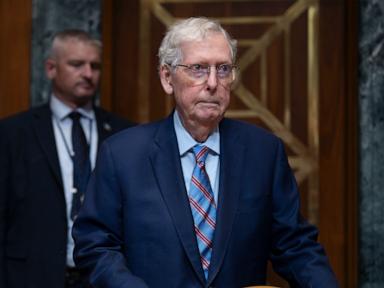
When a camera catches a powerful man freezing in real-time, the silence that follows is louder than any political rally. It forces an uncomfortable question into the open, one that transcends party lines and political strategies. What do we owe the public when our bodies begin to fail us?
Kentucky Governor Andy Beshear brought that question to the absolute forefront. He didn't do it with a fiery speech or a partisan attack. He did it with the quiet, devastating precision of a neighbor asking after a sick relative, wrapped in the undeniable authority of his office. He asked Senator Mitch McConnell to simply tell the people the truth about his health.
Consider the reality of a modern political career. It is an endurance sport played by the aging. We watch leaders who have spent decades climbing to the absolute peak of American influence, only to find that the summit offers no protection against the simple, brutal passage of time.
Imagine a hypothetical citizen from Eastern Kentucky. Let’s call him Arthur. Arthur has watched the same faces on his television screen for forty years. To Arthur, these figures aren't just names on a ballot; they are structural pillars of his worldview. When one of those pillars wavers, the ground beneath Arthur feels a little less stable. It is not about partisan victory. It is about a deep, human need for certainty.
The friction between Beshear and McConnell isn't just a local dispute. It is a microcosm of a national anxiety. We are a nation governed by a generation that refuses to let go of the wheel, even as the headlights begin to flicker.
When a public official experiences a highly visible medical event, the immediate instinct of the political apparatus is to build a wall of euphemisms. We hear about "lightheadedness." We hear about "dehydration." We are told, with practiced smiles, that everything is perfectly fine.
But the human eye is remarkably good at detecting the gap between what it is told and what it sees.
When Beshear stepped to the microphone, he chose not to participate in the collective pretense. He spoke to a basic human expectation: transparency. The governor’s request wasn't an act of cruelty; it was an acknowledgment of a shared reality. He noted that the people of Kentucky deserve to know the condition of the man who holds their collective future in his hands.
Power is an addictive substance. It numbs the user to their own limitations. In the high-stakes theater of Washington, admitting to a physical vulnerability is often treated as a tactical error. The moment you show a crack in the armor, the vultures begin to circle.
This creates a tragic paradox. The very people entrusted with the welfare of millions are forced to live in a state of deep, isolating denial about their own fragility. They suffer under the glaring lights of public scrutiny, unable to step away, unable to heal in the quiet privacy that every human being deserves at the end of their lives.
Think about what happens when a leader chooses secrecy over clarity.
Speculation rushes into the vacuum. Rumors grow like weeds in the dark. A single moment of physical hesitation becomes an internet meme, dissected by millions who have no context, no empathy, and no understanding of the underlying medical reality. The dignity of a long career is stripped away, replaced by a permanent loop of a vulnerable moment playing on a screen.
Beshear’s intervention was an attempt to break that loop. By asking for a public update, he offered an exit ramp from the rumors. He suggested that honesty, even a difficult or painful honesty, is always preferable to the anxious guesswork of a worried constituency.
We often treat our politicians like machines. We expect them to perform flawlessly, to travel constantly, to make monumental decisions on three hours of sleep, and to do it all without ever showing a hint of exhaustion. We forget that underneath the titles and the security details, there is just a fragile collection of bones and memories, trying to hold back the tide of years.
The true test of leadership is knowing when the mission requires you to step back into the light and speak without a script. It requires a willingness to say, "This is where I am. This is what I am facing."
The silence coming from the senator’s camp wasn't just a refusal to answer a political rival. It was a refusal to look the reality of aging in the face. It was a choice to maintain the illusion of absolute permanence in a world where everything eventually fades.
As the afternoon sun cast long shadows across the capitol lawn, the reporters packed up their cameras. The microphones were turned off. The statements were logged into the digital record.
But the question remained, hanging in the humid Kentucky air, unanswered and unavoidable. It sat on the desks of the staffers. It followed the politicians into their private offices. It lingered in the minds of the voters who watched the evening news.
A state cannot be governed by a ghost. A people cannot place their trust in a shadow. The demand for clarity isn't a political weapon; it is the ultimate act of respect for the system itself. Until that clarity arrives, the citizens are left to watch the screens, hoping for the best, but preparing themselves for the moment when the freezing stops being a temporary pause and becomes a permanent reality.