The United States government recently imposed targeted sanctions on several Rwandan individuals and corporate entities implicated in the illicit trafficking of conflict gold sourced from the Democratic Republic of Congo. By choking off the financial lifelines of these networks, Washington aims to disrupt the multi-million-dollar smuggling operations that directly fund armed groups and destabilize the eastern DRC. However, blacklisting a handful of middlemen barely scratches the surface of a deeply entrenched, highly sophisticated regional supply chain that relies on institutional complicity, porous borders, and the global jewelry market's insatiable appetite for cheap, untraceable bullion.
Sanctions look impressive on paper. They freeze assets, restrict travel, and signal moral outrage from Western capitals. Yet, the reality on the ground in Kigali, Bukavu, and Dubai tells a completely different story. The illicit gold trade is not a clandestine operation run by rogue actors operating in the shadows. It is a highly organized, state-sanctioned economic engine that bridges the gap between violent militia control in the Congolese bush and legitimate global commodities exchanges. For a more detailed analysis into similar topics, we recommend: this related article.
To understand why these financial penalties historically fail to yield lasting peace, one must look at the mechanics of the pipeline itself.
The Anatomy of the Illicit Supply Chain
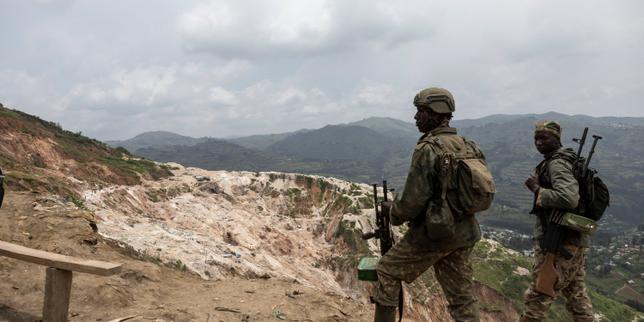
Gold mining in eastern Congo is predominantly artisanal. Hundreds of thousands of miners dig through mud with shovels and bare hands, working under the watchful eyes of various armed factions, including the rebel group M23 and the FDLR, alongside corrupt elements of the Congolese national army. These armed groups levy illegal taxes at every stage of extraction. They control the pits. They tax the paths leading to the markets. They extort the local traders. To get more details on the matter, detailed analysis can also be found at USA Today.
Once the raw gold leaves the mines, it undergoes a transformation designed to erase its origin.
Smugglers transport the unrefined gold across the porous border into Rwanda and Uganda. This is done through night crossings on Lake Kivu or hidden compartments in commercial vehicles. Once inside Rwandan territory, the metal is integrated into the domestic market. It receives forged documentation claiming it was mined locally, despite Rwanda possessing negligible natural gold reserves of its own.
+-------------------+      +---------------------+      +---------------------+
|  Congolese Mines  | ---> | Smuggled to Rwanda  | ---> | Refined & Exported  |
| (Militia Taxed)   |      | (Forged Origin Paper|      | (Global Markets)    |
+-------------------+      +---------------------+      +---------------------+
The numbers simply do not add up. For years, official export data from Rwanda has shown gold shipments that vastly exceed the country's known domestic production capacity. This statistical discrepancy is the smoking gun of the regional trade. The gold is refined, stamped with a new origin, and flown out to international transit hubs, primarily Dubai, where it enters the legitimate global supply chain.
Why Washington's Playbook is Outdated
The reliance on targeted individual sanctions stems from a fundamental misunderstanding of modern smuggling networks. When the U.S. Treasury Department places a specific trader or a local refinery on the Office of Foreign Assets Control blacklist, the network adapts almost instantly.
Corporate entities are cheap to dissolve and even cheaper to replace. A sanctioned shell company closes its doors on a Tuesday, and by Thursday, a new entity opens down the street under the name of a cousin, an associate, or a trusted nominee. The physical infrastructure—the smelting pots, the transport routes, the corrupt border officials—remains entirely intact.
Furthermore, enforcement relies heavily on the cooperation of regional governments that are themselves beneficiaries of the status quo. Gold is a primary source of foreign currency for resource-poor nations in the region. Expecting local authorities to aggressively police the very trade that stabilizes their balance of payments is a diplomatic calculation rooted in fantasy.
The Dubai Loophole and the Myth of Clean Jewelry
Western nations like to pretend that conflict gold is an isolated African problem. It is not. The pipeline requires a destination, and that destination is frequently the United Arab Emirates.
In the souks and refineries of Dubai, gold from various global sources is melted down together. This process blending conflict gold with legally sourced metal effectively sanitizes the product. Once refined to 99.9% purity, the gold is cast into bullion bars or crafted into jewelry, making it virtually impossible for forensic auditors to determine whether the raw material funded an atrocities-committing militia in North Kivu or came from a regulated corporate mine in Australia.
The international jewelry and electronics industries remain complicit through systemic negligence. While major brands tout their adherence to responsible sourcing guidelines, such as those established by the OECD, their audits rarely penetrate deeper than the first tier of suppliers. They verify the refinery, but they fail to verify where the refinery obtained the raw gold.
The Geopolitical Standoff
The conflict in the eastern DRC cannot be divorced from the broader geopolitical rivalries gripping the Great Lakes region. Kinshasa accuses Kigali of using the M23 rebel group as a proxy force to destabilize the region and maintain a stranglehold on the DRC's mineral wealth. Conversely, Kigali maintains that its security interests are threatened by the presence of the FDLR, a remnant militia linked to the 1994 Rwandan genocide, operating freely near its border.
Amid this finger-pointing, the gold trade serves as both a driver and a funder of perpetual warfare. The revenues generated by smuggled gold allow rebel groups to purchase sophisticated weaponry, pay recruits, and outgun local government forces. It creates a self-sustaining ecosystem where peace is economically disadvantageous for the warlords and traders holding the purse strings.
Moving Beyond Symbolic Penalties
If the international community genuinely wants to halt the pillaging of the DRC's resources, it must shift its strategy from toothless individual sanctions to systemic market exclusion.
This requires implementing strict, mandatory forensic testing on gold shipments entering major trading hubs. Technologies like trace-element analysis and isotopic mapping can identify the specific geographic origin of gold, regardless of what the accompanying paperwork claims. If a batch of gold possesses the chemical signature of the Kivu region but carries a Rwandan origin certificate, it must be seized immediately.
Additionally, international banks must face severe penalties for clearing dollar-denominated transactions linked to regional airlines and logistics firms involved in the transport of undocumented bullion. The flow of physical gold depends entirely on the flow of digital cash.
The current strategy of whack-a-mole sanctions provides political cover for Western governments wishing to appear proactive while allowing the lucrative underlying trade to continue unhindered. Until the financial risk of handling tainted gold outweighs the immense profit margins, the soil of eastern Congo will continue to be washed in blood for the sake of global luxury.


