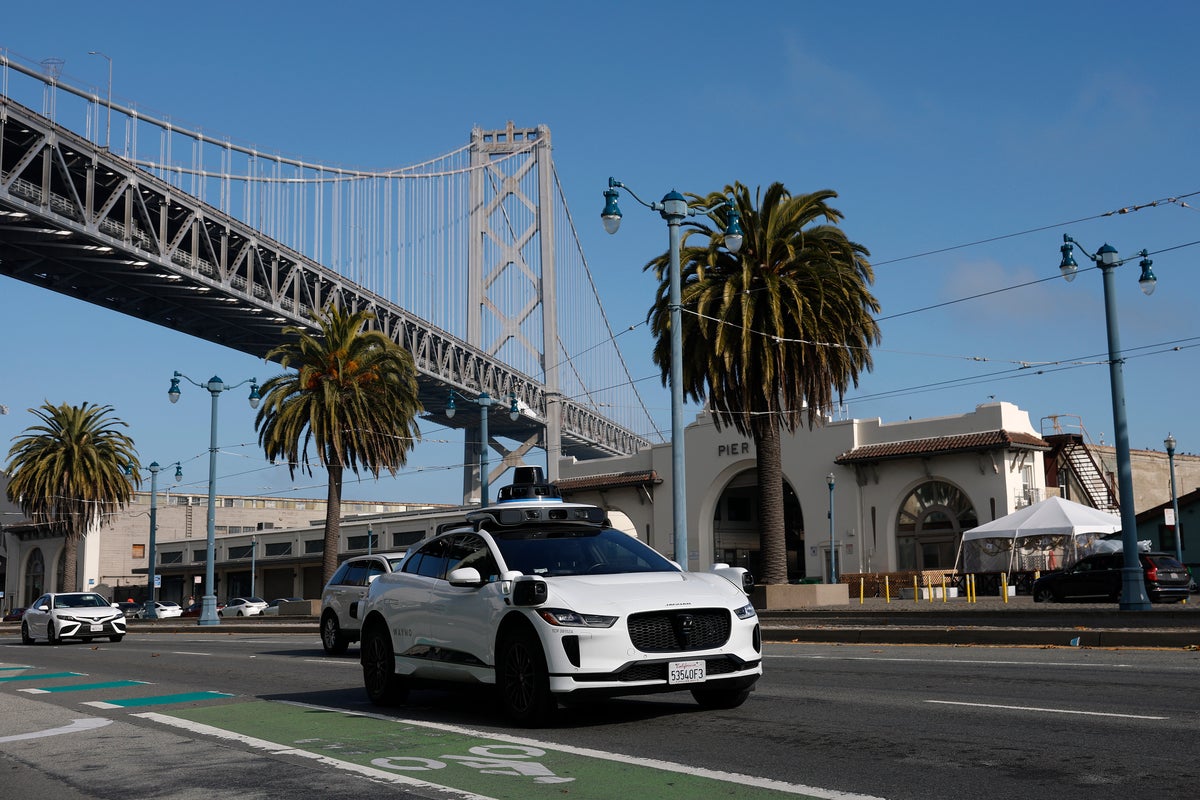
The media headlines read like bad Hollywood satire. A burglary suspect in Los Angeles hops into a driverless Waymo vehicle to flee the cops. The press immediately defaulted to the standard, pearl-clutching narrative: autonomous vehicles are a public safety hazard, a lawless wild west on wheels, and a get-away vehicle for the modern criminal.
They got it completely wrong.
The lazy consensus treats this incident as a failure of technology. In reality, it was a masterclass in why autonomous fleets are inherently safer, more trackable, and more compliant than any human-driven vehicle could ever hope to be. The suspect didn't exploit a loophole; they walked right into a digital dragnet.
The Myth of the Autonomous Getaway Car
Let’s dismantle the premise of the entire panic. For a getaway vehicle to be effective, it requires three things: anonymity, unpredictable routing, and a driver willing to break the law to evade capture.
A self-driving car possesses exactly zero of these traits.
When a human suspect flees in a traditional car, police face a high-risk pursuit. The driver speeds, runs red lights, weaves through traffic, and puts every pedestrian on the block at risk. According to data from the National Highway Traffic Safety Administration (NHTSA), pursuit-related crashes claim hundreds of lives every year in the United States alone.
Now look at what happens when a suspect panics and jumps into a robotaxi.
The vehicle does not speed. It does not run red lights. It does not engage in a high-speed chase with the LAPD. It pulls over safely the moment it detects emergency lights or receives a remote command from the fleet operations center. The suspect effectively locked themselves inside a slow-moving, heavily monitored surveillance box.
I have spent years analyzing fleet logistics and sensor architectures. The sheer density of telemetry data generated by these vehicles is staggering. A standard autonomous vehicle utilizes a suite of LiDAR, radar, and cameras that capture a 360-degree view of its surroundings in real-time. By stepping into the vehicle, the suspect handed law enforcement the ultimate digital paper trail.
Real-Time Tracking vs. The Human Wildcard
When someone steals a Honda Civic or hails a random human Uber driver at a crime scene, law enforcement is at a massive disadvantage. They rely on spotty eyewitness testimony, traffic cameras that may or may not be working, and the hope that the driver doesn't ditch the car in an unmonitored alley.
With a company like Waymo or Cruise, the asset is constantly pinging its exact GPS coordinates back to a centralized server.
[Suspect Enters Vehicle] -> [Instant GPS Ping to Fleet Command] -> [Law Enforcement Liaison Notified] -> [Vehicle Safely Rerouted/Stopped]
Alphabet's autonomous driving subsidiary maintains a 24/7 response team specifically designed to interact with first responders. When the police need a vehicle stopped, it doesn't require a spike strip or a tactical ramming maneuver. It requires a digital handshake. The fleet operator can remotely command the vehicle to pull over to a safe curb, lock the doors, or route directly toward the nearest police precinct.
The downside to this approach? Yes, it raises legitimate, massive questions about privacy and state surveillance. If a private corporation can instantly hand over your location, routing history, and in-cabin audio to law enforcement without a warrant during an active chase, the boundary of personal privacy is obliterated. That is the actual nuance the tech press missed while they were busy screaming about rogue robots. The danger isn't that the car will help the criminal escape; the danger is that the car is an unblinking eye for the state.
Dismantling the Fleet Safety Panic
Every time a robotaxi makes a mistake, it leads the evening news. If a Waymo stalls at an intersection, it gets an front-page write-up. Meanwhile, human drivers kill roughly 40,000 people annually on American roads, and it barely registers as a local traffic report.
We have to look at the cold, hard numbers.
Waymo released a comprehensive safety study analyzing over 7 million miles of rider-only driving data. The results were stark: autonomous vehicles showed an 85% reduction in crash rates involving injuries compared to human drivers in the same cities. They showed a 57% reduction in police-reported crash rates.
- Human Drivers: Prone to road rage, intoxication, texting, and panic.
- Autonomous Systems: Do not get nervous when a police cruiser flashes its lights. They execute deterministic safety protocols.
If every fleeing suspect chose a robotaxi instead of a stolen muscle car, high-speed police chases would cease to exist overnight. Bystander fatalities from police pursuits would drop to zero. The "crisis" isn't that criminals are using autonomous cars; the crisis is that we aren't putting more of them on the road to replace the chaotic liability of human steering wheels.
The Flawed Questions We Keep Asking
The public is asking the wrong questions because the tech industry has failed to educate them.
People ask: "How do we stop criminals from abusing self-driving cars?"
The premise itself is flawed. You don't need to stop them. You should encourage it. Let every shoplifter, burglar, and fugitive hail a driverless ride. It streamlines the arrest process. The ride comes with a credit card footprint, a phone number verification, a high-definition facial scan from the cabin camera, and a guaranteed, low-speed destination where officers can wait with handcuffs ready.
We need to stop treating autonomous vehicles like regular cars that happen to lack a driver. They are not cars. They are physical extensions of a cloud network. You cannot hijack a cloud network by sitting in its backseat.
The media wants a narrative of tech-fueled chaos because fear drives clicks. But the math and the mechanics tell a completely different story. The LA burglary incident proved that the autonomous grid works exactly as intended. It remained calm, it remained predictable, and it neutralized a high-risk public safety situation by simply obeying the speed limit.
Stop panicking about the driverless getaway. Start worrying about how quickly you'll give up your right to go unnoticed.