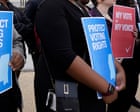
The narrative is comfortably predictable. Thousands gather on a humid afternoon, placards held high, invoking the ghosts of the 1960s. The speeches are rhythmic, the outrage is palpable, and the media coverage is copy-pasted from a template perfected decades ago. Everyone walks away feeling righteous. Nothing actually changes.
The obsession with "Jim Crow 2.0" isn't just an exaggeration; it’s a strategic failure. By framing every administrative tweak to election law as a return to the era of literacy tests and state-sponsored violence, activists are fighting a phantom. They are burning social capital on a battle that ignores the real mechanics of power in the modern South.
If you want to understand why Mississippi stays at the bottom of every quality-of-life metric, stop looking at the ballot box and start looking at the bureaucracy.
The Logic of Administrative Friction
The "lazy consensus" suggests that any policy making it slightly more difficult to vote—like requiring a specific ID or cleaning up inactive voter rolls—is a calculated attempt at disenfranchisement. This perspective assumes the state government is a well-oiled machine of suppression.
It isn't.
Most of the "suppression" people scream about is actually the result of gross incompetence and a crumbling infrastructure that hasn't been updated since the analog age. When a polling place moves or a registration form gets hung up in a 40-year-old database, it’s rarely a conspiracy. It’s a systemic collapse.
By labeling every glitch as "Jim Crow," we let local officials off the hook for their basic inability to run a functional office. We turn a debate about operational efficiency into a holy war over civil rights. The result? The officials keep their jobs because the fight is now partisan, and the systems stay broken.
The Participation Paradox
We are told that "voting rights are under attack." Yet, data from the last decade shows a different reality. In many jurisdictions with the strictest laws, minority turnout has actually increased.
Why? Because perceived suppression acts as a massive psychological mobilizer.
When you tell a community their right to vote is being stolen, they show up to defend it. The "suppression" narrative has become the most effective "Get Out The Vote" tool in the Democratic arsenal. But here is the sting: high turnout hasn't translated into better policy.
Mississippi has seen record-breaking engagement in recent cycles, yet the legislative outcomes remain stagnant. We have confused the act of voting with the exercise of power. We are winning the battle for the ballot while losing the war for the budget.
The Disenfranchisement Distraction
While the cameras are focused on the marchers at the state capitol, the real disenfranchisement happens in the fine print of municipal codes and zoning boards.
The average Mississippian is far more harmed by "food deserts," a lack of broadband, and the collapse of rural healthcare than they are by a requirement to show a driver's license at the polls. But "Broadband Access" doesn't make for a gripping protest chant. "Jim Crow" does.
This is the Insider's Truth: The political class loves the voting rights debate. It is a low-cost way to signal loyalty without actually having to fix a school or pave a road.
- For the Right: It’s about "Election Integrity," a phrase that means nothing but keeps the base agitated about invisible fraud.
- For the Left: It’s about "Voter Suppression," a phrase that keeps the base agitated about invisible ghosts.
Both sides are using the mechanics of the vote to avoid talking about the results of the governance.
The Myth of the "Easy Vote"
Let’s dismantle the premise that making voting "easier" is the ultimate goal of a healthy democracy.
Imagine a scenario where every citizen is automatically registered and can vote via a single tap on their smartphone. Does that improve the quality of the candidate pool? Does it make the voter more informed about the nuances of the state's $27 billion budget?
No. It increases volume, not value.
The obsession with "frictionless" voting ignores the fact that a democracy requires an engaged, informed citizenry, not just a high-participation one. When we lower the bar to the floor, we get a political discourse that lives in the basement. We trade depth for data points.
I’ve watched campaigns spend millions of dollars on "chasing ballots"—contacting people who have no idea who the candidates are and essentially dragging them to the finish line. This isn't empowerment; it's harvesting. It treats the voter as a commodity, a number to be tallied, rather than a stakeholder to be convinced.
The Redistricting Red Herring
Every four years, we hear that gerrymandering is the reason the status quo persists. "They're picking their voters," the activists cry.
While redistricting is certainly a dark art, it’s not the primary reason for Mississippi’s political stasis. The primary reason is geographic sorting. People are moving to enclaves where everyone thinks like them. You can draw the lines however you want; you cannot fix the fact that the state is culturally and demographically siloed.
By focusing on the lines on a map, we ignore the cultural chasm that prevents any real coalition building. We are fighting over the geometry of the districts instead of the geography of the heart.
Stop Marching, Start Auditing
If the thousands of people who rallied for "voting rights" instead spent that energy auditing their local tax assessor’s office or showing up to every single school board meeting for a year, Mississippi would transform.
But that is boring work. It doesn't look good on Instagram. It doesn't feel like a movement.
The harsh reality is that the current voting systems in the South are more secure and more accessible than they have been at almost any point in history. Is there room for improvement? Always. But the "Jim Crow" rhetoric is a historical insult to the people who actually faced down dogs and fire hoses.
Today’s "obstacles" are largely administrative annoyances. Treating them as existential threats to democracy is a luxury of a society that has forgotten what real oppression looks like.
The Price of Professional Activism
There is an entire industry built on the "Voting Rights Under Attack" narrative. Non-profits, consultants, and professional organizers depend on this crisis for their funding. If they admitted that the situation was actually stable, their donor base would dry up overnight.
They have a vested interest in the crisis. They need the threat to be imminent. They need the enemy to be a cartoon villain.
This creates a feedback loop where every legislative update is framed as a catastrophe. It creates a state of perpetual high-alert that leads to burnout among regular citizens. When everything is an emergency, nothing is.
The Pivot to Power
If you want to disrupt the system, you have to stop playing by the rules of the 1965 playbook.
- Drop the Hyperbole: Stop using the language of the civil rights movement for administrative disputes. It devalues the history and makes you look like a partisan hack to anyone in the middle.
- Focus on Local Mechanics: The Secretary of State matters, but the Circuit Clerk matters more. That’s where the friction actually lives.
- Demand Results, Not Just Access: High turnout is a vanity metric. If 100% of the state votes but the poverty rate doesn't budge, the "movement" has failed.
The status quo in Mississippi isn't maintained by "suppression." It's maintained by a population that has been convinced that the act of voting is the peak of political engagement.
The ballot is the beginning, not the end. Until the activists realize they are fighting the wrong war, they will continue to lose the state they claim to be saving.
The march is over. Go home and read the budget.