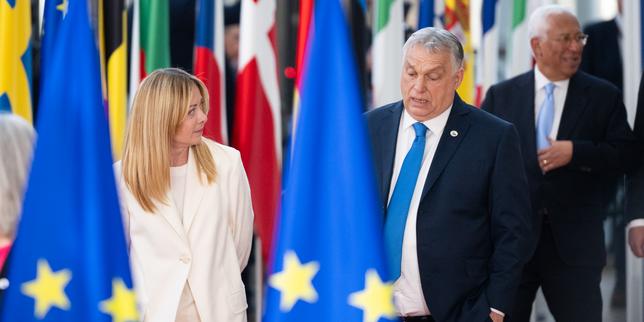
Brussels is at a standstill again. It’s a script we’ve seen play out dozens of times since 2022, but the stakes just got significantly higher. While Ukrainian forces face a brutal reality on the front lines, the bureaucratic machinery in Europe has hit a massive, Hungarian-shaped wall. Viktor Orban just officially tanked the latest attempt to greenlight a €90 billion loan package for Kyiv, leaving European leaders fuming and the financial future of Ukraine hanging by a thread.
This isn't just about a single veto. It's about a fundamental breakdown in how the European Union functions when one member state decides to hold the entire continent's foreign policy hostage. You might think this is just standard political posturing, but the timing couldn't be worse. With shifting political winds in Washington and depleted stockpiles across the continent, this €90 billion was supposed to be the "bridge" that kept the Ukrainian economy from total collapse through the next year. You might also find this similar story insightful: The $2 Billion Pause and the High Stakes of Silence.
Why the Hungarian veto is different this time
Orban isn't just saying no because he wants to be difficult. He's playing a very specific, high-stakes game of leverage. For months, the European Commission has frozen billions in funding earmarked for Hungary due to concerns over the rule of law and democratic backsliding in Budapest. Orban’s message to Brussels is loud and clear: if you don’t give me my money, I won't let you give Ukraine theirs.
It’s a cynical trade-off. European diplomats tried to offer concessions during the latest marathon session, but Orban didn't budge. He knows that the EU requires unanimity for these major financial packages. One "no" is all it takes to stop the whole train. This isn't just a disagreement over interest rates or repayment terms. It's a direct challenge to the EU's ability to act as a unified global power. As reported in detailed articles by Al Jazeera, the effects are widespread.
Kyiv needs this money for more than just bullets. We're talking about paying teachers, keeping hospitals running, and maintaining a power grid that is under constant bombardment. When the EU fails to deliver on a promise of this magnitude, it sends a signal of weakness that Moscow is all too happy to exploit. Honestly, it's a mess that everyone saw coming, yet no one seems to have a real Plan B.
The 90 billion euro math that doesn't add up anymore
Let’s look at the numbers because they’re staggering. This loan wasn't just a random figure pulled out of thin air. It was calculated to cover the projected fiscal gap for Ukraine as the war drags into another grueling phase. The plan involved using frozen Russian central bank assets as collateral—a move that was already legally shaky and technically complex.
By blocking the deal, Orban has effectively neutralized the "windfall profits" strategy that the G7 and EU spent months negotiating. Here is the reality of the situation:
- Ukraine faces a monthly budget deficit of roughly $3 billion to $5 billion.
- The EU was supposed to provide the lion's share of long-term stability.
- Without this €90 billion, the International Monetary Fund (IMF) might have to rethink its own support structures.
Europe’s credibility is on the line here. If they can't figure out a way around one disgruntled leader, the entire project of European integration looks like a house of cards. Some leaders, like France’s Emmanuel Macron and Germany’s Olaf Scholz, have hinted at "coalitions of the willing" where individual countries provide the cash outside of the formal EU framework. But that’s a logistical nightmare. It takes longer, involves dozens of separate national parliaments, and lacks the sheer weight of a unified European response.
The rule of law versus the reality of war
There is a bitter irony in the fact that the EU is trying to defend democracy in Ukraine while its own internal democratic mechanisms are being used to sabotage that very effort. The "Rule of Law" mechanism was designed to protect EU taxpayers from corruption in places like Hungary. Now, that same mechanism is being used as a bargaining chip in a war of attrition.
You have to wonder if the EU's founders ever imagined a scenario where a single mid-sized economy could paralyze the security strategy of the entire bloc. Probably not. But here we are. The frustration in the hallways of the Berlaymont building is palpable. Diplomats are tired of the "Orban dance," yet they haven't found a way to strip him of his voting rights under Article 7—the so-called "nuclear option" that remains too politically sensitive for many members to touch.
What happens to Kyiv if the money never arrives
If you’re sitting in Kyiv, this isn't a political debate. It’s an existential crisis. If the €90 billion remains frozen, the Ukrainian central bank will likely have to resort to "monetary financing." That’s a fancy way of saying they’ll have to print money. We all know where that leads: hyperinflation, a devalued currency, and a total wipeout of the middle class's savings.
Economic collapse can lose a war just as fast as a lost battle on the eastern front. Soldiers need to be paid. Logistics companies need to be compensated for fuel. If the civilian economy implodes, the military effort won't be far behind. Orban knows this. Putin knows this. And yet, the EU seems stuck in a loop of "deep concern" and "urgent consultations."
The failure to convince Hungary isn't just a tactical error. It's a strategic disaster. It tells every other autocrat that the EU can be bought, bullied, or simply bored into submission. While the headlines focus on the 90 billion, the real story is the erosion of European solidarity.
Bypassing the veto is the only way forward
The time for "convincing" Orban is over. He has shown time and again that he isn't interested in the European project; he’s interested in his own political survival and the flow of funds to his inner circle. If the EU wants to remain relevant, it has to stop playing by rules that Orban has already shredded.
There are two main paths left, and both are difficult.
First, the "Intergovernmental Agreement." This involves 26 member states signing a separate treaty to provide the funds. It bypasses the EU budget and, therefore, the Hungarian veto. The downside? It’s slow. It requires 26 separate ratifications. It’s a bureaucratic mountain that might take months to climb, and Ukraine doesn't have months.
Second, the EU could finally get serious about Article 7. This would suspend Hungary's voting rights. It’s the only way to actually fix the underlying problem rather than just putting a bandage on it. However, this requires a level of political courage that has been sorely lacking in Brussels lately. Countries like Slovakia might now step in to protect Hungary, creating a "veto shield" that makes the situation even more complicated.
Practical steps for the coming weeks
The next European Council meeting will be the moment of truth. Either the 26 leaders find the backbone to move without Orban, or they accept that their foreign policy is dictated by Budapest.
If you are tracking this, watch the yield on Ukrainian bonds and the rhetoric coming out of the German finance ministry. That’s where the real movement will happen. Germany has been the most hesitant to move outside of EU structures, but even they are reaching a breaking point.
The immediate next steps for European leadership are clear. They need to stop treating Orban like a partner who can be reasoned with and start treating him like the obstacle he is. This means preparing the legal groundwork for an "EU-26" financial vehicle immediately. They also need to accelerate the seizure of the underlying Russian assets, not just the interest they generate. It's a more aggressive legal stance, but the time for caution ended when the first veto was cast.
If you want to understand the future of the Ukraine conflict, stop looking at the maps for a second and look at the ledger in Brussels. That's where the war is currently being lost. The EU needs to stop talking about "sovereignty" and "values" and start figuring out how to write the check. Every day Orban holds this loan hostage is a day that the Russian military gains an advantage that no amount of battlefield heroism can easily overcome. Move the money, or admit that the veto is more important than the victory.