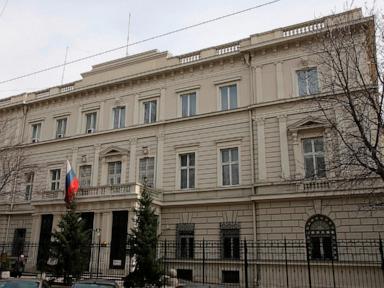
Austria just kicked out three Russian Embassy employees. It's a move that feels like a throwback to Cold War thrillers, but the reality is much more high-tech and grounded in current security fears. This wasn't a sudden whim by the Austrian Foreign Ministry. It's the result of months, maybe years, of watching antennas on rooftops and tracking signals that shouldn't be there. If you've been following European security lately, you know Vienna has a reputation as a playground for intelligence officers. It’s the "Spy Capital" for a reason. But even for a country that prides itself on neutrality, there’s a limit. That limit was crossed.
The Antenna Problem on Vienna Rooftops
The official reason for the expulsion centers on activities "incompatible with diplomatic status." That's the polite, diplomatic way of saying these individuals were likely intelligence officers working under cover. Specifically, investigators have been looking at the forest of antennas and satellite dishes sitting on top of Russian diplomatic buildings in Vienna. These aren't just for watching cable TV.
They're signals intelligence (SIGINT) tools. Experts suggest these arrays can intercept mobile phone traffic, radio communications, and even secure data transmissions across the city. Vienna is home to major international bodies like the UN, OPEC, and the IAEA. That makes the city a goldmine for anyone who can "listen" to the airwaves. When those antennas start looking less like communication tools and more like vacuum cleaners for data, the host government has to act.
Neutrality Does Not Mean Open Doors
Austria's neutral stance is often misunderstood. It doesn't mean they don't care about security. In fact, being neutral makes them more of a target. For decades, the Austrian government took a relatively soft approach to foreign agents. As long as they weren't spying on Austria, the authorities often looked the other way. That changed after the invasion of Ukraine.
The political climate in 2026 is vastly different. Europe is on edge. Security services across the continent are tightening the noose on "diplomats" who spend more time with signal processors than they do at cocktail parties. By expelling these three individuals, Austria is sending a signal of its own. It’s telling Moscow that the old "gentleman's agreement" regarding espionage in Vienna is dead.
How Modern SIGINT Works in Urban Settings
You might think spying is all about dead drops and secret meetings in dark alleys. It’s not. Most of it happens through the electromagnetic spectrum.
- Intercepting local Wi-Fi: High-gain antennas can sometimes pick up leaked signals from nearby buildings.
- IMSI Catchers: Devices that mimic cell towers to trick phones into connecting to them, allowing the interceptor to track locations or listen to calls.
- Satellite Uplink Monitoring: Watching where data goes when it leaves a government building.
The Russian embassy complex in Vienna is uniquely situated to facilitate this. It has a clear line of sight to various government districts. When you have three "staff members" whose primary job seems to be maintaining this hardware rather than processing visas, the charade falls apart.
The Broader Pattern of Expulsions
This isn't an isolated event. Over the last two years, we’ve seen a wave of Russian diplomats sent packing from Germany, Poland, and the Netherlands. The pattern is always the same. Intelligence services identify the "heavy hitters"—the ones running the technical surveillance or recruiting local assets—and give them 48 to 72 hours to leave.
It's a game of whack-a-mole. Russia will almost certainly retaliate by expelling Austrian diplomats from Moscow. This tit-for-tat is standard. However, the loss for Russia is often greater. It takes years to build a technical surveillance infrastructure and place the right people to run it. Tearing that down, even partially, creates a massive blind spot for their intelligence services.
What Happens to the Antennas Now
The antennas will likely stay. You can’t exactly go onto sovereign diplomatic territory and rip them down without causing a major international incident. But the people who knew how to use them effectively are gone. The Austrian intelligence agency, the DSN, will be watching the replacements very closely.
If you're living in or visiting Vienna, especially if you work in policy or international business, this is a reminder that the "air" isn't as private as you think. Use encrypted messaging. Use VPNs. Don't assume a "secure" Wi-Fi network in a café near the UN is actually secure. The tech on those rooftops is designed to exploit the smallest gaps in your digital hygiene.
Practical Security Steps for High-Risk Areas
If you find yourself in a city known for high-level espionage, you need to change how you handle your devices. It’s not about being paranoid; it’s about being realistic.
- Physical Privacy Screens: Prevent "over-the-shoulder" spying in public places.
- Hardwired Connections: Whenever possible, avoid Wi-Fi for sensitive work.
- Firmware Updates: Many SIGINT attacks exploit old vulnerabilities in phone hardware. Keep your OS current.
- Assume Monitoring: If you're near a diplomatic mission with a suspicious amount of hardware on the roof, act as if your unencrypted signals are being logged.
The expulsion of these three individuals won't stop the spying. It will just make it harder for a while. It’s a necessary move for Austrian sovereignty, but the digital battle for the airwaves over Vienna is far from over. Keep your software updated and your sensitive conversations offline.