The scream of a twin-engine turbojet at low altitude does something to the human chest cavity. It rattles the ribs. It forces a instinctual, primal glance upward, searching for the shape cutting through the clouds. For over two years, that sound over Ukraine has meant one of two things: imminent destruction, or the thin, screaming shield protecting the soil below.
On a standard Tuesday, the military briefings are dry. They are delivered in monochromatic bullet points by officials in olive-green t-shirts. They speak of asset liquidation and neutralized targets. But strip away the sterile language of modern warfare, and the raw numbers tell a story of rapid, suffocating constriction. You might also find this similar article insightful: Why the Afghanistan Earthquake Shook Delhi and What You Need to Know About Deep Tremors.
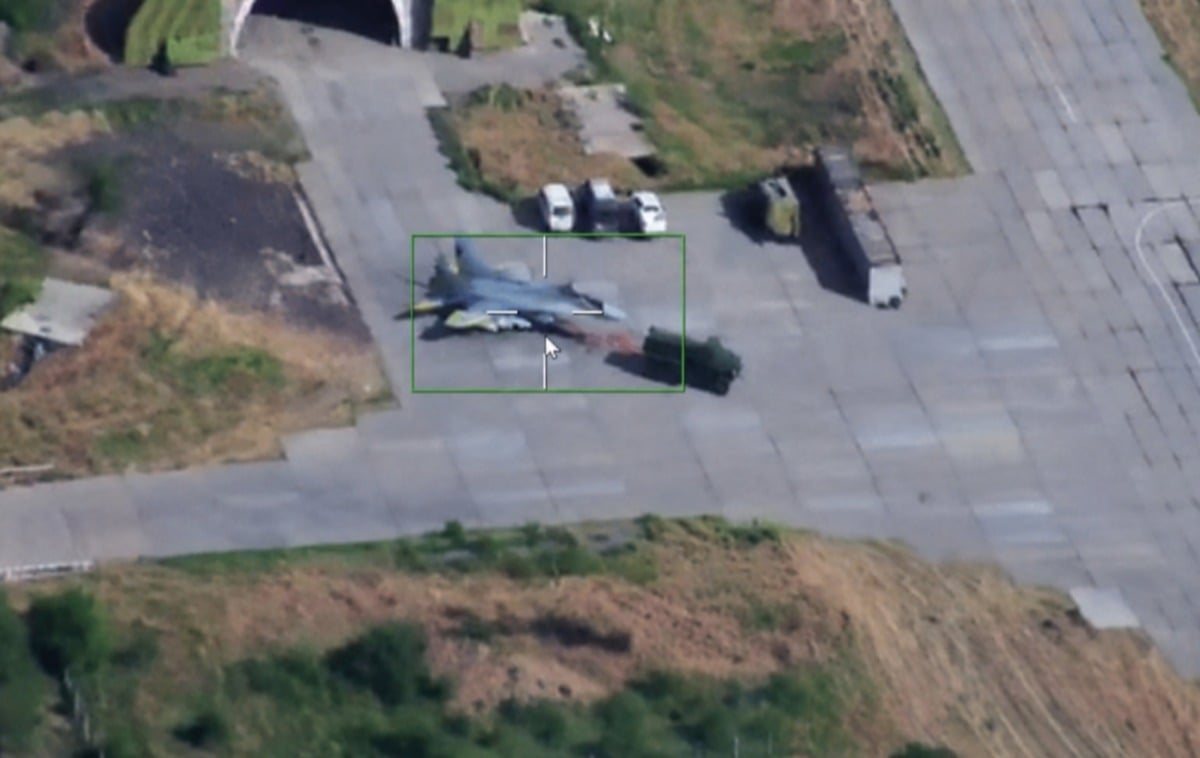
Within a single twenty-four-hour window, two Mikoyan MiG-29 fighter jets vanished from the Ukrainian inventory.
To the casual observer scrolling through a news feed, it reads like a minor statistic in an endless war of attrition. Two planes. In the grand tapestry of twentieth-century military history, losing two airframes is a rounding error. But in the current, claustrophobic reality of Eastern Europe, those two silhouettes represent a catastrophic drain on a resource that cannot be replaced by printing more money or passing congressional bills. As highlighted in latest articles by TIME, the implications are worth noting.
The math of modern air defense is brutal, unyielding, and entirely devoid of sentiment.
The Cost of an Empty Tarmac
To understand what happened in those twenty-four hours, we have to look past the titanium hulls and look at the geometry of the airspace. Ukraine started this conflict with a finite number of Soviet-era airframes. These are not pristine, factory-fresh machines rolling off an assembly line in Seattle or Toulouse. They are legacy warbirds. Many of them were built before the pilots flying them were even born.
Every time a MiG-29 takes off from a hidden, scarred runway in western or central Ukraine, it is burning through a non-renewable resource: structural lifespan.
Imagine a hypothetical pilot. Let us call him Roman. He does not wear a pristine flight suit. His gear is stained with sweat, hydraulic fluid, and the lingering scent of aviation fuel. When Roman straps into the cockpit of a MiG-29, he is entering a space governed by thousands of analog dials, retrofitted GPS units taped to the dashboard, and the constant, dull awareness that he is outranged.
The competitor reports focused on the locations—one caught on the ground at an airfield near Dnipro, another reportedly intercepted in mid-air over the southern front. The reports used words like "attrition" and "tactical setbacks."
But consider what happens next when those hulls hit the dirt.
It is not just about the loss of aluminum and radar systems. When a MiG-29 is destroyed on a tarmac by a lingering Russian drone or a ballistic missile, the air defense umbrella shrinks. These jets are used as reactive interceptors. They are the firefighters of the sky. When a swarm of low-flying cruise missiles or explosive drones is detected moving toward a thermal power plant or a residential neighborhood, these pilots are scrambled to hunt them down manually.
Lose two jets, and you lose the ability to cover two distinct sectors of the sky simultaneously. The umbrella tears. The rain gets through.
The Asymmetry of the Invisible Horizon
There is a profound misunderstanding about how air combat works in this conflict. People raised on Hollywood cinema expect dogfights. They look for cinematic banking maneuvers, flares dropping like glitter against a sunset, and pilots looking each other in the eye across a canopy.
The reality is cold. It is digital. It is profoundly lonely.
The MiG-29 was designed in the 1970s to counter American fighters in visual-range combat. It is agile. In a tight turn, it can pull G-forces that turn a pilot’s vision to gray silk. But in 2026, the war in Ukraine is not fought in the visual range. It is fought across hundreds of kilometers of empty, gray air.
Russian interceptors, like the Su-35S and the MiG-31BM, hover high within their own protected airspace. They carry radars that can see deep into Ukrainian territory. They carry missiles like the R-37M, which can travel at hypersonic speeds to strike a target over two hundred kilometers away.
Ukrainian pilots are fighting blind by comparison.
When Roman flies, he must stay incredibly low. He plays a lethal game of hide-and-seek with the earth’s curvature. He skims the tops of sunflowers, dips into river valleys, and pops up only for seconds to scan, lock, and fire before diving back into the clutter of the terrain. It is exhausting, high-stress flying that pushes the human body to its absolute limits.
When two of these aircraft disappear in a single day, it implies that the sanctuary of the low-altitude terrain is failing. It means the hunting drones overhead are finding the hidden airstrips. It means the network of spotters, satellites, and radar planes is tightening the noose around the remaining airfields.
The Human Capital in the Cockpit
We talk about the machines because they are easy to count. We can see them on satellite imagery. We can track their serial numbers. But the true bottleneck of the Ukrainian air force is not sitting in a hangar.
It is sitting in a classroom, or buried under a mound of earth.
Training a combat pilot to survive in a high-threat environment takes years. It requires thousands of hours in the air, millions of dollars in fuel, and a specific type of psychological resilience that few human beings possess. You cannot draft a man from a Kyiv cafe and put him in a MiG-29 three weeks later.
When an aircraft is lost in mid-air, the first question whispered across the military networks is never about the plane. It is always: Did the canopy blow? Did the silk open?
If the pilot did not survive, the loss is total. The institutional knowledge, the hard-earned lessons of how to dodge a surface-to-air missile over the Donbas, the instincts honed over hundreds of combat sorties—all of it vanishes in a greasy plume of black smoke.
The international community promises Western jets. The arrival of F-16s has been discussed in policy rooms and cable news segments for what feels like an eternity. But those transitions are slow. Flying an American jet requires thinking in English, understanding entirely different system philosophies, and trusting automated electronics that operate completely differently from the heavy, mechanical controls of a Soviet MiG.
During this long, agonizing transition period, the legacy MiG-29s are the bridge holding the line. They are the old, creaking wooden pillars supporting a ceiling while the concrete cures.
If those pillars crack too quickly, the ceiling comes down before the new support is ready.
The Real Meaning of Attrition
The loss of two fighters in less than twenty-four hours is a symptom of a larger, creeping exhaustion. It tells us that the airbases are no longer safe havens. It tells us that the early-warning systems are being stretched to their breaking points.
Every single airframe lost increases the burden on the remaining fleet. The maintenance crews must work through the night, scavenging parts from damaged planes to keep others airworthy. The remaining pilots must fly more often, with less sleep, into skies that grow more hostile by the hour.
The war in the air is not a series of glorious victories. It is a slow, grinding arithmetic where the side that runs out of pieces first loses everything.
The next time the reports surface detailing another lost airframe over the steppes, do not look at the numbers. Look at the sky above the nearest town. Think of the silence that follows when the engines finally stop screaming, and the horizon remains entirely empty.