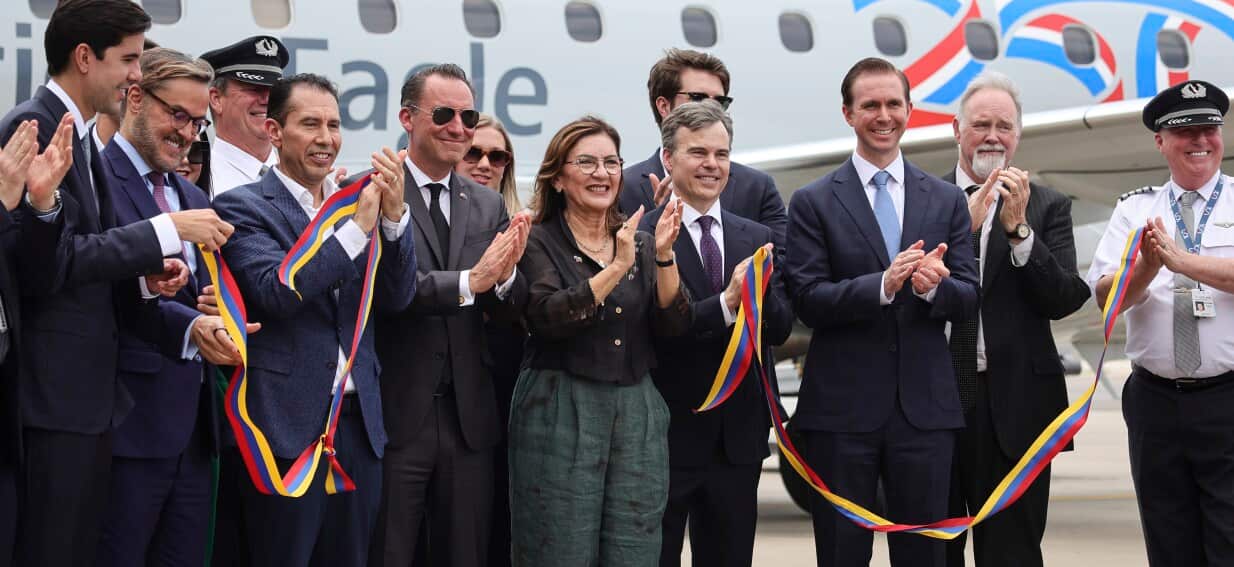
The media is salivating over a single plane hitting the tarmac. They call it a "historic chapter" and a "diplomatic breakthrough." They want you to believe that the resumption of direct flights between the United States and Venezuela—after a seven-year drought—is the first domino in a grand democratic restoration.
It isn't. It’s a pressure valve for a migration crisis, disguised as a peace offering.
If you’re looking at these flight paths and seeing the return of "business as usual," you aren’t paying attention to the math. You’re being sold a narrative of reconciliation when the reality is a cold, calculated transaction of convenience. This isn't about opening borders for tourism or trade; it's about the logistics of deportation and the desperate maintenance of global oil stability.
The Myth of the "Diplomatic Bridge"
The consensus view suggests that flights equal friendship. This is a fundamental misunderstanding of aviation diplomacy. In the real world, transport links are often the first thing to be weaponized and the last thing to be repaired.
When the US Department of Transportation suspended all commercial and cargo flights in 2019, citing "threats to safety and security," it was a hard-line play to isolate Caracas. Restoring them now isn't a sign that the security environment has miraculously healed. It’s a sign that the Biden administration has realized that isolation without an exit strategy is just a slow-motion car crash.
The "lazy consensus" ignores the timing. Why now?
- The Migration Math: The US is currently managing record-high encounters at the southern border. Without direct flights, the process of returning Venezuelan nationals is a logistical nightmare involving third-party countries and astronomical costs.
- The Energy Buffer: With Middle Eastern supply lines under constant threat and Russian oil off the table, the US needs the Venezuelan "heavy sour" crude back in the Gulf Coast refineries. You can’t run a massive energy exchange through Zoom calls and back-channel emails. You need boots on the ground, technicians in the fields, and direct logistics.
Stop Asking if it’s "Safe" to Fly to Caracas
People are flooding search engines with questions about whether Venezuela is now "open for travel." This is the wrong question.
The right question is: Who is allowed to profit from these routes?
If you think this opens the door for your favorite domestic carrier to start running cheap vacation hops to Isla Margarita, you’re dreaming. These initial flights are highly controlled, sanctioned, and specific. They are government-to-government conduits.
The E-E-A-T Reality Check: The Logistics of a Failed State
I’ve watched the aviation industry try to navigate "high-risk" re-entries for decades. When a country’s infrastructure has been cannibalized for parts and its air traffic control systems haven't seen a Western software update in half a decade, "historic" is just another word for "high-liability."
- Radar Gaps: Years of neglected maintenance mean the technical hand-offs between Caribbean sectors and Venezuelan airspace aren't "seamless." They are manual, clunky, and prone to error.
- Fuel Reliability: Jet A-1 fuel quality in Caracas has been a point of contention for international safety auditors for years.
- Insurance Premiums: No airline flies into a sanctioned zone without "war risk" insurance. The cost of these flights is being subsidized or passed directly to the passenger (or the taxpayer).
The Chevron Factor: Follow the Oil, Not the Headlines
If you want to understand why a flight landed in Caracas today, look at the Office of Foreign Assets Control (OFAC) General License 41.
In late 2022, the US Treasury began easing restrictions specifically to allow Chevron to resume limited operations in Venezuela. You cannot run a multibillion-dollar oil operation via commercial connections through Panama or Bogota forever. The friction is too high. The "direct flight" is a corporate shuttle disguised as a public service.
This isn't about the Venezuelan people's right to travel. It’s about the West's need to ensure that the infrastructure for extracting 300 billion barrels of proven oil reserves doesn't completely rot into the ground.
The Deportation Paradox
Here is the brutal truth that the "historic chapter" articles won't tell you: The primary cargo on these "breakthrough" flights won't be business executives or reuniting families. It will be people being sent back.
The US government has successfully framed the resumption of flights as a "humanitarian opening." In reality, it is the grease on the wheels of a deportation machine. By establishing a direct flight path, the US removes the primary hurdle to mass removals.
- Before: Deporting a Venezuelan national required complex diplomatic maneuvering with countries like Mexico or Colombia to act as transit points.
- Now: A direct line allows for high-volume, low-friction removal.
Calling this a "new chapter in relations" is like calling a divorce settlement a "new chapter in the marriage." Technically true, but fundamentally dishonest about the intent.
The Cost of the Counter-Intuitive Approach
Admittedly, there is a downside to my skepticism. If you ignore the "symbolism" of the flight, you might miss the very real, albeit tiny, window it opens for NGOs and humanitarian aid. Direct flights do lower the cost of getting medicine and specialized personnel into a country where the healthcare system has collapsed.
But we must weigh that against the fact that every landing fee, every gallon of fuel purchased, and every airport tax paid goes directly into the coffers of a regime that the US still officially considers illegitimate.
We are witnessing the "normalization of the abnormal."
The "People Also Ask" Evisceration
Q: Will flight prices to Venezuela drop now?
A: No. You’re ignoring the "Sanction Premium." Limited supply plus massive insurance overhead plus "political risk" surcharges means these flights will remain some of the most expensive per-mile routes in the Western Hemisphere.
Q: Is the US recognizing Maduro now?
A: The US is recognizing reality. Recognition is a legal term; coordination is a functional one. The US is coordinating because they have no other choice. It’s not a moral victory for Caracas; it’s a logistical surrender by Washington.
Q: Can I book a flight to Caracas on a standard travel site?
A: Not likely. The complexity of the sanctions regime means that even if the planes are flying, the payment processors are still terrified. We are years away from a "frictionless" booking experience.
The Industry Insider’s Bottom Line
Don’t be fooled by the high-definition footage of a plane taxing through a water cannon salute. That’s theater.
In the boardroom and the Situation Room, this flight is viewed as a tactical necessity to manage a border crisis and secure an energy future. The "historic" label is a PR bandage on a gaping wound of failed foreign policy.
The US isn't "reopening" Venezuela. It is installing a revolving door to manage the exit of people and the entry of resources. If you call that a "new chapter," you’re reading the wrong book.
Turn off the news. Watch the manifest. The cargo tells the real story.