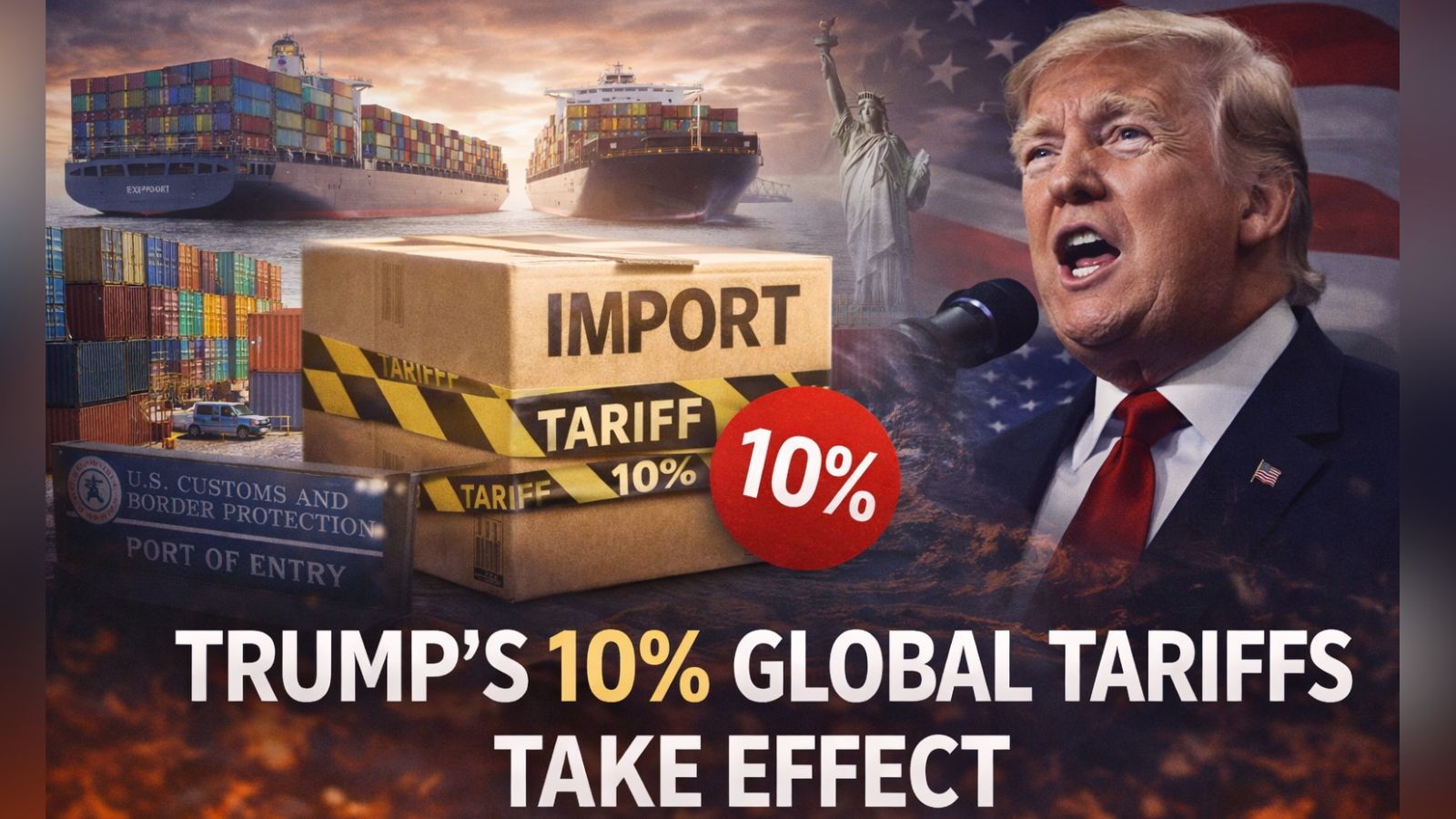
Washington has moved the goalposts again. For those watching the logistics sector, the manufacturing floor, or the quarterly earnings calls of multinational corporations, the sudden shift in American trade policy has been less of a pivot and more of a jarring reset. When the United States Supreme Court ruled on February 20, 2026, that the International Emergency Economic Powers Act (IEEPA) did not authorize the President to impose broad tariffs, the immediate reaction in boardrooms was one of temporary relief. That optimism died four days later when the administration invoked Section 122 of the Trade Act of 1974, implementing a 10 percent global surcharge on nearly all imports.
This is not merely a tweak to the existing trade order. It is an acknowledgment that the administration intends to force a permanent reduction in the United States' trade deficit, regardless of the judicial check on executive power. The 10 percent tariff, currently set for a 150-day window, is the new baseline. For countries like India, the impact is neither a simple disaster nor a clean escape. It is a complex, sector-specific reality check that demands a deep dive into the mechanics of supply chains and the harsh arithmetic of the current global economy.
The Arithmetic of the New Surcharge
To understand what this means for global exporters, one must first discard the notion that tariffs are a theoretical discussion. They are a consumption tax that arrives at the port of entry. When the 10 percent surcharge went into effect on February 24, it effectively acted as a levy on the American consumer, paid by the importer of record.
Consider the difference between the IEEPA-based regime and the new Section 122 approach. The IEEPA tariffs, which the courts struck down, had been volatile, climbing as high as 25 percent for Indian goods in 2025. This had stifled trade volumes and sent exporters scrambling to reroute shipments. By shifting to a 10 percent blanket rate, the administration has created a floor, not a ceiling. It is a lower rate for some, but a far more rigid one. The 150-day expiration date is the pressure point. It forces companies to decide whether to absorb the cost, pass it to the consumer, or permanently shift their supply chains.
Many firms are choosing the latter, not because they want to, but because the uncertainty has become unmanageable. The message from the White House is clear: supply chains should be in the United States, or at the very least, they should not be reliant on a system that the administration views as fundamentally flawed.
The India Exposure
For India, the trade narrative has been a rollercoaster. Throughout 2025, Indian manufacturers were caught in the crossfire of retaliatory measures and reciprocal tariff hikes. The recent reduction from the previous 25 percent punitive rates to the 10 percent Section 122 baseline feels like a reprieve, but it is deceptive.
India’s integration into the global economy is bifurcated. On one side, the massive IT services and software sectors remain largely untouched by the physical goods tariffs. If you are a developer in Bengaluru writing code for a Silicon Valley firm, your trade reality is dictated by visa policies and digital services taxes, not container ship inspections at the Port of Long Beach.
However, for the manufacturing and commodity sectors, the pain is real. The solar industry provides the most glaring example. While the administration lowered the blanket tariff, it simultaneously launched targeted investigations into solar cell imports. On February 24, 2026, the Department of Commerce hit Indian solar manufacturers with preliminary countervailing duties reaching over 125 percent. This is not about a 10 percent surcharge; this is about using aggressive trade defense tools to protect domestic US manufacturers at any cost.
Indian exporters of textiles, engineering goods, and pharmaceuticals are now in a wait-and-see mode. They have learned that negotiating a trade deal with Washington is a moving target. The Indian Commerce Ministry has taken a stance of strategic patience, pushing for bilateral agreements while diversifying exports to the European Union and ASEAN markets. The lesson they have taken from the last 18 months is simple: never rely on a single market, especially one where the political winds shift with a single executive order.
The Hidden Cost of Protectionism
There is a growing consensus among trade economists that the United States is essentially running a grand, expensive experiment in domestic industrial policy. By raising the cost of imports, the administration hopes to encourage domestic production. But the reality is that the US economy has been hollowed out of the mid-stream manufacturing capacity required to replace those imports.
Take the automotive industry. Even with high tariffs on imported parts, domestic manufacturers still rely heavily on global supply chains for specialized components. When the tariff hits, those costs do not vanish. They are added to the cost of the finished vehicle. The result is a persistent inflationary pressure. It is a quiet tax on the American public, disguised as a national security measure.
Companies that rely on lean, just-in-time inventory systems are finding themselves in a crisis. The cost of inventory has spiked because keeping goods in warehouses is now the only way to shield against the volatility of potential future tariff hikes. When the government signals that it might increase the 10 percent rate to 15 percent, businesses panic-buy, creating artificial scarcity and driving prices higher.
The most troubling aspect of this strategy is the degradation of the multilateral trading system. By abandoning the Appellate Body of the World Trade Organization and relying on executive-led trade actions, the United States is shifting the world toward a system where might makes right. Smaller economies, like those of emerging markets in Asia and South America, no longer have a predictable set of rules to navigate. They have to deal with the US on a case-by-case, or industry-by-industry basis.
The Strategy for Survival
What happens next? The 150-day window for the current 10 percent tariff is a short clock. By mid-summer 2026, Congress will be forced to either codify these duties or allow them to lapse. In the interim, firms must adopt a strategy of extreme agility.
For exporters, this means diversifying the destination of their goods. If the US market is becoming expensive and volatile, the focus must shift toward the EU, the Middle East, and growing markets in Southeast Asia. This is not an abandonment of the American consumer, but a recognition that the US market is no longer the predictable engine of growth it once was.
For US importers, the strategy is about visibility. Mapping the supply chain to the raw material level is no longer a "nice-to-have" exercise for sustainability reporting; it is a financial necessity. If a component comes from a country that might be the next target for a Section 301 investigation or a new round of countervailing duties, that component is a liability.
The era of cheap, reliable, global trade has not ended, but it has certainly entered a period of dark volatility. Corporations that spent the last three decades optimizing for cost are now realizing that the most expensive line item in their budget is no longer shipping or labor, but regulatory and trade uncertainty.
The administration’s wager is that American companies will endure this friction, eventually reshore their production, and create a new, self-contained economic machine. It is a massive bet. If it pays off, the United States might regain a portion of its manufacturing base. But if it fails, the nation will simply be left with higher prices, more fragile supply chains, and a global reputation as a market that is increasingly difficult to do business with.
The 10 percent tariff is merely the start of this new chapter. Whether it leads to a revitalization of American industry or a slow erosion of competitiveness remains an open question. For now, the only certainty is that the trade regime has changed, and those who do not adapt quickly will find themselves paying the price, one invoice at a time. The real test is not what happens at the border, but how long the domestic economy can sustain the weight of its own protectionist ambition.